
An ambitious vision, the Triangle Trail would connect more than a dozen communities. It’s making progress.
The 42-mile path would improve access to recreational opportunities in communities through the Mill Creek Valley.
Cincinnati’s first-ring suburbs face challenges including changing demographics, economics, and security. The ways the 49 cities, villages, and townships in Hamilton County meet these challenges is the focus of this series, First Suburbs—Beyond Borders. The series explores the diversity and innovation in these longstanding communities, highlighting issues that demand collective thought and action.
A coalition that includes more than a dozen towns in Hamilton County, outdoors advocates, and the county park district are planning an extensive trail that would connect communities in the urbanized central and northern parts of the county, many of which are situated in the Mill Creek Valley.
The ambitious project, a vision of planners and advocates for more than 10 years, aims to link existing neighborhood trails and build new ones to create a 42-mile pathway that would be shared by bicyclists and walkers.
Dubbed the Triangle Trail, the path would run north from the Cincinnati neighborhood of Spring Grove village, and one branch would link communities along the Mill Creek, including Arlington Heights, Lockland, Lincoln Heights and Woodlawn. Another branch would run to the northeast, connecting Reading, Evendale, Sharonville, and other towns.
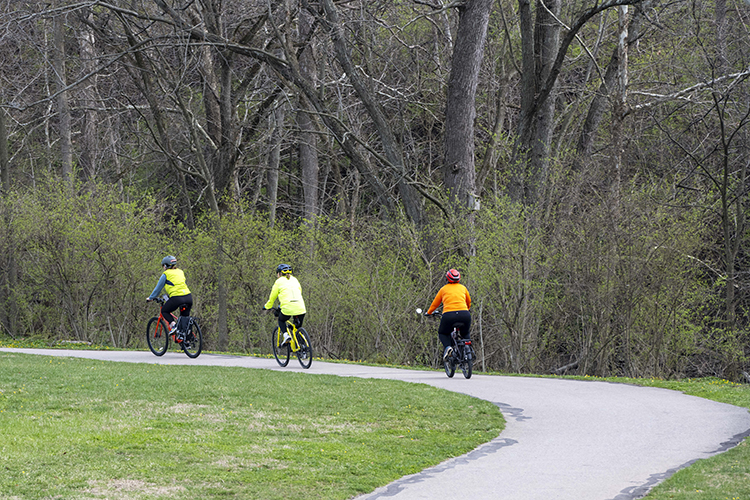
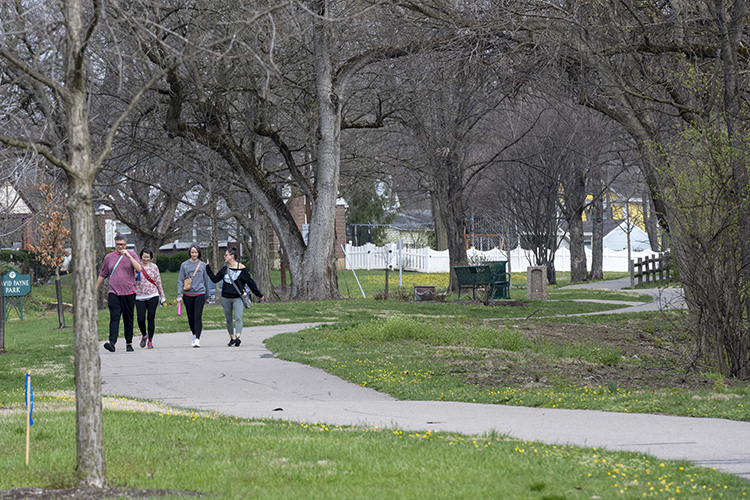
The trail would be separated from the roadways, creating safe paths for walking, running, and bicycling. It would improve access to those recreational opportunities in communities through the Valley, including some that have been saddled with the legacies of one of the nation’s busiest interstate highways, I-75, and one of the Midwest’s most heavily used rail lines.
“We are trying to fill a need of communities that want it to be easier for residents and visitors to walk and bike, not only in their communities, but to neighboring communities,” said Wade Johnston, executive director of Tri-State Trails, the nonprofit that has taken the lead on the project.
These kinds of multi-use trails provide a range of benefits to people and communities, he said. “Trails provide all kinds of benefits for communities from economic development to connection with nature to physical and mental health, as well as improving the ability to attract and retain talented professionals to our region by having amenities like this,” he said.
In its proposed length, the Triangle Trail is on par with the Cincinnati Riding or Walking Network, the CROWN. As planned, that trail is a 34-mile loop around the east side of Cincinnati, from Downtown to Lunken Airport, and from Clifton to Mariemont. The Triangle Trail would connect with the CROWN in Spring Grove Village, according to the current concept plan. Nearly 24 miles of the CROWN are complete, Tri-State Trails says.
A big goal of the Triangle Trail project is to link two of the biggest parks in the county, Winton Woods in the northwest and Sharon Woods in the northeast. They would be connected by a network that would wind through Sharonville, Glendale and Woodlawn.
Of the proposed 42-mile trail, segments exist that total nearly 20 miles. Much of that is the existing trails in Winton Woods and Sharon Woods. The Triangle Trail will also include four-plus miles of the existing Mill Creek Greenway Trail, which runs through the Cincinnati neighborhoods of Carthage, Hartwell, Northside, and South Cumminsville.
An engineering and feasibility study was completed and adopted in late 2025. The study included public engagement, social media campaigns, online engagement tools, project fliers, yard signs and an open house. About half of the respondents to a survey said they would use such shared-use paths one to four times a month. More than 90% said they would feel comfortable bicycling on a shared, multi-use trail.
The completion of the study is a big step forward, as it gives project planners a document to support grant applications and continue gathering community support. The study can be found here.
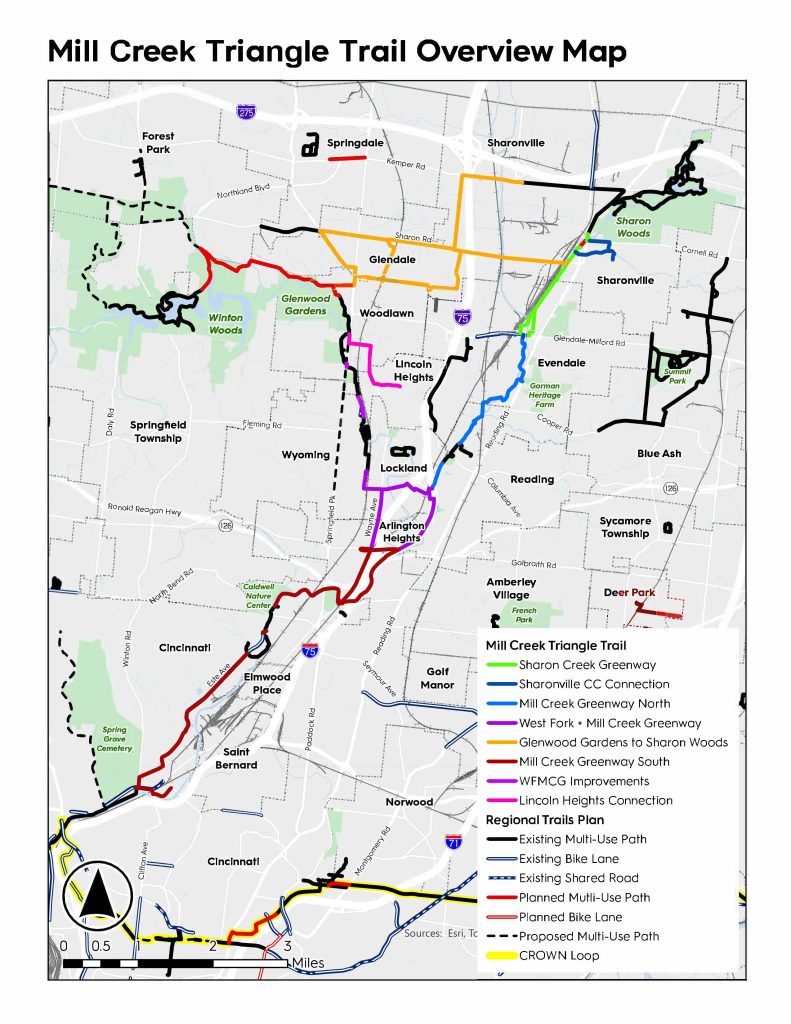
The main stem of Triangle Trail would generally follow the Mill Creek for about 15 miles. Its western leg would generally follow the creek’s West Fork tributary for about seven miles. The linkage of these streams with the trail has won the project the support of groups such as the Mill Creek Alliance, which advocates for recreation opportunities and development along the waterway.
“Having the trail along the creek brings people to the creek, lets them see for themselves how beautiful and healthy it’s become, and gives them a greater appreciation for the stream,” said Dave Schmitt, executive director of the Mill Creek Alliance.
Great Parks, the county park district, is also a partner in the project. Earlier this year, the park district began construction on the final section of a 3.6 mile trail that will connect its Glenwood Gardens botanical park with Winton Woods, the most visited destination in its system. This section will connect with the West Fork Mill Creek Greenway Trail in Woodlawn. When completed, the link will be a significant addition to the existing trail network that the Triangle Trail planners want to build upon.
“Building the Glenwood Gardens to Winton Woods Trail is a continuation of Great Parks’ priority to increase regional trail miles,” said Todd Palmeter, Great Parks CEO.
He’s called the Triangle Trail project “an inspiring vision for the future of active transportation and recreation in Hamilton County.”
“This plan builds upon decades of collaboration, innovation, and community advocacy to transform the Mill Creek watershed into a vibrant corridor of connectivity and opportunity,” he says.
The current cost estimate to complete the project is $29.9 million, meaning it will likely be completed in increments over several years by applying for local, state and federal grants. Great Parks secured more than $7 million for the design and construction of the Glenwood Gardens to Winton Woods link, most of that coming from a federal grant.
Other challenges to advancing the project, in addition to funding it, include coordinating collaboration among 14 different local governments, each with their own governing bodies and budgets, Johnson says. Each contributed to paying for the feasibility study, he said, a good sign for long-term buy-in, which will be necessary to see the project through to its completion.
First Suburbs—Beyond Borders series is made possible with support from a coalition of stakeholders including the Murray & Agnes Seasongood Good Government Foundation: The Seasongood Foundation is devoted to the cause of good local government; Hamilton County Planning Partnership; plus First Suburbs Consortium of Southwest Ohio, an association of elected and appointed officials representing older suburban communities in Hamilton County, Ohio.
Author

Related Articles
Restoring, repairing and maintaining your old historic home
Northern Kentucky Restoration event helps homeowners learn about restoration and tax credits plus an opportunity to meet contractors with expertise.

From idea to movement: The Power to Pursue Summit returns for 5th year Power-versary
The annual summit brings together women across industries and life stages for a day centered on shared experience and authentic conversation.

Superintendent Debbie Houser retires in August leaving Middletown City Schools in a good place for her successor
During her tenure, programs increased student proficiency, reduced chronic absenteeism and included a collaborative initiative to introduce students to wider career opportunities.