
A federal leadership grant puts Cincinnati Zoo at the center of global conservation
This award strengthens a program that supports emerging conservationists from the communities where conservation work is happening.
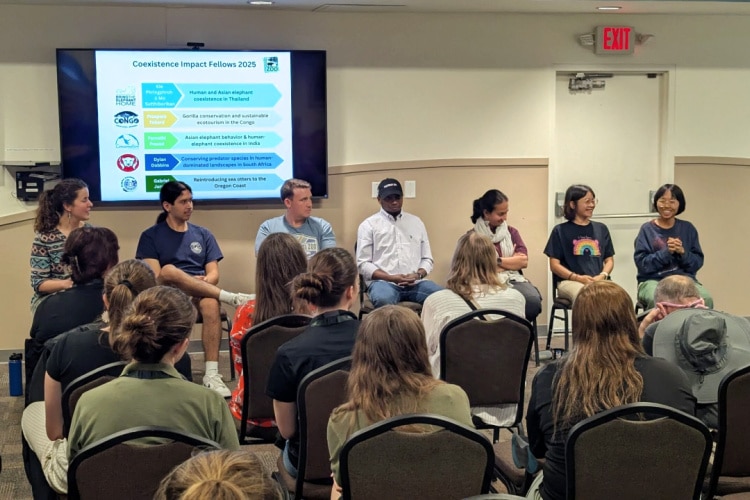
Cincinnati’s conservation work reached a new milestone this year when the Cincinnati Zoo and Botanical Garden received a 2025 National Leadership Grant from the Institute of Museum and Library Services, one of the most competitive federal awards in the museum field. The grant is more than a recognition. It is an investment in a model of conservation that builds power outward, into the hands of local researchers and community partners around the world.
The $652,260 award will allow the Zoo to expand and strengthen its Hoffman Coexistence Impact Fellowship, a program that supports emerging conservationists from the communities where conservation work is happening, with a focus on local leaders historically underrepresented in the field. The Fellowship began in 2022, but this grant gives it long-term scaffolding. It ensures Fellows receive the training, resources, and support needed to lead work shaped by their lived experience in the landscapes they call home.
The Fellowship is grounded in the Zoo’s Coexistence Coalition, a team rethinking what conservation should look like in the twenty-first century. Their starting point is clear: conservation must begin with the people living closest to wildlife. The Coalition builds long-term partnerships with local organizations, supports them with research and capacity, and works beside them rather than above them. The goal is shared resilience. Communities do not have to choose between survival and stewardship, and wildlife does not have to live at odds with people’s livelihoods.
The Fellowship extends that mission globally. Working with partners such as SORALO, Bring the Elephant Home, Congo-Apes, Cheetah Outreach Trust, and Lion Landscapes, the Zoo supports leaders who already belong to the ecosystems they serve. Fellows receive salaries, mentorship, and scientific guidance while running projects shaped by the needs of their communities.
Much of the Fellowship unfolds remotely, but each spring the cohort travels to Cincinnati for a week of training, coaching, and cross-department collaboration. This year, ideas emerged from unexpected corners. In one session, Joshua Vandament from the Zoo’s maintenance team connected with fellow Parvathi Prasad, who works on coexistence between farmers and Asian elephants in India. After hearing how dangerous unlit paths can be at night, Joshua drew on his experience maintaining solar light batteries to brainstorm lighting solutions. They continued the conversation after the workshop, trading contact information and sketching next steps.
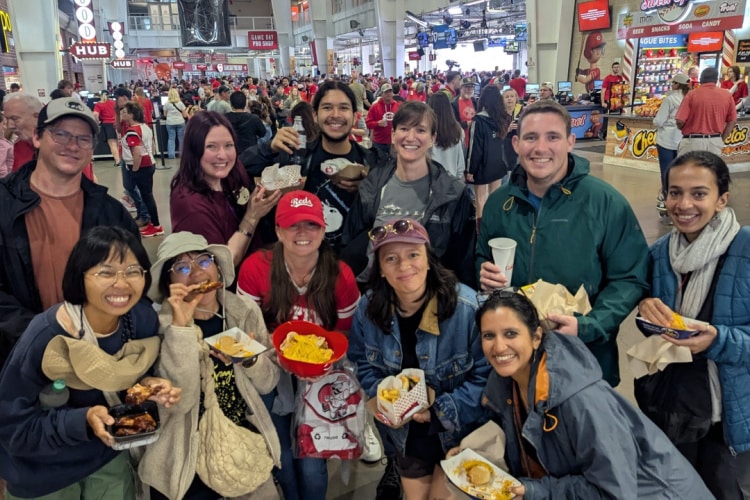
Outside the sessions, the Fellows explored the city, from Graeter’s and Skyline to FC Cincinnati’s stadium. These small moments of welcome matter. They build trust, dissolve formality, and remind everyone that conservation is a community practice, not only fieldwork.
The work the Fellows return to is complex and deeply tied to place. Natsuda “Mo” Sutthiboriban and Marisa “Kie” Phringphroh carried their Cincinnati momentum back to Ruam Thai Village in Thailand, where Bring the Elephant Home (BTEH) collaborates with farmers living at the edge of Kui Buri National Park. It is a landscape shared by people and elephants, where a single night of crop damage can reverberate through a household. One coexistence strategy rising from the community is the Tom Yum Project, named for the soup whose lemongrass and chili serve as natural buffers around pineapple fields. A future section of the Zoo’s Elephant Trek habitat will lift up this partnership.
The work BTEH is doing in Thailand reflects exactly the kind of community led innovation the grant is designed to strengthen. Their coexistence strategies, from crop-buffer systems to wildlife monitoring, rely on local expertise and long-term relationships. The Fellowship gives partners like BTEH the support and scientific collaboration needed to test new ideas and expand what works, making the grant’s impact immediate and tangible.
“Mo and Kie returned to Kui Buri full of excitement and enthusiasm after their trip to Cincinnati. Their renewed passion is contagious and has given a boost to our entire team,” said Ave Owen of Bring the Elephant Home in a program update.
This is where the grant lands. Not on a stage, not in a press release, but in Ruam Thai’s fields and Congo’s forests, and in the classrooms and neighborhoods here in Cincinnati that learn from this work. The 2025 National Leadership Grant ensures the Fellowship can keep growing the next generation of conservation leaders, one community at a time. Coexistence is lived work, and this grant ensures Cincinnati remains a place where global conservation grows from the ground up.
Author

Related Articles

Where to eat well in Middletown
A guide to four independent restaurants shaping the city’s growing dining scene.
In neighborhoods across Greater Cincinnati, a nonviolent resistance begins to organize
Concerned citizens are taking action — making whistle kits, getting a refresher in the U.S. Constitution, and reaching out to immigrant-owned small businesses.

Safe speed: Why towns in Hamilton County are slimming down their main roads
The “road diet” is increasingly being considered to slow speed while at the same time keep traffic flowing.