
Where we worship: Sacred spaces in Cincinnati
Greater Cincinnati is blessed with an abundance of diverse places for worship, faith and community. Here’s just a few of them.
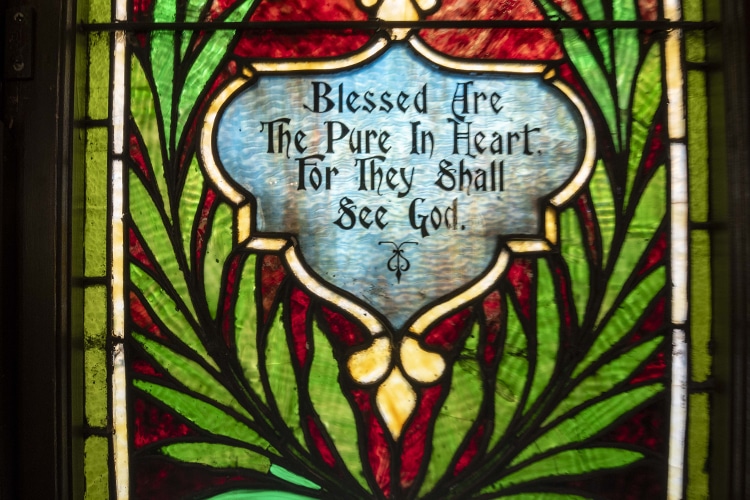
December is a season of light and a month that ushers in major religious holidays in a variety of traditions. It can be a month of busyness and also a month to slow down and reflect on the year, look ahead to the future, and reconnect with family and friends. Greater Cincinnati is blessed with a broad diversity of worship spaces where communities of faith will gather this month and beyond to share rituals, honor traditions and inspire hope. Here are just a dozen of those spaces, in no particular order, chosen to represent some of the diversity of our beliefs.
Trinity Episcopal
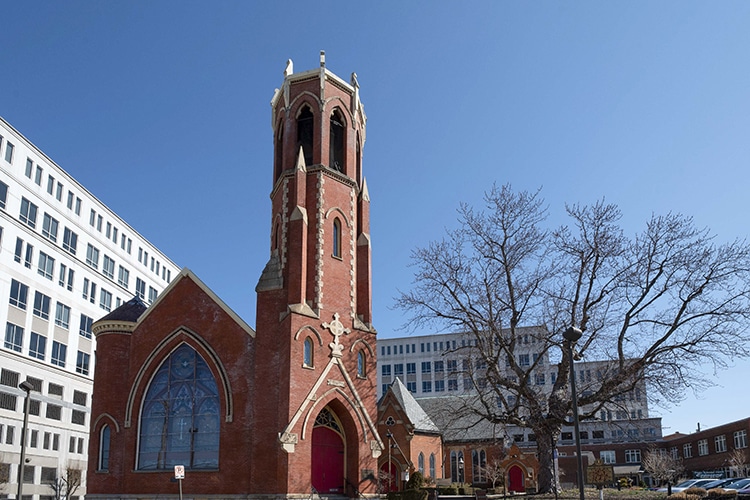
The roots of Trinity Episcopal Church date to 1842, when, in a small frame building on the northwest corner of Fifth and Madison in Covington, the first bishop of the Diocese of Kentucky officiated at its first public service. Doctor Thomas Bird, a young man who had come to Covington from England, had urged the bishop to make the trip, saying Covington was “a suitable place for commencing exertions in behalf of the Episcopal Church.” In time, the congregation built a permanent home. The current church dates to 1888. Added to the National Register of Historic Places in 1982, Trinity contains a number of works of art, including stained glass windows designed by the John Riordan Studio of Cincinnati as well as the St. Michael Archangel window created by the Louis Tiffany studio of New York.
Islamic Center of Greater Cincinnati
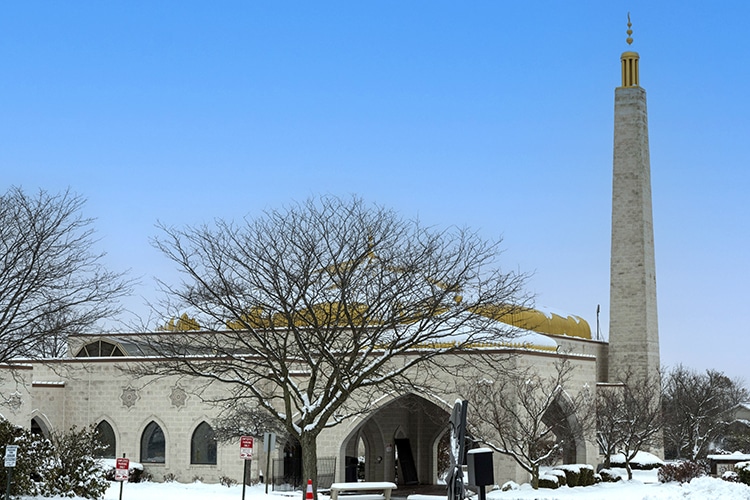
In the 1950s, members of Cincinnati’s Islamic community bought a tiny house in Clifton to serve as a mosque and meeting place. As the community grew, a larger house on Clifton Avenue was purchased, which still serves as a mosque today. In 1988, the current Islamic Center of Greater Cincinnati property in West Chester was purchased, largely through the perseverance and generosity of Ahmad Samawi, an immigrant from Syria who had founded a successful development company. The 18-acre campus, which opened in 1995, features a mosque, a community center, a gymnasium, an auditorium, and more than 20 classrooms.
Allen Temple AME Church
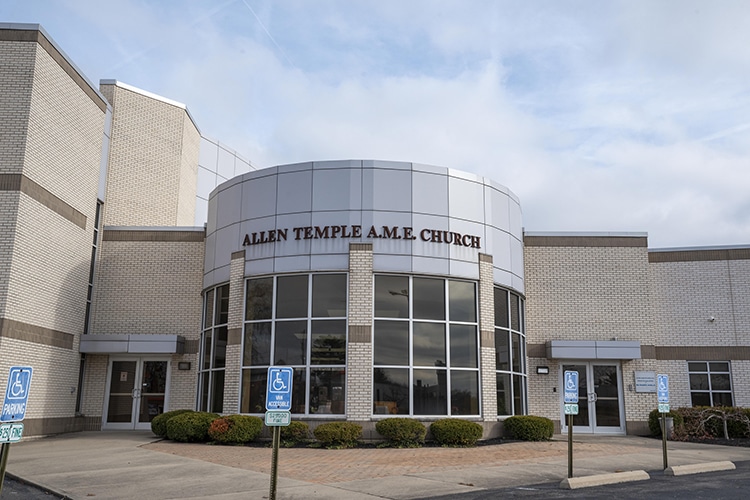
Founded in 1824, Allen Temple AME (African Methodist Episcopal) is the oldest operating Black church in Cincinnati and the largest church of the Third Episcopal District of the AME Church. It was founded by Rev. James King, a former slave from Kentucky, and Rev. Phillip Brodie. Rev. Brodie’s cellar was among the first locations for worship services. After progressing through several downtown locations, the church eventually moved to Roselawn in 1979. In 2004, Allen Temple moved into its current place of worship, a newly designed and constructed facility at the corner of Reading Road and Seymour Avenue in Bond Hill. In 2014, the church opened a Life Activity Center there dedicated to the legacy of former pastor Rev. Donald Jordan Sr.
Isaac M. Wise Temple
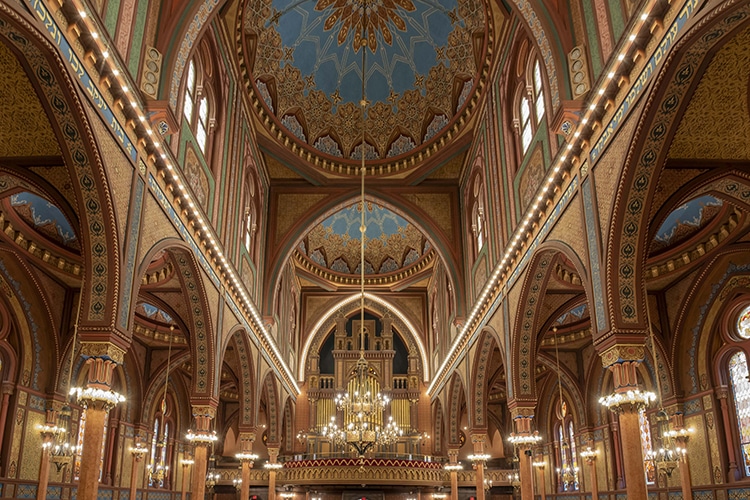
The remarkable architecture and design of the Isaac M. Wise Temple is a landmark in downtown Cincinnati. It is also a historic center of Jewish life, as Isaac Mayer Wise founded the institutions of Reform Judaism, including Cincinnati’s Hebrew Union College, while serving as rabbi there in the late 19th century. This striking temple was built at the corner of Eighth and Plum in 1866 in a Byzantine-Moorish style, and was designated a national historic landmark and placed on the Department of the Interior’s National Register of Historic Places in 1975. The synagogue, K.K. B’nai Yeshurun in Hebrew, is used nearly every week for Sabbath services, major life events and other religious functions.
Corinthian Baptist Church
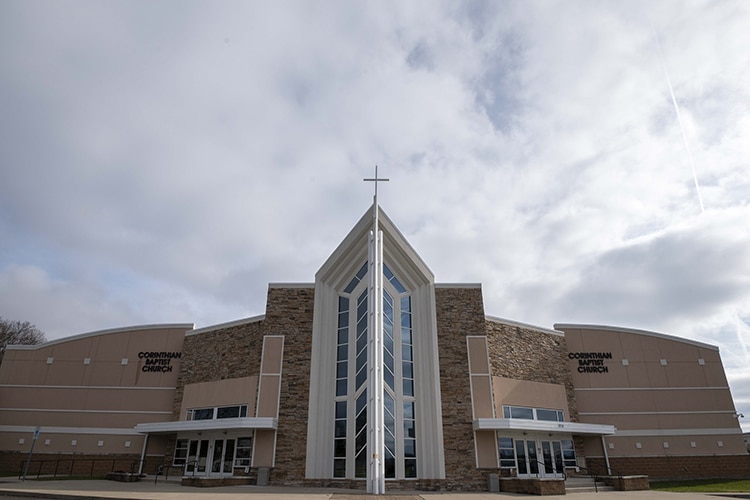
Just after the Civil War, in 1868, a small group of men and women who had been meeting in each other’s homes saw a need to establish a place to worship in the Avondale community. The Council of Baptist Churches sanctioned the formation of a church, and the first service was held at an orphan home on Van Buren Street. Originally called the First Baptist Church of Avondale, the name was changed to Corinthian Baptist to avoid confusion with another place of worship in town. In the 1960s, the congregation was forced to move due to the construction of a highway. Eventually, in 2010, the church purchased 30 acres of land on Reading Road in Bond Hill and construction of the current facility began in 2017. Rev. KZ Smith has served as pastor of Corinthian Baptist for 37 years.
The Church of Jesus Christ Latter-day Saints
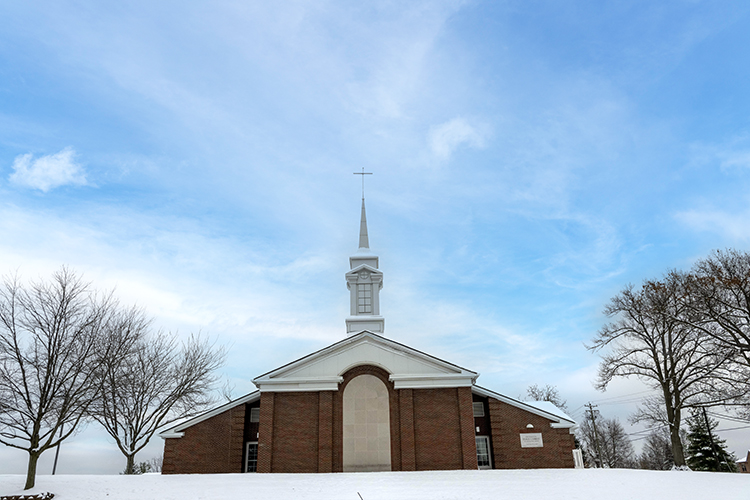
Although geographically, members of the Church of Latter-day Saints are heavily concentrated in the western part of the United States, several churches are located in Greater Cincinnati, including this one in Green Township. The Christian religion is one of the fastest-growing in the United States. Often called Mormons, the members prefer the term “latter-day saints,” as the nickname Mormon is based on one of its sacred texts, the Book of Mormon. Latter-day saints place a high priority on family life, as surveys show that large majorities say that being a good parent and having a successful marriage are among their most important goals in life. Members also place a high priority on community service and ministering to those less fortunate.
Golf Manor Synagogue
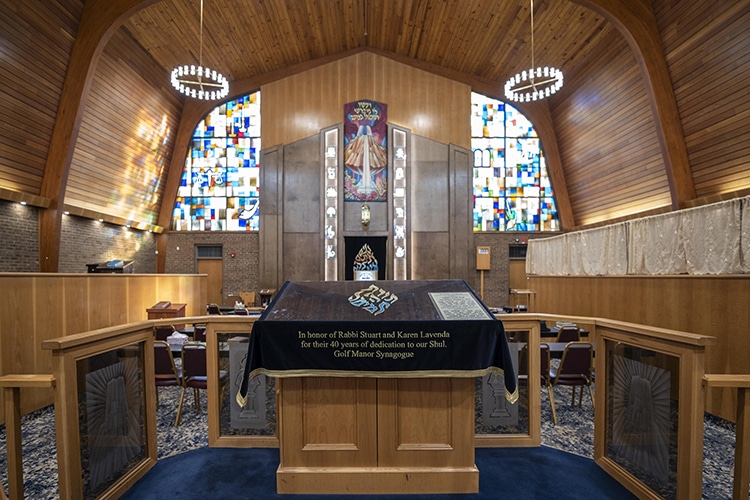
At the turn of the 20th century, members of the Jewish faith were fleeing persecution in Europe. In 1902, two groups, one from Poland, one from Romania, joined to establish the Yad Charutzim Congregation, “The Hand of the Diligent Congregation.” This group eventually evolved into the Anschei Sholom Romanian Harmony Congregation, which gathered first on Court Street downtown, then Price Hill, then West End, then Avondale. In the 1950s, as many members had moved to the suburb of Golf Manor, the congregation agreed to move there and the first services in Golf Manor were held in 1957. Rabbi Hanan Balk, who was known locally and nationally for his teachings on the Orthodox Jewish faith, served as rabbi for 24 years. Rabbi Yosef Alt has served as head rabbi since 2019.
Saint Lawrence Catholic Church
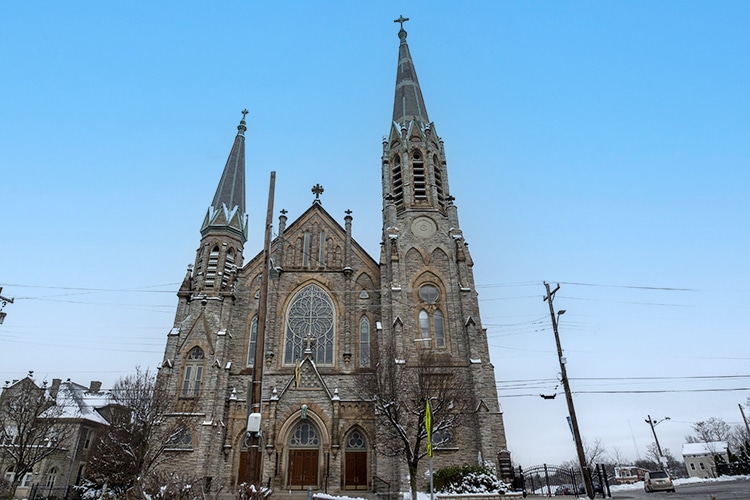
The imposing Gothic spires of St. Lawrence, considered the Mother Church of the Catholic parishes in East and West Price Hill, dominate the neighborhood around Glenway and Warsaw Avenues, where the church has beckoned worshippers for more than 130 years. St. Lawrence’s origins date to 1870, when a red brick building at the corner of Warsaw and Rapid Run Pikes was dedicated as St. Lawrence Martyr, Price Hill’s first Roman Catholic Church. A small school opened that year with just two Sisters of Charity teachers. In 1886, work was begun on the present structure. The superstructure was completed and the new church was dedicated September 30, 1894 by Archbishop William Henry Elder.
First Unitarian Church of Cincinnati
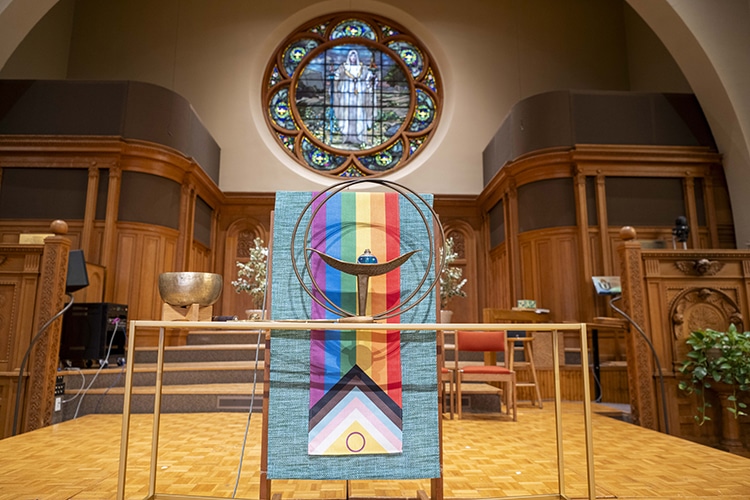
In 1830, a group of transplanted New Englanders joined together to form the First Congregational Church of Cincinnati, a congregation affiliated with the American Unitarian Association. Their first meeting house was on Fourth Street in the heart of the city. In the 1880s, the congregation voted to move to Avondale, which was then considered the suburbs. The church’s current site at the corner of Reading Road and Linton Street was purchased in 1888. The sanctuary is graced by a distinctive wood-carved pulpit, and several Tiffany windows were added in 1900. In the early 20th century, the church changed its name to First Unitarian Church. Among its members have been former president William Howard Taft and artists Charley and Edie Harper.
Westwood First Presbyterian Church
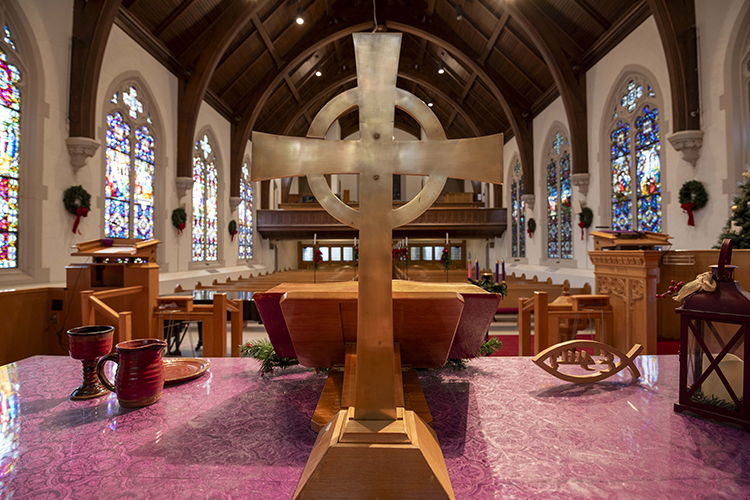
In 1881, a committee of official Presbyterians came to Westwood to officially organize the “Presbyterian Church of Westwood.” As the neighborhood grew, so did the church and in 1925, the congregation officially incorporated as the Westwood First Presbyterian Church, dedicating their current church in 1926. The stone building, likely designed by a son of famed architect Samual Hannaford, features Gothic arched openings, buttresses, a square bell tower, and two wings. The stained glass windows were designed and crafted by the Tyrolese Art Glass company in Innsbruck, Austria. The church’s music ministry offers the popular Westwood First Concert Series, featuring a range of local, national, and international performers of all genres.
Mother of God Roman Catholic Church
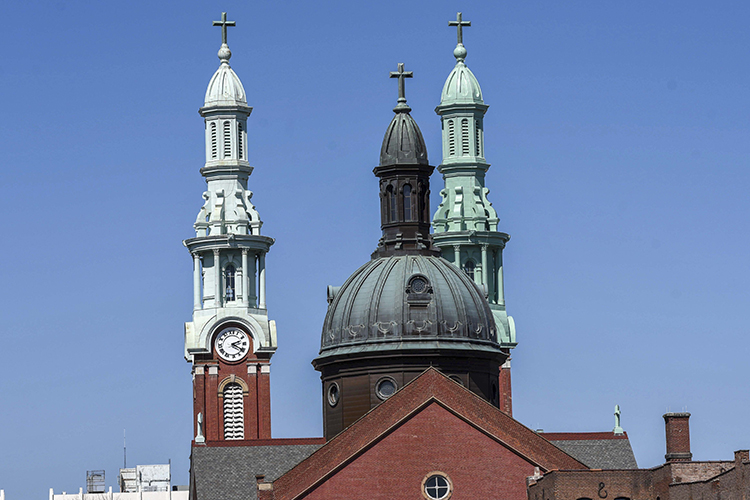
As the number of German Catholics in Covington increased, they needed a place to worship, and a temporary chapel was set up in a building on Scott Street in 1841. Mother of God became the second Catholic parish to be established in Northern Kentucky. In 1870, ground was broken for a new Italian Renaissance Revival structure, and the building was dedicated on September 10, 1871. Despite damage from a tornado in 1986, and a subsequent fire, Mutter Gottes Kirche has been restored to its 1890 appearance. The interior houses works of prominent religious artists of the 19th century.
Echo Church
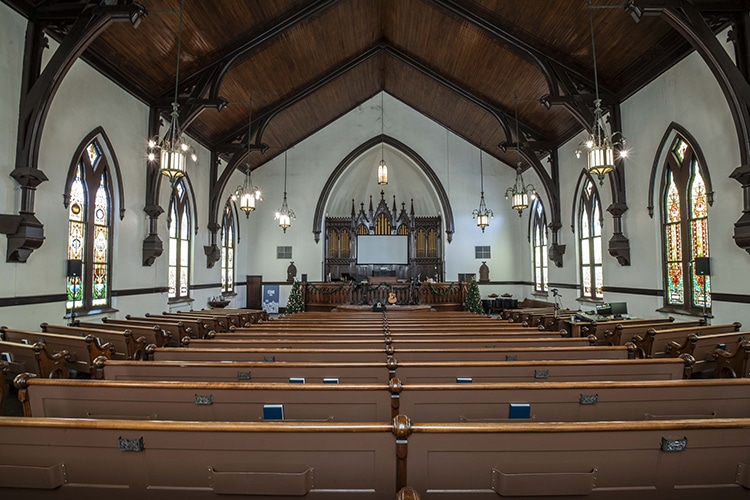
Echo Church began in October 2005, starting as a group of ten friends and growing into a fellowship of believers. Echo is an autonomous, non-denominational church, affiliated with the Independent Christian Churches/Churches of Christ, which traces its roots to the Second Great Awakening and the Restoration Movement of the early 19th century. Its name comes from its mission: “Throughout the Scriptures, God speaks … we merely echo God’s words to all creation.” Echo Church rents its Walnut Hills facility from Learning Grove, an educational nonprofit that operates a child care facility out of the rest of the building. “We aim to be a simple church of Christians focused on living out the message of Jesus in our community,” the church says.
Author

Related Articles
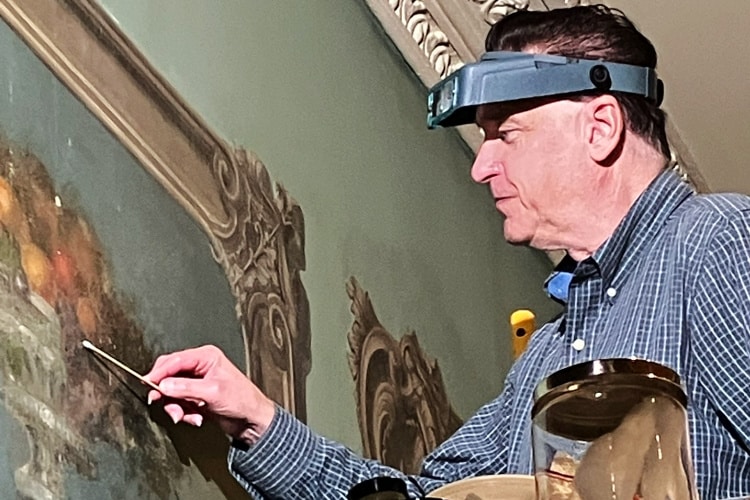
An artist’s creative process is revealed beneath layers of paint
The discovery is part of an ongoing conservation project examining Robert S. Duncanson’s monumental mural cycle inside the Taft Museum’s historic foyer.
How much you can receive in student loans now depends on what degree you pursue
Spoiler: It’s less for programs that have traditionally attracted women.
This northwest Hamilton County city is 18 minutes from everywhere
Nobody planned for North College Hill to start coming back together. But somebody had to say something about the leaves.