Social Innovation Fund charts course from cradle to career
As grade-schoolers play in the “Energy Zone” filled with bright-colored balls at the Duke Energy Children’s Musuem, they learn about simple machines the fun way. Training teachers to guide students through field-trip science activities expands the reach, and impact, of every lesson. At Cincinnati’s Social Innovation Fund, which supports a wide range of educational programs including teacher training, creating lasting learning makes for measurable successes.



The Cincinnati/Northern Kentucky Social Innovation Fund (SIF) earns Federal grant dollars to improve the odds for at-risk children and adults. But that’s where the similarity to other funding mechanisms ends.
“We’re turning to local grantees for leadership to find solutions for our communities,” says SIF Director Mike Baker. “We’re becoming a national clearinghouse for what’s working for children, for health and for education.”
The SIF, one of 11 in the nation, operates with a $2 million, two-year federal grant from the Corporation for National and Community. That seed money generates matching support from major local organizations, such as the Procter & Gamble Fund and the US Bank Foundation. Local funders match federal dollars to boost the SIF’s grant-making ability.
Nine local sub-grantees receive the combined funds. All of these programs and initiatives share SIF’s goal of keeping kids in school and helping them excel, building career preparation programs and supporting sustained employment initiatives. Baker calls the sub-grantee initiatives “cradle to career” support for area children who might not otherwise land on a path toward healthy development and stable career growth.
Rather than providing funding and then waiting for reports on how the money was used, the SIF works closely with grantees to establish rigorous measurement of their results. That data, Baker says, has the potential to become a valuable tool that reaches far beyond Cincinnati.
“A big focus for us is what are we learning, what are the key nuggets we can take out to other programs,” he says.
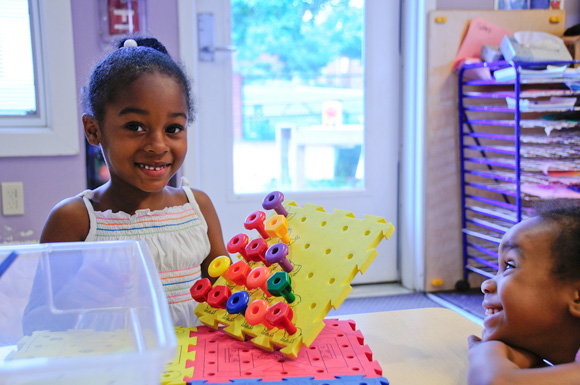
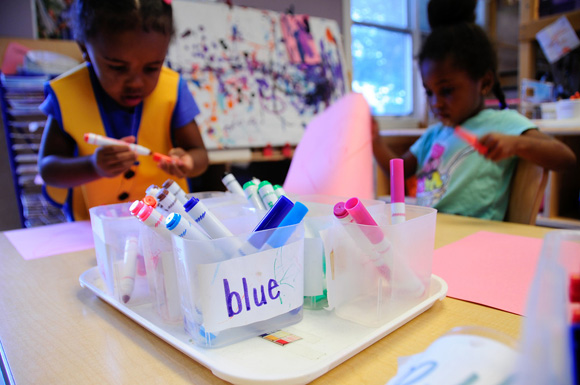
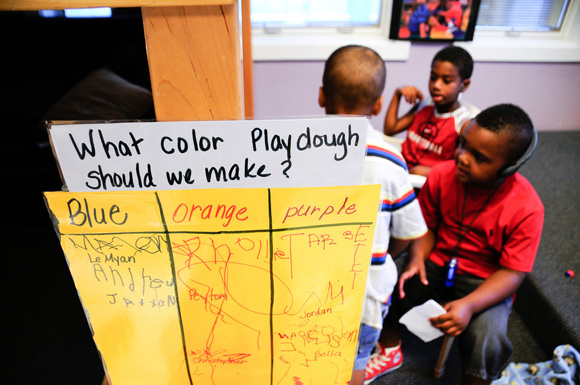
The nine programs supported by SIF meet a variety of community needs. For example, the Duke Energy Children’s Museum at Cincinnati Museum Center uses SIF support to roughly double the scope of its Early Childhood Science Inquiry Training for Educators (ECSITE) program. Last year, ECSITE provided training and in-class materials for 43 early-childhood educators in Northern Kentucky. This year, 42 Hamilton County teachers join that list, eventually introducing the fundamentals of science and scientific inquiry to more than 1,200 pre-K students.
Duke Energy Children’s Museum Director Tony Lawson says ECSITE uese a series of teacher and student evaluations to measure how effectively the program makes teachers more comfortable with science, and how well it prepares students for learning in kindergarten and the early grades.
“It’s amazing how we’ve seen scores increase,” he says, adding that this year’s SIF funding allows the program to bring in outside evaluators to look at how teacher education translates into student test scores.
For other programs, SIF helps fill a gap in coverage. Margaret Clark is the manager of Every Child Succeeds, a program at Cincinnati Children’s Hospital Medical Center that provides in-home support for at-risk mothers and their prenatal-to-infant children.
“Our program ends at age three, and that’s it,” she says. “There was this gap for educational programs to when head-start programs might occur.”
SIF funding supports staff and programs that cover the transition period between early childhood and pre-K education, she explains. And it will help Every Child Succeeds track the progress of its participants.
“It will let us know where the kids are when they leave our program, and will track them so we can provide that information to parents and preschools,” she says. That data, she hopes, will help educators and families better prepare children for kindergarten.
Some program leaders say SIF support — and the mandate for measurement and reporting — has spurred positive growth in their organizations.
Tracy Moore, the executive director of Leadership Scholars, says SIF support has helped her organization’s better measure the program’s effectiveness at preparing inner-city youth to graduate high school and be prepared for college. “It helped us better understand rigorous evaluation,” he says. “Just going through that process is very, very valuable.”
Moore adds that the collaborative support of the many local donors that fund SIF provides added benefits. “We’re essentially getting funding from 14 major organizations,” he says. “The exchange of knowledge that enables with the partners is incredible. We feel very fortunate to be in this position.”
Related Articles
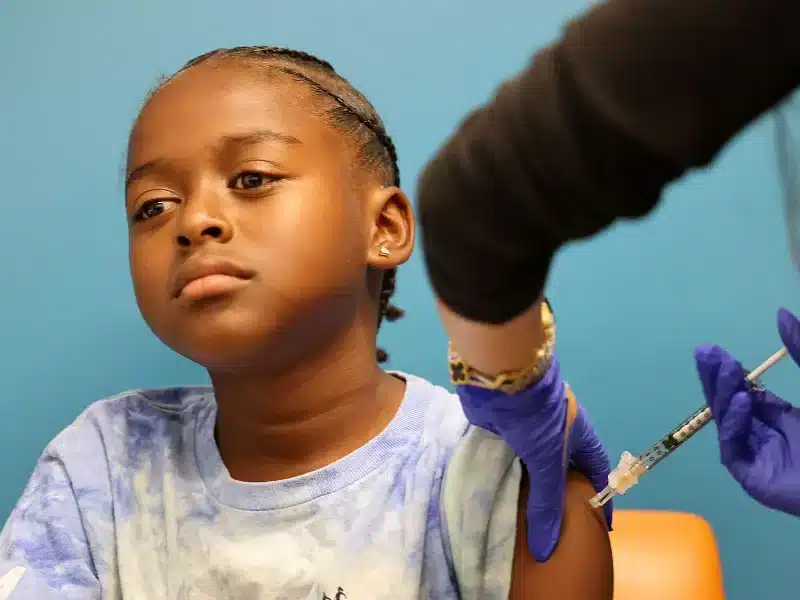
What does the new childhood vaccine schedule actually mean for your family?
Officials say not much will change. Experts aren’t so sure.

New platform to share ‘Common Ground’ from community ideas and solutions
Issue Media Group, a multilocal network of solutions-based, issues-focused digital publications, has launched a new national platform for increasing the reach and impact of its journalism.
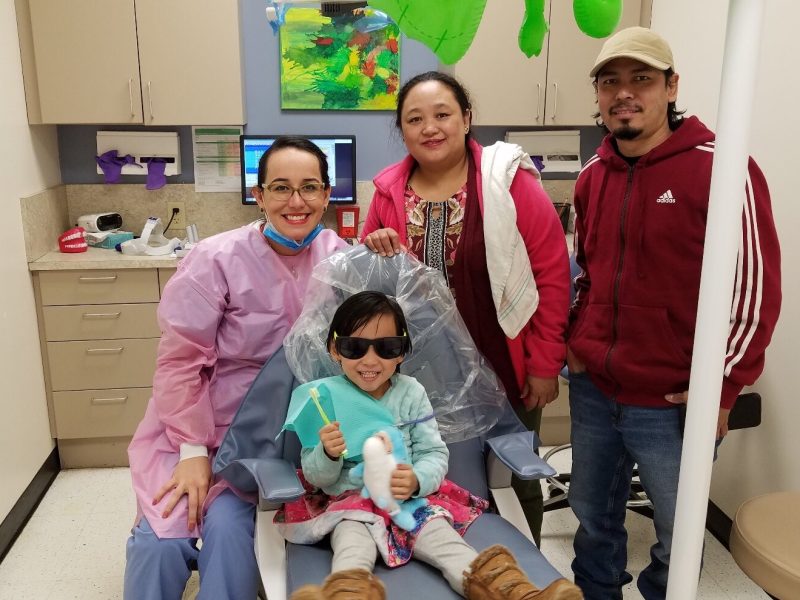
Cincinnati’s school dental clinics bring relief to thousands
Serving 24,000 patients annually, the Cincinnati Health Department dental program brings year-round care to students and community patients through an innovative public-private partnership.