Dhani Jones among best dressed athletes

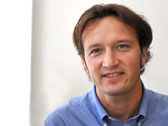
Cincinnati Bengal's linebacker, Dhani Jones, has been ranked among many well-known athletes on Forbes' list of "Best-Dressed Athletes." Jones is founder and designer of Bow Tie for a Cause, which raises funds for the Juvenile Diabetes Research Foundation, and also partners with sports apparel and lifestyle company, No Mas. Read the full story here.

Pleasant Ridge wins Community Entertainment District designation

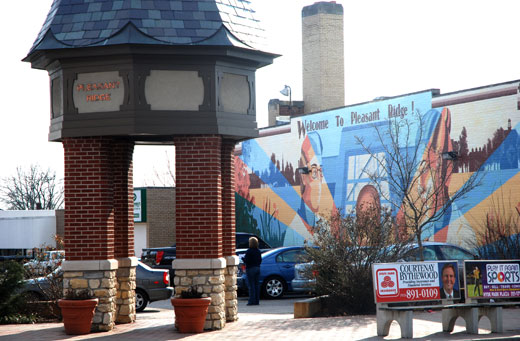
Like many neighborhood business districts, the main drag of Montgomery Road in Pleasant Ridge has lost a lot of life to big box developments by the expressway. But last week a group working to reverse that trend won five liquor licenses that they think will attract new restaurants, and new life, to Pleasant Ridge's old town center. The Pleasant Ridge Development Corporation (PRDC) succeeded in making Pleasant Ridge an official "Community Entertainment District" of Ohio last month, a designation that includes up to five liquor licenses from the State of Ohio. The licenses would typically cost a restaurant between $25,000 and $30,000 apiece through a broker, PRDC project manager Bryn Lewis said. This designation will allow five restaurants to save that entire cost.The designation is the latest step in an ongoing collaboration between Pleasant Ridge and Kennedy Heights to create a destination arts and dining district on the two-mile stretch of Montgomery road that runs through the two neighborhoods. While Kennedy Heights has seen success attracting arts groups - most recently the Cincinnati Art Museum - Lewis thinks the Entertainment District designation will fill a crucial piece of the puzzle by adding more dining to the mix.The first application for a license was turned in by Sam Yhdego, co-owner of the Ethiopian restaurant Emanu in Pleasant Ridge, the very day the designation went through."The profit margin when you have a liquor license is so much higher than when you don't." Yhdego said. "But if you go to the bank and ask for a loan to buy a liquor license, they will laugh at you. We were trying to find the cash to buy one, but it was too much."Yhdego told Lewis about Emanu's efforts to secure a liquor license last March while Lewis was having dinner there. Afraid Emanu would close if they could not secure a license, Lewis began brainstorming ways to keep them in the neighborhood, and possibly attract more restaurants like it."I walked down the street after the meal, and store after store was vacant," he said. "I thought 'this would be a lot nicer if people were out here on the street at night,' and I looked at ways we could attract restaurants."Lewis began researching liquor licenses, and he found the entertainment district designation which had been created in 2005.The PRDC couldn't afford the application fee of $15,000 (the designations are typically won by for-profit developers,) but councilwoman Laure Quinlivan worked to change Cincinnati municipal code and make the fee downwardly flexible. That allowed the PRDC to apply without outside funding."This is a citizen-led action that's not dependent on an angel investor to come in and make it happen," Lewis said. "This is bootstrap ingenuity."Writer: Henry SweetsPhotography by Scott Beseler.

Designers envision sustainable future for Cincinnati icon

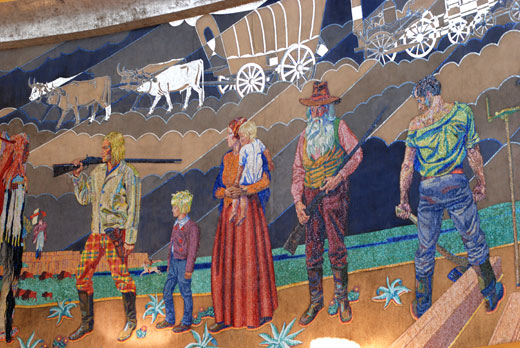
A group of budding designers, architects and urban planers from the University of Cincinnati's College of Design, Art, Architecture and Planning are helping to breathe new life into one of the Queen City's most notable landmarks. Thanks to a collaborative effort between Cincinnati Museum Center, DAAP and UC's Niehoff Urban Studio, 28 undergraduate and graduate students spent the fall quarter developing proposals in the aptly named course, "Envisioning a Sustainable Future for Cincinnati Museum Center and its District.""They're looking collectively at this," says course co-instructor Michael Zaretsky, assistant professor of architecture at DAAP. He explains that the students split into five working groups, with each focusing on different aspects of sustainable development in the Queensgate neighborhood, where the Museum Center is located. Some students focused on the area itself, developing plans for an eco-industrial district complete with an urban greenspace that flows from the district's center to Cincinnati's downtown business district. Others focused on the Museum Center's home, historic Union Terminal. Whether planning for the building or the area, all focused on sustainable design, multimodal transportation (think bike lanes, park-and-ride access, and walkable greenspace) and transforming Queensgate from a peripheral light-industrial wing of the city to a core neighborhood with a range of business and social attractions.Architecture graduate students Erica Stauffer and Gary Williams took on Union Terminal as their project. Their proposed redesign of the famous structure includes reopening its signature ramps to pedestrian and bicycle traffic, and a three-tiered internal layout that allows the building to serve as museum, gathering place and retail/social destination.Both students said they understand their ideas may never make it past the finely-crafted architectural model and design proposal that they drafted. But an exact execution of ideas isn't the point, they say."The important point is envisioning an idea," Stauffer says. "It can really be the start of what the design can be."Williams added that he gained a lot from the wide-open nature of the project."I think part of the point was not having budgets, and having less limitation than if we were on contract," he says.And according to Zaretsky, that's a key to the project. Officials from Cincinnati Museum Center interviewed the students early in December to incorporate their proposals into their long-term planning for the facility. And the students' work is on display in the Union Terminal Rotunda, giving those most affected by the space - the people who use it for work and pleasure - a chance to consider, discuss and envision these students' sustainable ideas for the Cincinnati icon's future.Writer: Matt CunninghamPhotography by Scott Beseler.

‘Bearcat Bubble’ adds practice space and energy savings on UC campus

The University of Cincinnati gained its very own 24/7 practice field with the addition of an air-supported "Bearcat bubble" for the cold winter months. Athletes now have the ability to practice year-round in the new 75-foot-high and 370-foot-long bubble covering the new Sheakley Athletic Complex."The football players are excited and grateful to have the opportunity to use it. It gives us the ability to practice all year round with consistent conditions every time you are in there," according to UC Athletic Director Coslen. The field also benefits other varsity sports such as soccer, baseball, lacrosse, and eventually track and fieldBefore the addition of the practice field and bubble, athletes had limited conditioning and practice space. During the winter months they only had the ability to condition inside with the weight-room facility and indoor track. "The football team couldn't get out until the spring. During the winter months, they practiced outside when they could, " Coslon added. The Bubble and field provides 72,200 square feet of usable indoor space for athletic programs but also allowed the school to build a chilled water thermal storage tank underneath the short field to assist the air conditioning systems throughout campus. The addition provides the University $750,000 to $1 million in energy savings a year and adds to the "greening" of campus.According to the University project manager of the complex, Barrett Bamberger, the bubble is energy efficient and less expensive than a permanent structure. The dome consists of two layers that trap air between the two layers, which results in a 40 percent energy savings. Natural daylight also passes through the translucent outer layer, allowing the limited use of electric lights during practices. Because the bubble is transportable, it will only be inflated from November through February, and will return to a normal open-air practice field in the spring. Writer: Lisa EnsmingerPhotography provided by UC

Yes brings fresh art and events to Main Street

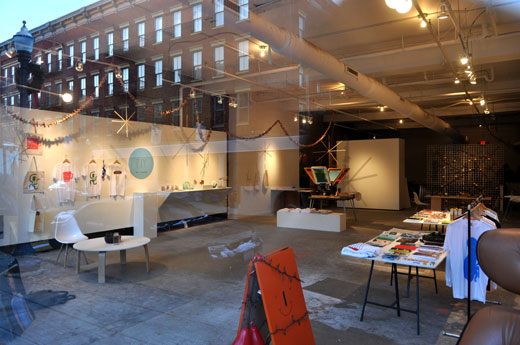
Andrew Neyer doesn't want people to feel intimidated when they walk into his art space, or feel awkward when they leave.So when he opened Yes gallery on Main Street in October he held a big game night - literally - with an 8-ft wide connect four, over-sized pickup sticks and a Cracker Barrel golf tee game the size of a twin bed. Each piece was labeled with a card like any sculpture at a gallery opening would, but guests played with them all night."It was a way to get people that aren't involved with art a chance to see things and interact with things they wouldn't have otherwise," he said. "But also art people can approach these objects as art pieces, and engage with them that way."Yes, located at 1417 Main Street in Over the Rhine, is equal parts art gallery, events venue and pop-up shop. During their regular business hours - Thursday and Friday 4 to 10 p.m. and Saturday 12 to 4 p.m. - customers will find tables full of zines, racks of clothing and screen prints hanging on the wall. A "Print it Yourself" station allows them to print four existing designs onto shirts and aprons. Hand crafted tree ornaments, including a 3-inch wooden likeness of the Kroger Building, will be available through the holiday season."The initial mission statement or goal for the space was to basically create opportunities for artists to display their work and create opportunities for people to see new art, and acquire it at an affordable price," he said.After graduating from art school in Baltimore, Neyer decided to move back home to Cincinnati and open an arts space on par with the ones popping up in New York or Los Angeles, and bring work from national and international artists here. He and two other local artists, Evan Halter and Alex Jameson, operate the space and use it as their studio.Events, which occur most Friday nights, range from traditional gallery openings to a monthly grindhouse double-feature called Cincinnati Psych-OTR-onic Night. They have also held a piñata party and the release for the latest issue of local literary zine Milk Money.The traditional monthly gallery shows at Yes will always include something interactive, Neyer said, like a three-dimensional element or mini publication."When we represent artists we'll be collaborating with them in some way, instead of just hanging them on the wall," he said.Writer: Henry SweetsPhotography by Scott Beseler.

Sean Rhiney

In our last ''My Soapbox" of 2010, Managing Editor Sean Rhiney talks about why every building matters in Over the Rhine.

The Year In Photos

Managing photographer Scott Beseler takes a look back at the photos from our top stories of 2010, showcasing some of the people, places and things that define our region.

AMP Electric Vehicles and Northern Lights Energy to bring 1,000 all-electric SUVs to Iceland

AMP Electric Vehicles has hit one of its biggest milestones yet. The four-year-old Blue Ash company will introduce 1,000 all-electric SUVs to Iceland.AMP, which moved from an engineering lab into a former Land Rover dealership late last year, has just signed a deal with Northern Electric Lights, a private company in Iceland. Under a letter of Intent, NLE has committed to buy the SUVs from AMP over the next five years.Currently AMP specializes in converting three vehicles to 100-percent electric: the Chevrolet Equinox, Saturn Sky and Pontiac Solstice.  AMP manufactures and installs state-of-the-art, all-electric, high performance engines and transmissions for the vehicles. Details are still being ironed out on exactly what type of vehicles AMP will convert in the deal. In addition to converting vehicles in Blue Ash, the company could also set up a small shop in Iceland and convert some vehicles on site, said company CEO and founder Steve Burns.This marks the largest single order for the startup, and the first time the company has converted vehicles for an overseas buyer."This is a big deal for us," Burns said. "1,000 vehicles is huge for any EV (Electric Vehicle) manufacturer."AMP got the deal after hearing that Reykjavík-based NEL was looking to bring all-electric SUVs into the country as part of its ambitious plan to have every Iceland SUV driver in an all-electric vehicle. "They announced they intended to make it the EV capital of the world. One of our marketing guys saw it in the press. We met (an NEL representative) in L.A. at the auto show and brought along a vehicle to the meeting. We picked him up in it. He drove it and saw it was solid," Burns said.The meeting led to an eventual agreement. Burns said Iceland is the perfect place to experiment with introducing a large number of all electric SUVs into the market (the country only has 200,000 drivers). SUVs are very popular in the Northern European Island, which has some rugged terrain. Gas is expensive, up to $8 U.S. dollars a gallon, because it's all imported. Electricity is cheap and in the last few decades the government has made it a priority to develop the country's renewable hydropower and geothermal power sources.In addition most of the country's densely packed population lives in or near the capital, making the average commute about 30 miles."This is going to be a great test bed," Burns said.AMP plans to get a first vehicle for drivers "to rally around" by January, Burns said. Afterward more details will be laid outlining plans for the next five years.Writer: Feoshia HendersonSource: Steve Burns, AMP founder and CEOYou can follow Feoshia on twitter @feoshiawrites

Miami immersion in OTR prepares new generation of urban school teachers

Educational research has suggested that students in difficult situations - facing poverty, from underfunded urban schools - benefit from working with better teachers. The concept makes sense, but application isn't always the easiest. Many of those high-performing teachers were able to attend good universities thanks in part to their experiences in good primary and secondary schools. They may have the knowledge and theoretical skills to teach well, but the cultural gap between their and their students' experiences can prevent quality learning from taking place.Urban teaching is a lot different than suburban teaching or rural teaching," says Annette Digirolamo, a third-grade teacher at Rothenberg Preparatory Academy in Over-the-Rhine. "There's a big, big difference in training, or should be."Miami University is working to do something about this problem, through an innovative, hands-on program. The Urban Teaching Cohort prepares undergraduate students to become effective teachers in urban schools through a combination of education and immersive experiences.The slogan of UTC director Tammy Schwartz sums up its mission: "Forget no child left behind," she says. "We want every child to absolutely thrive."Accomplishing this mission through better teaching means preparing teachers from a social - as well as an educational - perspective. The UTC curriculum includes specialized courses on urban teaching and the sociocultural aspects of education in the urban environment. Its highlight, however, is its student teaching and service-learning opportunities: students have the chance to volunteer and work in urban areas from their first year on, and all of their student teaching takes place in urban schools. Students are also encouraged to live in the communities they serve, including an intensive, three-week summer internship.Along with helping students through housing assistance and placement, the UTC supports its students through intense school and community mentorship networks. For student teachers from rural or suburban backgrounds, this immersion is key to their success as teachers in the nation's urban schools.According to the program's students, the initiative is working. Students come away with what they say is a much better perspective of - and appreciation for - teaching in the urban environment."This program dispels and confronts the myth of what it is to teach in an urban setting," says student teacher Tierionna Morris. "It's one thing to learn from a textbook, it's another to learn from the people you'll be teaching."For more information on Miami University's Urban Teaching Cohort, visit here.Writer: Matt Cunningham

Earthineer.com social networking site brings sustainable-living minded people together

Covington software consultant Dan Adams' interest in sustainable living practices was stoked by his home garden. The self-satisfaction that came from growing some of his own food led Adams to learn  how to can, preserve and pickle."I started reading a lot and getting into general sustainable living practices," he said. "The more I did this, the more I realized the sense of fulfillment that came with it." At the same time, Adams was running his own software constancy ItalkTech.  In a sustainable practice of another type, he'd started the business in 2006 after being laid off from a tech company he'd worked at for nine years.It wasn't long before his two passions merged resulting in Earthineer.com. It's an online social networking community for people interested in green living practices. He'd been working on the site as a side project, but this year decided to devote his full-time efforts to getting the site off the ground."I decided that I was never going to get this done in my spare time, so I dedicated all of my time to finishing it," Adams said.He developed Earthineer.com, which is just coming out of beta, as an independent study course at  Northern Kentucky University."This is meant to be a social network for sustainable living, eating locally and seasonally, and talking about renewable energy," Adams said.The site has a spot for blog posts for sustainable living "experiments" like different composting, canning or wine making methods. It also has typical social networking features including personal profiles, news feeds and status updates. There's also a members' recommended books section. Though the intention is to create a national network, Adams is developing a trading section where members who live near each other can also share tools and goods."You'll be able to configure a list of things you want and can trade people for them. If one person has eggs and another has milk, they could meet up to trade," he said.The site is designed not just for individuals but for like minded nonprofits, farmers and small businesses."I hope there is going to be enough information on the site on a national level that it will encourage local groups to meet and consume locally," he said.    Writer: Feoshia HendersonSource: Dan Adams, creator Earthineer.comYou can follow Feoshia on twitter @feoshiawrites

Our Partners

Taft Museum of Art

Common Ground Is Brewing

Support local stories and receive our signature roast straight to your door when you join at the Standard level (or above).

Drink Better, Read Local

Close the CTA

Don't miss out!

Everything Cincinnati, in your inbox every week.

Close the CTA

Already a subscriber? Enter your email to hide this popup in the future.