The Agenda 360 rallying cry
By the year 2020 the goal is to transform Cincinnati USA into a leading metropolitan region for talent, jobs and economic opportunity for all who call our region home. This is the rallying cry for Agenda 360 as it moves our region forward with a unified and comprehensive plan. The regional action plan wants success to be measured by a variety of quantifiable measures. An additional 150,000 20-34 year-olds in the region’s workforce which would be an increase of 50 percent of the workers in that age range in the region today.200,000 net new jobs in the region which represents more than a 50 percent increase in the historical job growth rate in the region.A minimum income level at 250 percent above the federal poverty level for all households in our region. The reason Agenda 360 focuses in on 20 to 34 year-olds is because they are the age group most vulnerable to leaving or potentially coming to our region. The group is mobile, presents useful skills and is flexible says the president of the Cincinnati USA Regional Chamber of Commerce Ellen van der Horst. “Young talent is the focus,” says Ellen van der Horst who highlights that this is the most likely demographic that Cincinnati can experience gains. She also went on to discuss the importance of growing our region’s workforce by adopting a regional policy where communities agree to “start collaborating, and stop poaching” businesses away from one another. The Agenda 360 Regional Action Plan was put together over a period of 18 months with the help of over 1,000 volunteers and 35 community sessions. But Agenda 360 director Myrita Craig made sure to emphasize that the work is not done and that the measures of success can only be achieved with community support and accountability. Craig also pointed out that the Agenda 360 document is intended to be a living breathing document that will change and grow over time with the region. A final point that was made at the ‘Connecting the Dots’ session held last week was that a master narrative is needed for Cincinnati. This is also one of the key points identified for work that needs to be done going forward. Participants at the session described the narratives of other peer cities and had a hard time determining what exactly Cincinnati’s master narrative is. Determining this will help determine the future growth and development needs and desires for the region. Having such a regional plan with goals in mind will help Cincinnati going forward as it tries to compete for the best talent in the new job markets of the future.Writer: Randy SimesSource: Myrita Craig, director, Agenda 360; Ellen van der Horst, president, Cincinnati USA Regional Chamber of CommerceImage Source: Agenda 360
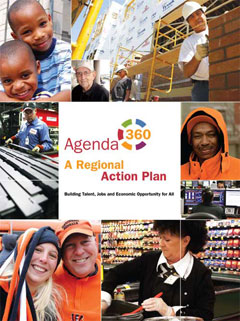 By the year 2020 the goal is to transform Cincinnati USA into a leading metropolitan region for talent, jobs and economic opportunity for all who call our region home. This is the rallying cry for Agenda 360 as it moves our region forward with a unified and comprehensive plan.
The regional action plan wants success to be measured by a variety of quantifiable measures.
- An additional 150,000 20-34 year-olds in the region’s workforce which would be an increase of 50 percent of the workers in that age range in the region today.
- 200,000 net new jobs in the region which represents more than a 50 percent increase in the historical job growth rate in the region.
- A minimum income level at 250 percent above the federal poverty level for all households in our region.
The reason Agenda 360 focuses in on 20 to 34 year-olds is because they are the age group most vulnerable to leaving or potentially coming to our region. The group is mobile, presents useful skills and is flexible says the president of the Cincinnati USA Regional Chamber of Commerce Ellen van der Horst.
“Young talent is the focus,” says Ellen van der Horst who highlights that this is the most likely demographic that Cincinnati can experience gains. She also went on to discuss the importance of growing our region’s workforce by adopting a regional policy where communities agree to “start collaborating, and stop poaching” businesses away from one another.
The Agenda 360 Regional Action Plan was put together over a period of 18 months with the help of over 1,000 volunteers and 35 community sessions.
But Agenda 360 director Myrita Craig made sure to emphasize that the work is not done and that the measures of success can only be achieved with community support and accountability.
Craig also pointed out that the Agenda 360 document is intended to be a living breathing document that will change and grow over time with the region.
A final point that was made at the ‘Connecting the Dots’ session held last week was that a master narrative is needed for Cincinnati. This is also one of the key points identified for work that needs to be done going forward.
Participants at the session described the narratives of other peer cities and had a hard time determining what exactly Cincinnati’s master narrative is. Determining this will help determine the future growth and development needs and desires for the region. Having such a regional plan with goals in mind will help Cincinnati going forward as it tries to compete for the best talent in the new job markets of the future.
Writer: Randy Simes
Source: Myrita Craig, director, Agenda 360; Ellen van der Horst, president, Cincinnati USA Regional Chamber of Commerce
Image Source: Agenda 360
Author

Related Articles
More than $1 million granted to first suburbs to spark economic impact
The money is meant to kick start improvements in business districts and help achieve long-term plans.

Middletown, Butler County leaders mull fate of city’s historic buildings
As the city looks for a new path forward, perspectives may vary, but there is shared enthusiasm for an invigorated downtown.

Coming Clean with Paul Sturkey, America’s River Roots captain of cuisine
Food and music always have and always will be a common thread that bring people together according to this regional culinary legend.