
A Regional Education Initiative Worth Striving For
You could consider Strive, the region’s four year old public education reform initiative, like a trapeze artist’s net – there to catch anyone who slips or misteps along the way. But dig deeper and you’ll find Strive does more than just work to eliminate the myriad of ‘cracks’ kids can fall through while trying to get a decent education. This innovative, holistic approach wants to take students from “cradle to career,” by empowering not only the educators who teach them, but local community and corporate partners too. Soapbox writer Michael Kearns takes a first look at Strive’s efforts to transform our region’s public education system into a national model.

 As the greater Cincinnati region moves into the second decade of the new millennium, the city’s urban core faces numerous significant challenges but perhaps none more crucial than the effective education of its children.
Ten years ago, as Cincinnati entered the 2000’s, its school system was failing to graduate 25 percent of its student body population. Across the Ohio River, Cincinnati’s neighbors weren’t fairing much better – only 52% of Newport and Covington High School graduates were planning to attend post-secondary institutions. From all sides of government, and industry leaders questioned whether local schools could provide a competent, educated workforce capable of servicing the city’s business community. Clearly, something had to be done.
In August 2006, a broad cross section of the city’s governmental, business and non-profit community gathered for a news conference on the Purple People Bridge to announce that they had a plan to mend the region’s ailing education system.  That solution, called Strive, is an initiative meant to redefine the region’s educational system. Strive wants nothingless than “a bold commitment to creating a holistic education system for students which would span from cradle to career.”
To accomplish this, Strive’s leadership set forth a concise set of goals that would warrant the success of each and every student. By ensuring that students be prepared for school, supported in and out of the classroom, and, upon graduation from high school, enrolled in college or career training, Strive hoped each child would have the opportunity to enter a meaningful career. This holistic approach would encompass all facets of education and student support, and would include those students who had dropped out or were at risk.
And while no one at the time of Strive’s initial press conference four years ago doubted the need for such an initiative, there were those who wondered whether or not Strive was just another well- intentioned, but ill-equipped effort destined for mixed results. To its credit, Strive has not seen fit to duck or minimalize neither the difficulty nor the enormity of its task. In its self-authored 2009 Progress Report, Strive’s Executive Director, Jeff Edmondson, pointedly admitted, “Many nay-sayers say it cannot be done.”
To accomplish its goals and get the necessary community buy-in, Strive convened the educators who teach; the non-profits that support teaching and well-being, the philanthropies that provide financial support, the elected officials who create policy change, and the corporations who need a local, skilled workforce. Recognizing that change in one district would not ensure community wide success, Strive’s organization stretches across state lines in an unprecedented attempt to effect change not only throughout a single school system, but also throughout the region. 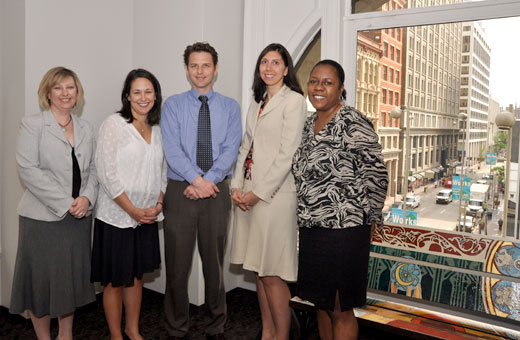
It’s now nearly four years later and while many may not have heard of Strive, let alone had an opportunity to witness Strive’s work in Cincinnati or Northern Kentucky classrooms, Strive’s relative anonymity is about to come to an abrupt end. The organization is preparing to release its third annual “Report Card” amidst a host of public events intended to broadcast the organization’s efforts and successes.
Last year’s 2009 report card concluded that, “[t]he overarching news is good and deserves celebration: a majority of the measures we have adopted to gauge success have improved.” In a recent conversation with Soapbox, Strive leadership further indicated that improvement would also be reflected in 2010’s Report Card released later this month. Specifically, according to Strive, data that measure’s the initiative’s impact has improved over last year’s report as 40 of 53 indicators Strive uses to evaluate success are on the rise. These indicators include 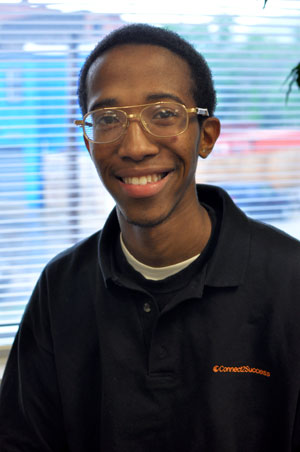 a large increase in 4th and 8th grade math aptitude for Cincinnati Public students, as well as an increase in high school graduation rates, and number of graduates enrolling in college. Covington Schools also enjoyed large increases in 4th grade reading and math scores as well as anincrease in graduates enrolling in college; Newport schools have seen similar results.
Anecdotally, there are also bright spots: Terron Wooten is currently a student at Cincinnati State studying business management. Wooten attended Middletown High, after his mother brought him to Cincinnati from Chicago – ostensibly to protect him from life on the streets. At Middletown, he played some basketball but was only able to complete the tenth grade, ultimately leaving school without a diploma. He then spent, “a rough couple years on the street, got arrested a few times and did some time in juvenile detention.” None of which made much of an impression on him. That is, until he found himself in the adult system.
After finding it hard to get anywhere without a diploma, he investigated Connect2Success (C2S), a Strive partner. Wooten attended about a month and a half of classes, two to three days a week, and studied outside of class another several days a week. After a month and a half, he was ready to take and pass the GED.
“I would have never gotten to where I’m at so fast without Connect2Success,” Wooten says. “The program was a definite boost to helping me find my way.” Now his long-term goal is to own a business. “I’d like to own maybe a retail business or a barber shop, something I’m familiar with.”
 Raquell Grant also attended C2S. and credits the program with giving her a chance to realize her dreams. Grant grew up in Batavia and later moved to Cincinnati. She attended both traditional and nontraditional schools, but felt that she could not fit in either setting.
Grant says that she found herself constantly being excluded because she “spoke like a white girl.” Grant, however, refused to be discouraged. Within a year of leaving her last high school she completed her GED. She’s now studying for her SAT with the hopes of attending San Francisco State to study fashion.
Wooten and Grant are two examples that indicate that Strive and its partner programs can work. Arguably, the more important question is, why?
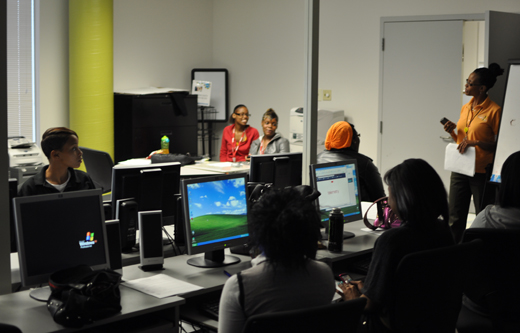
To find out why one only has to visit C2S, located in the larger agency called SuperJobs at 1916 Central Parkway. On a rainy Friday morning, off to the side of the lobby, there are a knot of people sitting at a pod of computers looking for work on the Internet. In the back are a series of cubicles housing various agency employees. In a second computer room, behind the cubicles, are gathered a group of students, all of whom are working or have recently worked to obtain their GED through C2S. Included in this group are Raquel and Terron. It’s here, in the back of this converted hardware store, that one finds the heart and soul of C2S: Will White and Darren Thigpen.
White and Thigpen are Cincinnati natives and serve as C2S’s Employment and Training Facilitators. In reality, they’re that and much more. They are also tutors, mentors, guides and, most importantly, role models to the young people who come here. It’s clear from watching the students at C2S, as they circle about Thigpen and White, that these men are the pole stars for these kids. Students come and go asking advice, telling stories and confiding hopes. One young boy, a recent transplant from California begins to regale Thigpen with what is clearly the latest chapter in an ongoing drama. He recounts how recently, while visiting a relative, he, through no fault of his own, naturally, became enmeshed in gang-banging.
 Thigpen listens and then begins to counsel. He does not counsel as a bored social worker might or someone who’s been on the job too long and has heard it all. Rather, his tone of voice is authentic and fatherly. He talks to the student in even, low tones and it’s obvious that he cares a great deal. In fact, it takes only several minutes of watching Thigpen and White to understand that they perform well outside their written job descriptions and they are not at Connect 2 Success just for the paycheck.
Thigpen tells his student “you’ve come too far to end up that way. You may as well just have stayed home and never even tried. Don’t end up that way,” he says.
His tone is neither harsh nor pleading, but carries with it the informed assertion of a man who has been through the wars, and has seen what could happen, what does happen all too frequently. GED’s, while important, are clearly not the only thing on Thigpen’s mind. That’s part of Strive’s adoptive approach, from “cradle to career.”
In the end, it’s clear that any success this program will achieve will ultimately have to rely not just upon data or report cards, but with interested educators and community leaders like Thigpen and White. It will clearly take people who exceed expectations and obligations and who are willing to reach out to make a difference. Not because there’s a paycheck in it, but because it’s clearly the right thing to do.
Related Articles
Restoring, repairing and maintaining your old historic home
Northern Kentucky Restoration event helps homeowners learn about restoration and tax credits plus an opportunity to meet contractors with expertise.

Superintendent Debbie Houser retires in August leaving Middletown City Schools in a good place for her successor
During her tenure, programs increased student proficiency, reduced chronic absenteeism and included a collaborative initiative to introduce students to wider career opportunities.

From constitutional amendment to access
A conversation with journalist Amanda Becker and PPSWO ACT’s Nan Whaley about the forces influencing reproductive rights today.