Transportation

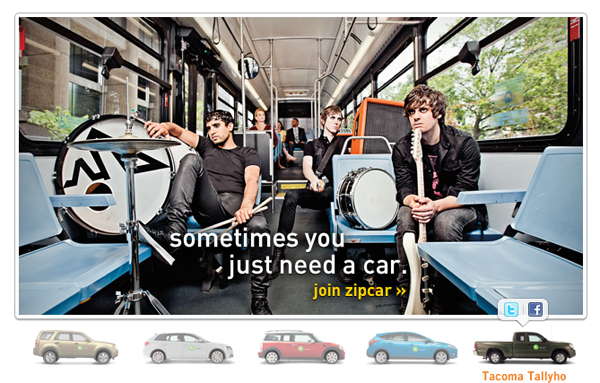
ZipCars add fast, fun transit option for all

You don’t have to be a UC student or faculty member to take a spin in one of the region’s first ZipCars, convenient alternatives to owning a car in an urban setting. Now, in addition to about 300,000 people in the city limits of Cincinnati, add four ZipCars. Their names are Footsies, Iyana, Felicia and Moto. Pull up the map on ZipCar’s website, and you’ll see the East coat is full of the easy in-city rentals. They operate out of universities and cities. Even Indiana has ZipCars at four different universities. Ohio, on the other hand, has only had them available in Cleveland. Until now. The four new cars sit in two separate places on UC’s Clifton campus. But don’t let the university location fool you. ZipCars are available for public rental and while UC students and faculty get discounted prices, the cost is still reasonable for the general public. Once you sign up for and pay the annual fee, which differs based on the plans, you receive a ZipCard. With the card in hand, you can reserve a car for a couple of hours or the whole day. Walk up to the car, swipe your ZipCard past the windshield, and a new mode of transportation is open to you. With its proximity to downtown, ZipCar expects to draw users beyond the university. According to ZipCar sales operation managers Bill Connolly, many users in other cities are reporters. As a reporter without a car, I make my way around town via public transit and a bicycle. Frequently, this means I have to pass up opportunities to do in-person interviews because I can’t make it to locations outside of the city. I jumped on the opportunity to use ZipCar and rent a car for around $7 an hour, including gas and insurance. The car sharing program can replace a seldom used car, or even owning a car altogether. The benefits are enticing. Hop on a bus to UC, swipe your ZipCard and don’t ever worry about taking your car to get the oil changed or paying $400 for new tires. By Evan Wallis

Latest in Transportation
My Soapbox: Andrea Torrice, documentary filmmaker

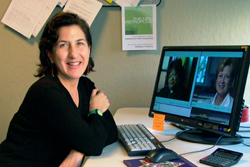
In The New Metropolis, documentary filmmaker and Cincinnati resident Andrea Torrice explores how cities can recreate and reinvigorate themselves through neighborhood initiatives and thoughtful planning. This week, she talks with Emily Schneider for Soapbox.

Obama takes jobs fight to his adversaries’ turf

President Obama was back on the road on Thursday to sell his jobs plan — at an aging and overtaxed bridge connecting the home states of his chief Republican antagonists in Congress, Speaker John A. Boehner of Ohio and Mitch McConnell of Kentucky, the Senate minority leader. Read the whole story here.

Women’s Fund takes wrench out of car problems

In Cincinnati, one working car may mean the difference between privation and stability for a woman struggling with poverty. Affordable housing will always be a flashpoint of concern for poverty activists. But affordable transportation inflicts its own damage to a family.   Women, in particular, are vulnerable to the poverty that accompanies a lack of transportation. Even without local studies to measure the numbers, organizations like the Women’s Fund of the Greater Cincinnati Foundation know that inadequate transportation is a solid barrier in a woman’s fight to become economically self-sufficient.    “Take a couple,” explains Vanessa Freytag, executive director of the Women’s Fund. “If they have one car, the husband usually gets the car. In a single mother's situation, she often doesn’t know how to take care of it. She’s also trying to get her kids to day care. Men don’t [usually] have to do that.” Many low-wage hotel and restaurant jobs are often far from the inner city homes of single mothers, creating more transportation issues. Meghan Cummings, development officer at the Women’s Fund, sees a perfect storm of challenges for women in Cincinnati.  “The jobs are outside the beltway, child care is harder and harder to find, and there’s not affordable child care near the jobs," she says. "Women don’t have a personal vehicle, and we don’t have a transportation system with enough spokes and layers that will help get women to where they need to go.” With few local resources available to ease women’s transportation needs, 1000 Women Strong, a project of the Women’s Fund, found the perfect “vehicle” to combat this problem. “Strut Your Stuff,” scheduled for Sept. 24 in Pleasant Ridge, is an interactive car care clinic that teaches women the basics of maintenance and offers tips for visiting the mechanic. Expert mechanics like Dale Donovan, host of the The Car Show on 55KRC, will answer questions and encourage women to take care of their cars with confidence. Best of all, a portion of the ticket cost will fund the Samaritan Car Care Clinic, a local outreach program that provides free car maintenance and repair for women living in poverty. Impoverished or not, “feeling more confident and safe about your vehicle is important for every woman,” Freytag says. Do Good: Donate: The Greater Cincinnati Foundation always accepts donations. Get Involved: Contact Vanessa Freytag to find out how you can help. Attend: Visit the Strut your Stuff event and support the Samaritan Car Care Outreach. By Becky Johnson

TANK’s GM helps public transit grow

After taking over as general manager of TANK a little more than one year ago, Andrew Aiello has already made meaningful changes in the community that have been recognized. Aiello was recently awarded with the first Young Visionary award from Vision 2015 for his work with TANK. "It's always inspiring receiving recognition for the work you do. It just makes you want to work harder," says Aiello.Vision 2015 is an organization that was launched in 2005 to develop a 10-year plan to create a vibrant and sustainable community in Northern Kentucky. One of Aiello's noteworthy accomplishments is the U-Pass program that teams up with NKU to give students free access to all of TANK's bus routes. "In our discussions with NKU and the market research we had done, we realized that one of the biggest hurdles for people using public transit is that leap people have to take public transit for the first time," says Aiello. "Removing barriers is an easy way to ease that step and NKU was willing to help offset the cost so more people take that first step and start riding public transit." Aiello and his team at TANK have continued to work with NKU to make positive changes to their programs, many of these focus on technology. Again, teaming up with NKU, TANK has installed Wi-Fi technology, they have also created iPhone and Android apps to help ease finding bus routes and making rides more productive.As a smaller public transit system, TANK is able to look at regional and national transit companies and learn from them. "Just based on geography, we aren't competitors to other transit systems, so there is a very open exchange of information in the industry," says Aiello. "Since we are smaller we have the ability to sit back and see which technologies are really gaining traction." This keen eye for changes that encourage people to use public transit has made Aiello successful in his short time as general manager of TANK and help create a more sustainable community.Do Good:Buy a pass. TANK offers many different passes to meet your public transit needs.Ride. TANK offers several Park and Ride locations. Bus it to work!Volunteer.  Vision 2015 is always looking for volunteers who want to help in many different ways.By Evan Wallis

Bike co-op adds balance to sustainability movement

MoBo leaders aren't satisfied with making the world of cycling available to Cincinnatians. They want to increase quality of life as well.The MoBo Bicycle Cooperative, located at 1415 Knowlton Ave. in Northside, advocates sustainable transportation in the community by teaching the finer points of cycling, from maintenance to riding. "MoBo's mission is to promote bicycling within the community," says Alex Nava, a MoBo board member. "It's really about just sharing with others and teaching them about alternative transportation."The cooperative – a project of the Northside Village Green Foundation – celebrated its fifth anniversary in June and offers a myriad of programs for citizens, including monthly bicycle basics workshops, kid's day programs, an adopt-a-bike program and a mechanics internship program, Nava says.It also teaches recycling, illustrated by the various workbenches and maintenance apparatus constructed from bicycle parts, falling in line with the cooperative's vision statement of sustainability."It's really an excellent community resource," Nava says.Besides offering bicycle repair and advocacy, MoBo allows its workshop space to be reserved by members of the community for classes in woodworking and welding, Nava says.Plans include a loner bike program to give individuals visiting the city the opportunity to experience it using their own power on two wheels, Nava said.MoBo has been well-received in Northside, a community known for its environmental sustainability efforts, Nava says."We've had very positive comments," Nava says. "They love it."Do Good:• Volunteer to be a shop coordinator, game organizer for Kid's Day programs or man the MoBo table at the weekly Northside Farmers Market. Email for more information.• Got an old bike you no longer need? Give it a second life and donate it to MoBo. Email to set up a drop off.• Lend a hand with MoBo's building renovation. Email to see how you can help.By James Sprague    

Madisonville, City councils raising concerns about ODOT plans for Eastern Corridor

One local community is coming together to oppose an upcoming transportation project in Cincinnati – and it's not the streetcar. The Eastern Corridor project, a highway expansion and community rail project led by the Ohio Department of Transportation, has raised the ire of Madisonville residents who object to the expansion of Red Bank Road to what ODOT terms "highway capacity," citing a negative impact on the neighborhood. "It's really quite dramatic what they are proposing," says Bill Collins, a board member with the Madisonville Community Council. "Essentially the end result will make these neighborhoods unattractive." Construction for Phase 1 of the project is slated to take place on an approximately 2.5 mile stretch on Red Bank Road from Interstate 71 to US 50. The project calls for the appropriation of large amounts of land along Red Bank Road, Collins says, including chunks of property belonging to the Children's Home of Cincinnati and the clinical research company Medpace. Collins says the plan is very outdated. "It was a plan that was put together with very little input from the communities around here," he says. "It was put together before a lot of development blossomed (on Red Bank Road). People stop at businesses when the speed limit is 35 miles per hour. How many will stop when the speed limit is 55?" Collins is also amazed that ODOT didn't contact businesses to consult with them about the land appropriation. A June meeting about the Eastern Corridor project was the first time that representatives of Medpace and the Children's Home of Cincinnati learned of their property being connected to the project, he says. "Neither organization had any recollection of being contacted by ODOT," Collins says. "The fact that (Ellen Katz, CEO of the Children's Home of Cincinnati) didn't know about it and was seeing the maps for the first time was shocking. That's an indication to us that the community input in 2006 was limited. ODOT didn't really do their due diligence in reaching out to the public."Representatives for ODOT, however, said they solicited resident input on the project as early as 2001."We've had numerous meetings and discussions with them (between 2001 and 2006)," says Andy Fluegemann, planning engineer for ODOT's District 8, which includes Hamilton County.A federal court decision upheld the plans for Phase 1 of the project in 2006, but the project stalled due to a lack of development funds, Fluegemann says.Funding was identified for the project in 2009, however, and a consultant was hired to collect data and update what information may have changed concerning the project, such as the new development along Red Bank Road, he saidIn the meantime, neighboring communities have joined Madisonville in its opposition to the project. The Hyde Park Neighborhood Council approved a resolution supporting a Madisonville resolution calling for no expansion to Red Bank Road and requesting more neighborhood input on the project. "I think they realize if the road (Red Bank) accommodates the quality development, it will possibly raise the demand for housing (in Hyde Park)," Collins says. "It's not just a Madisonville issue, but an east side issue." Cincinnati City Council has also joined the movement. It passed two resolutions June 21 calling for the Cincinnati Department of Transportation and Engineering to work with Madisonville in developing an alternative plan for Phase 1 and to change the name of the Red Bank Road Expressway to the Dunbar Expressway, paying homage to the historic Dunbar neighborhood. "We move that DOTE work with the residents and businesses of Madisonville to oppose the current Ohio Department of Transportation (ODOT) plan to turn Red Bank Expressway into a 55-mile-per-hour highway as part of the Eastern Corridor project," the council resolution reads. The City Council resolution also called for DOTE to include attractive landscaping and accommodate the needs of cyclists and pedestrians. Despite opposing the current plan, the Madisonville Community Council is not against the whole Eastern Corridor project, Collins says. The council just wants to see ODOT solicit more community input from Madisonville residents regarding Phase 1. "If this thing is done right, it has the potential to dramatically improve the east side of town for the next 30 to 40 years," he says. "If the project is going to be done, we want it to be done the right way before the bulldozers start doing their thing." Flugemann says ODOT planned to reengage the public, including residents of Madisonville, at a series of meetings this fall -- before Cincinnati City Council beat them to the punch by setting a meeting slated for Aug. 3 at the Madisonville Recreation Center at 5320 Stewart Road. The meeting is hosted by Cincinnati City Council's Livable Communities Committee.ODOT will "gather residents input and get their concerns on the table" through the Aug. 3 meeting, he said.By James Sprague

Streetcar design to respect FONSI guidelines, OTR history

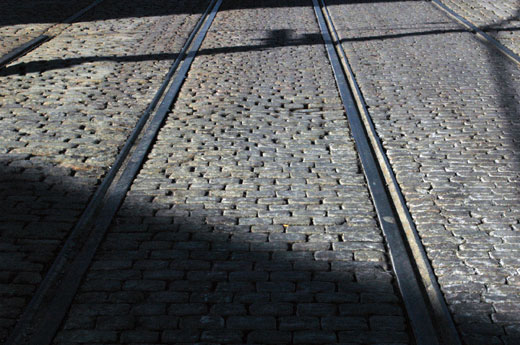
The Cincinnati Streetcar could soon become one of the first projects in the country to be funded by the Federal government's Urban Circulator grant program. The city of Cincnnati announced June 10 that the project received a Finding of No Significant Impact (FONSI) from the U.S. Environmental Protection Agency, a final step needed before the project could access the Urban Circulator funds it won in June 2010.According to Streetcar Project Manager Chris Eilerman, a key to passing that government-mandated standard has been a commitment to protecting not only the physical environment, but the cultural one as well."Because this project extends into Over-the-Rhine, which is pretty heavily regulated, we were really sensitive when looking at the impact," he said. "We want to make sure we don't produce a negative impact on the historic properties."Over-the-Rhine's historic collection of Italianate architecture is as much a part of the environment as air and water quality - at least in terms of what the EPA's environmental assessment evaluates. Eilerman said as part of the assessment, the city has promised to work closely with the Ohio Historic Preservation Office. The office will review designs for platforms, transmission wire poles and other streetcar facilities, to ensure they complement the historic neighborhood's overall look and feel."This is a neighborhood that grew up around streetcar transit," Eilerman said. "We view the resurgence in this type of transit as something that could make the neighborhood better, and we want to make sure we do that."He explained that, now that the FONSI is on the records, the project will work to complete initial design work and right-of-way negotiations. Throughout the process - especially in the design department - the Ohio Historic Preservation Office will provide review and oversight, to make sure Cincinnati's streetcar fits in with the past as it moves the city into the future.

Wasson Way bike path advocates hope to transform rail spur

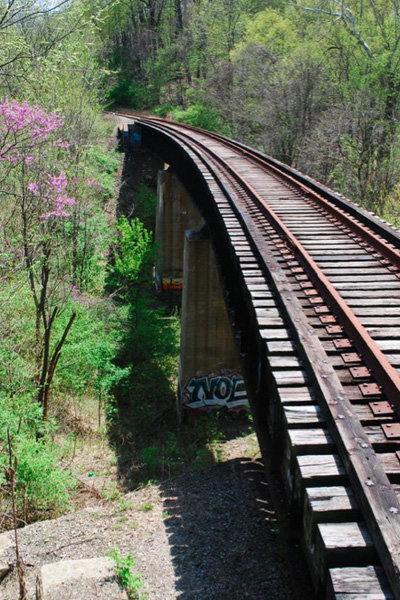
A group of residents from several Cincinnati neighborhoods spoke at the June 7 meeting of Cincinnati City Council's Quality of Life Subcommittee. Their subject? A recently closed railroad spur and a proposal to change it into a 6.5-mile cycling and walking path."This could really serve as an important connector for the many [multiuse path] projects Cincinnati has going on," said project advocate Jay Andress.The proposed project would convert a Norfolk Southern Railroad spur into a path that would connect with the Little Miami bike trail in Newtown and run into the heart of downtown. Advocates at Tuesday's meeting pointed out that the path would only cross seven roads in its entire length, making it a true rarity: a nearly uninterrupted trail running through several neighborhoods in a major urban area.But beyond the health benefits and transportation options that the path could provide, some residents at the meeting brought up another point: building the path could resolve a growing problem with the semi-abandoned line.Hyde Park Neighborhood Council President Anne Gerwin said the point where the line crosses Wasson Road has been a maintenance and safety issue for years. "We struggle many times each year to have the city and railroad maintain it," she said. The neighborhood's council passed a resolution supporting the project.Likewise, Hyde Park resident Lindsay Felder, who said her home is within sight of the track, said there's been a visible deterioration of it - and an uptick in people loitering along the weedy path - since it became inactive in 2009."We've always wondered about the tracks," she said, explaining that she began going door to door to drum up local support after meeting Andress and learning about the proposed project."We see it as a great upcycling of existing property that is underutilized," she said.Subcommittee chair Laure Quinlivan said there are a number of details to clarify before the project moves further forward, such as determining if Norfolk Southern has future plans for the line, and if an arrangement can be made that would allow the city to adapt the path into light rail if that becomes a future transit option."This is really a great proposal," she said. "The best ideas don't always come out of City Hall. If we could make this happen, it would be such a great asset to so many residents."Story: Matt CunninghamPhoto: Wasson Way Project

Bike Friendly Destinations talk plans, benefits of being two-wheel friendly

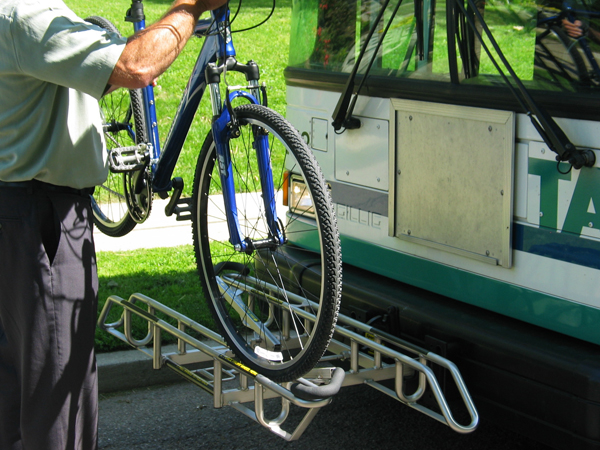
Cincinnati-based cycling advocacy organization Queen City Bike kicked off Bike Month in May with the launch of a new award. The Bike Friendly Destinations program honored 41 destinations at a May 2 ceremony, granting certifications ranging from Gold to Honorable Mention.Two Gold recipients, the Transit Authority of Northern Kentucky and the Mercantile Library in Downtown Cincinnati, said the changes they made that earned the designation were relatively simple and inexpensive. And while their motivations - and response from patrons and employees - differ, representatives from both said they're seeing benefits from being bike-friendly. TANK spokesperson Gina Douthat said that the transit organization didn't just rely on its highly visible bus-mounted bike racks for the award; a number of employee-facing changes have also made bike commuting an alternative for TANK staff. "Being an organization that's into alternative modes of transportation, we continually encourage employees to look at alternatives to single-occupancy vehicles," she said. TANK offers both indoor and outdoor bike storage at its offices, and Douthat said on-site showers and the ability for some employees to flex schedules make it easier for employees to ride to and from the office. "It gives them the ability to fit workouts into their lives a lot better," she said. Cedric Rose, part of the Mercantile Library's collection staff, said that he's seen an upswing in patrons riding in. "Among our patrons, we have some younger people who, that's just the way they get around," he said. "Overall, I definitely think there's been an upswing." Queen City Bike staff helped the library acquire a bike rack for its Walnut Street entrance, and the library has opened its 11th-floor lobby to let patrons park their bikes indoors. Cincinnati Department of Transportation city planner Melissa McVay, who has worked on a number of bike advocacy issues, said the awards could play a major role in reaching out to potential riders unfamiliar with the city's bike culture. "One of the things we struggle with is the people we're able to communicate with are already cycling," she said. Many of the winning businesses conducted Bike Month campaigns and publicity drives among their patrons, she added. "That's going to reach so many more people than we could ever reach on our own." And as non-riding patrons and employees of the award-winning businesses are exposed to the city's growing bike culture, Queen City Bike Program Coordinator Jess Linz said she hopes to see a more significant shift in the way Cincinnatians think about transit. "These groups are now representing a bike-friendly transportation mindset," she said. "There's this value in the private realm for this kind of cultural change." Writer: Matt Cunningham Photography by Matt Cunningham

Our Partners

Don't miss out!

Everything Cincinnati, in your inbox every week.

Close the CTA

Already a subscriber? Enter your email to hide this popup in the future.