West End / Brighton

This expansive neighborhood borders Over-the-Rhine in the shape of a sliver. Mostly residential, it has a rich history and diverse inhabitants, a beauty discovered by only the most discerning eye. The Dayton Street Historical District, a cluster of houses built mostly in the late 1800s, is on the National Register of Historic Places. City West, a mixed-income housing development just north of downtown in the neighborhood's southern-most point, is the biggest housing development in Cincinnati since World War II. The quiet streets have come alive with additions like the Mockbee across Central Parkway and a church renovation that will yield a climbing gym.

Former brownfield green-lighted for development

An eight-year-long city initiative to clean up a heavily contaminated 'brownfield' reached a culminating point this month. The Ohio EPA cleared the way for redevelopment of the Queensgate South industrial/business site on Mehring Way. The former junkyard is now a potential development site featuring 17 acres zoned for office, industrial or high-tech use."That was a long time coming," said Cincinnati Business Development Manager William Fischer. He explained that 50 years of use as a scrap yard had left the roughly 16-acre site contaminated with PCBs, heavy metals and petroleum products. This meant that any remediation work would have to meet the approval of both state and federal officials."There were contaminants on the site that were regulated by both the US and Ohio EPA," Fischer said. "It was a lot of work to coordinate those cleanups."Remediation of long-contaminated sites like this one is often a lengthy, expensive process, and this was no exception. The city's Strategic Program for Urban Redevelopment (SPUR) identified the site in 2001, and began establishing development agreements to conduct remediation over the next two years. In 2003, the city and Queensgate South Realty LLC partnered to win a $3 million Clean Ohio Revitalization Fund grant. That began the process of remediating the site: crews removed the hazardous materials, or contained them so that they could not escape into the surrounding environment. The resulting cleanup earned the site covenant-not-to-sue protection from the Ohio EPA: future property owners will be protected from liability for the site's toxic past. The remediation project turned the site of Cincinnati's first rail yard and a long-time environmental eyesore into a development opportunity Fischer hopes will compete with the best the area's suburbs have to offer."The site is obviously a good location for industry that needs to be close to the river, to downtown and to Northern Kentucky," he said. "It's a very key piece of property. This kind of levels the playing field a little bit."He added that the remediation project is being completed at an appropriate time; the economic turnaround is slowly increasing business interest in new development. Companies that had held tight to their purse strings are beginning to explore new expansion or relocation projects, and he said a number have started exploring the city."We've got brokers calling us looking for sites for new construction. I haven't had calls with that level of excitement coming in a while."Writer: Matt CunninghamPhotography by Matt Cunningham

Harmony Garden research academy trains residents to lead

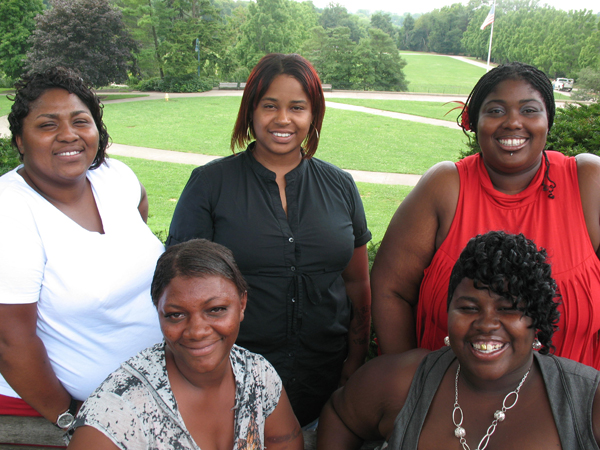
This summer, a small group of residents in the West End will be part of a new kind of leadership development program. A year-long academy will train four women how to conduct research, how to identify health disparities and how to hone their own life and workforce skills.The Community Resident Research Academy, the latest programming effort by the non-profit Harmony Garden, builds on more than three years of work alongside West End residents.In that time, community researchers - all women, all mothers - have surveyed their neighbors to find out what kinds of help and support they want and need. The community research team organized a healthy, happy, hazard-free program, says Executive Director Lisa Mills. "Over the course of the past four years, they have come so far," Mills says. Resident researchers planned monthly workshops where they and their neighbors learned about high blood pressure, cholesterol and nutrition on a budget. They even started a walking club. What excites Mills the most, though, are the intangibles that women have taken from being part of the research team. "Being healthy and striving for a healthy life impacts their children, their families and their community," she says. "They have connected all of the dots."Now Mills and the rest of her all-female team at Harmony Garden want to extend the dots by giving neighborhood women a path to reach broader audiences and enhance their ability to impact community development and urban planning issues. They will also design and complete a project to benefit their community. The academy is a pilot program that she hopes will act as a kind of Leadership Cincinnati for women living in disadvantaged communities.Women accepted into the academy will be paid $8 per hour for the time they spend learning research skills, developing personal reflections and building their capacity to lead. Mills and her team have structured the program to allow the women time to continue to manage their own lives."We realized the women's lives are very chaotic," Mills says. "They are all mothers. They are doing the best they can for their kids." While Mills and her team are busy recruiting women for their first class, they are also seeking additional funding. "It's a very expensive program," says Mills, who estimates it will cost $20,000 per year to sponsor one class member. Do Good: • Underwrite good news. Harmony Gardens is on the lookout for a sponsor for their newsletter, which reaches 6,000 homes and businesses in the West End. • Fund a scholarship. Mills and her team welcome any level of support to offset the academy's $20,000 per student per year price tag.• Show your stuff. Volunteer as a presenter in the academy. "It's important to expose women to people doing different jobs, particularly around health," Mills says. She hopes to have a variety of speakers to help inspire the West End women, many of whom have not traveled far outside their neighborhood boundaries. Email Lisa Mills for more information.By Elissa YanceyPhoto courtesy Harmony Garden

Hype, Distinctly Local partner on urban walking map

You can't get more local than a map as a way to highlight local businesses and area landmarks. But a new company and the Cincinnati USA Regional Chamber's YP arm have partnered to create a fun, visually appealing map that personifies its creating company's name: Distinctly Local.The first of a series of planned urban and specialty walking maps was unveiled last week at the Red Tree gallery and coffee shop in Oakley. The slick, full-color map outlines the Cincinnati core, as well as Newport and Covington in Northern Kentucky.The maps are geared towards people in the city during a long weekend or an event, as well as those recently transplanted or planning to move to the city, said Joe Hansbauer, who helped make the map a reality."We wanted to create a product that was accessible, and shows the places that give Cincinnati its unique flavor," he said.The idea for the map came from Hansbauer, Doug Brauch, and John Mark Ouderslyus, friends and members of Give Back Cincinnati. It was designed and illustrated by Standard Design Partners. Plans are to update the map annually, along with support from business sponsors. Distinctly Local plans other specialty maps around events like the Flying Pig or MidPoint Music Festival.The animated map has traditional street, neighborhood and interstate makers, before delving into more creative territory. It marks neighborhood business districts, locally owned businesses and city landmarks like Findlay Market, Cincinnati Museum Center and the World Peace Bell in Newport.It also highlights urban places important to Cincinnati's identity like Skyline Chili, Graeters, Paul Brown Stadium and Carew Tower. These places are drawn and named, so users can clearly make out the football and baseball stadiums, see the crown atop the Great American tower and get a tiny glimpse of the Genius of Water on Fountain Square. And unlike most maps today locations are measured in walk time."We were looking for a piece that would really showcase our region, the neighborhoods close to the central core and highlight the cool, unique, independent shops, vendors and restaurants that are all around us," said Jennifer Young, Marketing Communications manager for HYPE (Harnessing Young Professional Energy).The map will be included in new hire packets for Chamber members, and will also be distributed at area hotels, convention centers and real estate offices. Eventually the map could be online as well.Writer: Feoshia HendersonSources: Jen Young, HYPE Marketing Communications and Joe Hansbauer, Give Back CincinnatiYou can follow Feoshia on Twitter @feoshiawrites

Favorite Cincy Find: Brush Factory

A Cincinnati couple turned a 120-year old factory in Brighton into a creative workshop for their brand known as Brush Factory. Rosie Kovacs utilizes the first floor for designing and sewing clothing items while Hayes Shanesy refurbishes motorcycles and creates wood objects and furniture for their retail shop in Oakley. Read the full story here.

B&B’s offering urban alternative to the traditional hotel stay

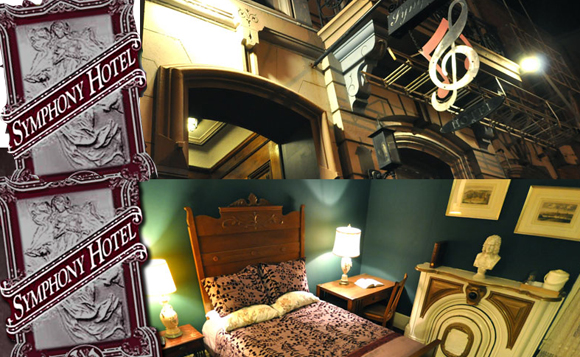
A weekend at a bed and breakfast conjures images of peace and quiet. It's a place where you can get away from the outside world, enjoy nature and be with your thoughts.That's unless that bed and breakfast is in the city.Not all Bed and Breakfasts cater to the "peace and quiet only" crowd. Greater Cincinnati's urban B&B's attract locals and those in nearby cities that crave excitement, not silence. These travelers prefer a night out on the town instead of a cozy night in. They'd rather catch a symphony than stroll grounds. A number of such B&B's dot Cincinnati and Northern Kentucky. They're located in Over-the-Rhine, downtown, and points outward, stretching across the river to Newport, Covington and Bellevue. These B&Bs have the expected creature comforts: big breakfasts, plush quilted beds, and antique furnishings, but they also offer the bonus of the city, just minutes away from art museums, concert venues and playhouses and professional sports teams."People get to feel like they're far away, but they're really close enough to their homes and families," said Weller Haus Bed & Breakfast owner Leanne Saylor. "I think people want to be able to get out to dinner for evening or shop. People say they want to get away from it all, but we're so wired today that we really want access to things we're used to."About 70 percent of Saylor's lodgers come from a 50-mile radius of her B&B's location in Bellevue, with much of the rest coming from Indianapolis, Louisville, Columbus and other nearby cities. She also gets football fans who spend a weekend when catching a Bengals game.Saylor bought the established B&B about seven years ago. Located in a residential neighborhood, it's in two side-by-side renovated Victorian Gothic homes that are listed on the National Register of Historic places. And lest you think it's too big city, the Weller Haus is also known for its secluded backyard gardens.In Over-The-Rhine, one bed and breakfast has proved so successful that it's expanding into an adjoining historic building. The Symphony Hotel & Restaurant, near Cincinnati's Music Hall, attracts guests looking for dinner and a show before retiring to their rooms. Located on 14th Street in a renovated mansion, its six rooms (three more will be added with the expansion) are named after composers such as Mozart, Beethoven and Bach. The Hotel will continue its popular food service before CSO concerts at Music Hall during the renovations. Writer: Feoshia Henderson

Principal turns around failing high school, one student at a time

Principal Anthony Smith, of Taft Information Technology High School, transformed the school from a failing, crime-ridden place to a successful, appreciated institution. Smith focused his attention towards his teachers to begin improvements nine years ago. As a result, the graduation rate jumped from 18 percent to 95 percent, making Taft an example of how to save troubled schools one at a time. As a result of his students' success, Smith was named ABC New's "Person of the Week."Read the full story here.

Building Brands and Rebuilding the Workforce at Nehemiah

Two successful business veterans give hope to chronically unemployed workers with a company focused on building brands, creating jobs and changing lives in Cincinnati's inner-city.

OTR Brewery district master plan comes into focus

Registration opens March 15 for an April 9 workshop that will identify ideas for enhancing and preserving Over-the-Rhine's Brewery District, a significant facet of Cincinnati's brewing history. (Check here for details on the workshop. Space is limited.) The Brewery District includes Over-the-Rhine, home to 12 brewery structures, including that of Christian Moerlein Brewing Co.Leading the small-group workshop is the Brewery District Community Urban Redevelopment Corporation, a nonprofit organization aiming to make the area an economic tour-de-force. It's developing a master plan that will focus on more public and private developments and consider potential developers. The organization is building on its 2006 master plan, which called for residential redevelopments in the Findlay Market area and a streetcar system, among others. "Our goal is to refine the work that's already been done," said Steven Hampton, executive director of the Brewery District, and "build upon the great successes that are already happening, develop these key projects, and identify the partners and finances to do that." An upcoming workshop will shape the master plan, according to Jeff Raser. Raser is a principal with the architecture firm Glaserworks, hired to do pre-development planning for the Brewery District. "We want to hear from people, especially those who live and work and own businesses in the Brewery District," Raser said in reference to the April 9 workshop. "What do they really want to see in the next five years or even 20 years? What is their vision?"Carl Solway has some early ideas. At the press conference announcing the Brewery District's plans, the owner of Carl Solway Gallery asked if the district's boundaries could expand to the West End neighborhood, west of Over-the-Rhine. That's where Samuel Adams Brewery Co. operates, and where Solway owns a 40,000-square foot building, housing exhibitions and artists spaces."I see the potential of taking the concept much further by including what has the potential to be a very serious and important arts neighborhood," he said.Hampton acknowledged that idea and says the upcoming workshop will help flesh that out."Historically, the Brewery District really consisted of Over-the-Rhine and the West End. We've been very careful in the past not to lock ourselves into a specific boundary to respect that."Writer: Rich Shivener

Divine Inspiration: New Uses for Old Churches

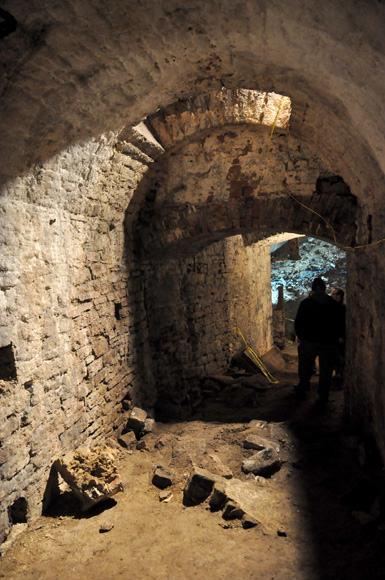
A recording studio, boutique hotel, and arts center are just some of the innovative approaches Cincinnatians are taking to preserve and reimagine our historic houses of worship.

Finding hip-hop hot, inspirational at Elementz

At the Cincinnati Pops 2010 Christmas concert, "The Little Drummer Boy" never looked so jazzy. When dancers from Elementz, the Central Parkway studio where "hip-hop" is always mentioned in the same breath as "respect," took the stage, Tom Kent could not have been more proud. "This is an unusually gifted group of youth," says Kent, an initial funder and now executive director of the non-profit Elementz. What started in 2005 as an outreach effort designed to give young people in Over-the-Rhine and the West End a safe place to hang out after school has evolved into an incubator of positive creativity. Open four days a week from 2:30 until 10 p.m., Elementz uses hip-hop to engage and inspire youth. Young men and women take classes and practice honing their skills in rapping, dee-jaying, dancing and grafitti, or urban art. Kent says that on an average night, 30 to 45 young people show up to record, to learn, to talk and to listen. "We're developing a real reputation as a safe place where you are treasured," Kent says. With more than 320 members, Elementz ranks include aspiring artists aged 14 to 24, some of whom have attained their GEDs since starting at the studio. Some are preparing for college; some are already enrolled. But Kent says that many of the young artists don't want to talk about outside measures of accomplishment. "They want to talk about how they found themselves, how they found family when they needed family," he says. At the same time, they are preparing for public performances at neighborhood coffee shops, community centers and special events, including their upcoming sixth anniversary concert at the 20th Century Theater in Oakley. A sample rap from MC Forty: "Cincinnati We Be" C-I-N-C-I-N-N-A-T-I's where I'm at.That is where I live and that is where I rap.If you're raised by the city of the gray and the grittyYou can take from the city, but try and give back.I walk past mass cats everydayWith a "C" on their hat, claiming "Down The Way"And "Over the Rhine," but what do they sayWhen asked about faith and hope and change?Most will say that they gon' stay hustlers,Posted on Vine Street waiting for customers -Grinding, crunking, swagging, stunting,Passing time and up to nothing!But what about buildin' children,Education, preachin', prayin',Working, legally. Are you feeling me?I'll help healing you, you help healing me. Do Good: • Donate: Visit Elementz and make a contribution to their creative cause. • Enjoy the show: Attend Elementz Sixth Anniversary Showcase, March 10, 2011, 8-11 p.m., at the 20th Century Theater. Tickets are just $10. • Tweet about it: Follow Elementz on Twitter, @elementzhiphop  

Our Partners

Don't miss out!

Everything Cincinnati, in your inbox every week.

Close the CTA

Already a subscriber? Enter your email to hide this popup in the future.