Mt. Auburn / Prospect Hill

Cincinnati's first "suburb" sprung up when downtown and Over-the-Rhine dwellers began to crawl out of the once sooty basin seeking the fresh country air of the surrounding hillsides. At Mt. Auburn's base, homes in the eclectic Prospect Hill Historic District cling to the swift rising slope (stop in at Milton's Prospect Hill Tavern if the climb up Sycamore Street proves too much) providing gorgeous, panoramic views of downtown, Mt. Adams and Northern Kentucky. At the top of the hill, the Flatiron Café anchors the southern edge of the business district, once a Mt. Auburn millionaire's row, now home to medical offices and organizations along modern day Auburn Avenue (including the birth home of bathtub-bursting U.S. President and Supreme Court Justice William Howard Taft). Home to Christ Hospital, one of the oldest medical facilities in Cincinnati and a perennial national contender for top heart hospital, and three city parks and tennis courts, you're sure to keep your ticker in tip top shape here. This diverse community offers multiple, affordable living options including single family historic homes, student apartment housing and gorgeous Italianate mansions.

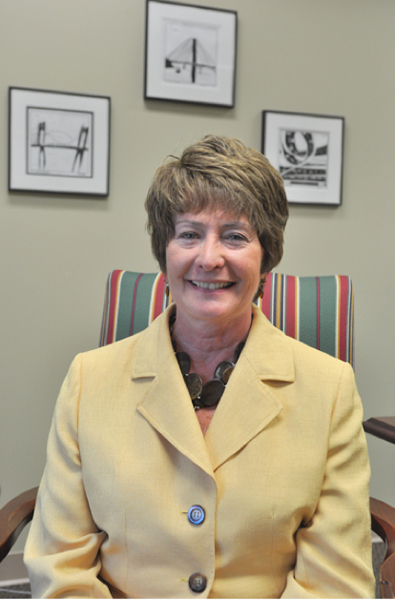
CPS summer school makeover gets attention

While summer might be fading from your mind as temperatures dip and leaves fall, one of its less pleasant remnants continues to impact children and teachers around the region—summer brain drain, or the loss of knowledge through weeks outside of the structured learning environment of schools. Community and school leaders gather this week to talk about "summer slide," part of Cincinnati Public Schools efforts after being one of only six school districts in the country to receive Wallace Foundation funding for summer learning initiatives. CPS Superintendent Mary Ronan will be joined by policy researchers and foundation executives for the forum. Talk will center around the district’s innovative Fifth Quarter program, launched in 2009 as a non-mandatory four-week full-day extension of the school year. The Wallace Foundation funding was awarded to support the curriculum development and design of Fifth Quarter and ensure that students’ progress is monitored closely. "We see the Fifth Quarter as the best way to allow learning to continue right after the regular school year ends,” Ronan says. Cited as a national success story, the non-mandatory (it bears repeating, non-required summer school!) Fifth Quarter combines academic rigor with community partnerships. After mornings of learning, students in 16 participating schools enjoy fine arts, technology, fitness and environmental education activities -- all at no cost (it bears repeating--no cost!) to the district. During the forum, Ronan will be joined by Strive Partnership’s Greg Landsman, Jennifer Sloan McCombs of the RAND Corporation and Ed Pauly of the Wallace Foundation in a discussion of best practices and why summer learning matters. By Elissa Yancey
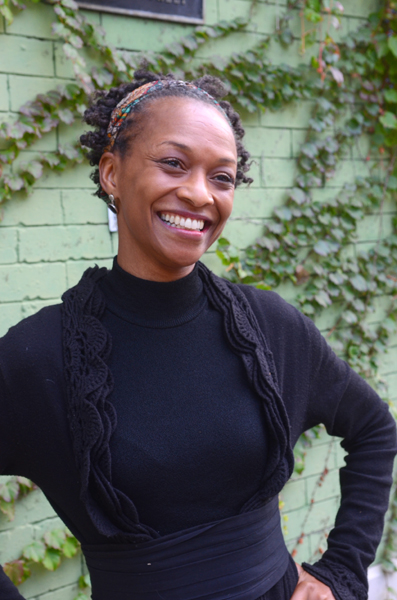
Soapbox special: MORE women to watch

Last week you met five remarkable women changing the city's intellectual and creative landscapes. This week, we're serving up another batch of smart thinking, creative planning and big dreaming by five more. They talked with Soapbox's Evan Wallis and Scott Beseler so you can read, enjoy and be inspired.

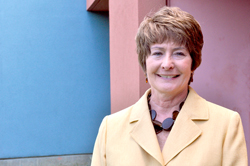
Carla D. Walker: President/CEO, think BIG strategies llc
Green Learning Station programs set to bloom

When the Civic Garden Center of Greater Cincinnati cuts the ribbon Aug. 20 to open its Green Learning Station, it will do more than add a new exhibit to its facility on Reading Road. The nonprofit center, which has provided horticultural education and resources to green-thumbed Cincinnatians since the 1940s, will offer new services, education and scientific information.The $1.2 million Green Learning station showcases a wide range of environmentally friendly technology, including a composting facility, a green roof and pervious pavers to control water runoff."We've got all of this technology concentrated in a very small area," says CGC program manager Ryan Mooney-Bullock. The technology allows the CGC to expand its educational offerings. Along with its traditional programs focused on growing flowers, fruits and vegetables, the center can now offer courses on composting, rainwater management as well as other environmental topics that shape quality of life. Consequently, the center's long-standing field-trip programming now includes options for middle-and high-school students, and Mooney-Bullock says professional development courses are being created for landscape architects, builders and green professionals.CGC board member and Green Learning Station project manager Betsy Townsend says this spirit of going above and beyond springs from the very process that launched the station. Input from the variety of granting agencies that funded the project, such as the Metropolitan Sewer District, which supported the project through a $400,000 grant, helped determine its final focus."The details of the project expanded," Townsend says. "We were able to incorporate elements that weren't in our original budget." Some of those elements include research, a new avenue for CGC to pursue with its facilities. Environmental sensor supplier UrbanAlta provided equipment and expertise that turned the Green Learning Station's exhibits into measurable test pieces for environmental technology. Mooney-Bullock explains that students from the University of Cincinnati and environmental engineers are using the sensors to track how the station's green roof, pervious pavers and other rainwater control measures perform on a near-real-time basis. The data collected could help improve the city's runoff management, a major issue for the MSD. "They really need that data to make the case to install the technology on a wide scale, and to support policy changes," she says.Townsend adds that the Green Learning Station will continue the CGC's mission of public education as well, through self-guided tours. And as this year's plants take root and begin to flourish in 2012, she says the CGC will work to reach out to more members of the public than ever."That's a piece we will really be pushing next spring," she says. By Matt Cunningham Follow Matt on Twitter @cunningcontent

Salad bars in pork city

Cincinnati isn't the only town in the country that's bringing salad bars to its public schools (there's New Haven, and New Orleans), but it has the rare distinction of once being known as Porkopolis, from the time – the early-to-mid 19th century – when herds of hogs roamed its streets, and it was the biggest pork-packing center in the country.Read the full story here.

Head of the class: Mary Ronan, CPS superintendent

This fall, Cincinnati Public Schools celebrate higher test scores and make a plea for critical funding. As CPS students head back to school this week, Soapbox quizzed Ronan about the year ahead, the district she loves and her favorite school supply.

New for aspiring doctors, the people skills test

The University of Cincinnati Medical School joins seven other top medical training programs, including Stanford and UCLA, to include nine brief interviews to test if potential medical school students have the social skills needed to survive in a field where communication is critically important and too often undervalued.Read the full story here.

Six school districts, including Cincinnati Public Schools, to participate in major project

Children in low-income communities in six cities, including Cincinnati, will take part in improved summer learning programs, beginning this summer, thanks to substantial grants from the Wallace Foundation. Cincinnati Public Schools were chosen, in part, because of the Fifth Quarter program, which taps community organizations to provide fine arts, technology, fitness and environmental education. Read the full story here.

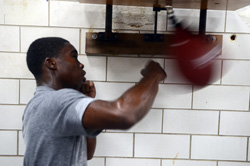
Cincinnati’s Boxing Legacy Grows with Olympic Event

Mention Cincinnati sports and the conversation can span from the Red's fabled history to the off-field exploits of the Bengals. But there's another sports scene that is capturing national attention - even drawing a pre-Olympics qualifying event to the city next month - that everyone will be talking about soon: amateur boxing. 

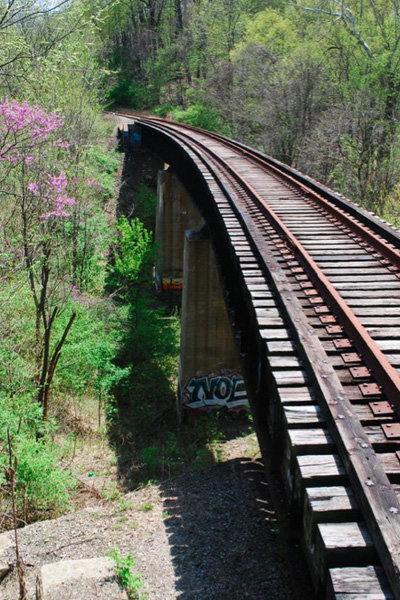
Wasson Way bike path advocates hope to transform rail spur

A group of residents from several Cincinnati neighborhoods spoke at the June 7 meeting of Cincinnati City Council's Quality of Life Subcommittee. Their subject? A recently closed railroad spur and a proposal to change it into a 6.5-mile cycling and walking path."This could really serve as an important connector for the many [multiuse path] projects Cincinnati has going on," said project advocate Jay Andress.The proposed project would convert a Norfolk Southern Railroad spur into a path that would connect with the Little Miami bike trail in Newtown and run into the heart of downtown. Advocates at Tuesday's meeting pointed out that the path would only cross seven roads in its entire length, making it a true rarity: a nearly uninterrupted trail running through several neighborhoods in a major urban area.But beyond the health benefits and transportation options that the path could provide, some residents at the meeting brought up another point: building the path could resolve a growing problem with the semi-abandoned line.Hyde Park Neighborhood Council President Anne Gerwin said the point where the line crosses Wasson Road has been a maintenance and safety issue for years. "We struggle many times each year to have the city and railroad maintain it," she said. The neighborhood's council passed a resolution supporting the project.Likewise, Hyde Park resident Lindsay Felder, who said her home is within sight of the track, said there's been a visible deterioration of it - and an uptick in people loitering along the weedy path - since it became inactive in 2009."We've always wondered about the tracks," she said, explaining that she began going door to door to drum up local support after meeting Andress and learning about the proposed project."We see it as a great upcycling of existing property that is underutilized," she said.Subcommittee chair Laure Quinlivan said there are a number of details to clarify before the project moves further forward, such as determining if Norfolk Southern has future plans for the line, and if an arrangement can be made that would allow the city to adapt the path into light rail if that becomes a future transit option."This is really a great proposal," she said. "The best ideas don't always come out of City Hall. If we could make this happen, it would be such a great asset to so many residents."Story: Matt CunninghamPhoto: Wasson Way Project

Our Partners

Solutions journalism takes time, trust, and your support.

Close
Psst. We could use your help today!

Don't miss out!

Everything Cincinnati, in your inbox every week.

Close the CTA

Already a subscriber? Enter your email to hide this popup in the future.