Avondale

Avondale is Cincinnati’s fourth largest neighborhood and home to the nation’s second oldest zoo, the Cincinnati Zoo & Botanical Garden. Burnet Avenue runs through the community and serves as headquarters for two of the region’s top hospitals and research centers: Cincinnati Children’s Hospital Medical Center and University of Cincinnati Medical Center. The neighborhood abuts both Xavier University and UC main campuses. The developing Cincinnati Innovation District is anchored by 1819 Innovation Hub on Reading Road, just off of interstate I-71 at the Martin Luther King Dr. exchange.

Urban farming program keeps growing at Findlay Market

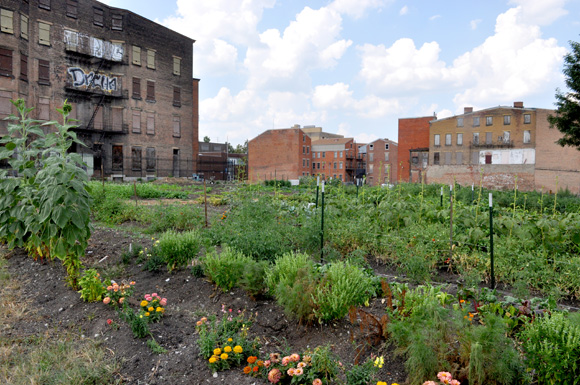
Hundreds flock to Findlay Market every week to stock their pantry, snack on samples and pay homage to the local agro-businesses that surround the city. But Findlay Market also gives residents the opportunity to learn about sustainable farming from the ground up, literally. In partnership with the USDA, The Corporation for Findlay Market has been training de facto urban farms hand since 2009 to cultivate produce on local farm land that will eventually be sold at the market, thus increasing access to locally grown foods to Cincinnatians.The project, dubbed Findlay Markey Farms!, recently received another $30,000 grant from the Greater Cincinnati Foundation  http://www.gcfdn.org/ to continue the farming on urban acres within the city. "We created to the project because we knew we had more demand for local produce than we had supply," says Karen Kahle, resource development director for Findlay Market. The grant allows Findlay Market Farms! to hire an urban farming manager, in partnership the Civic Garden Center.  It also helps train two dozen apprentice farmers and provides funds for equipment and supplies.The four plots of land used by Findlay Market Farms! are located in Over-the-Rhine, Hartwell and Westwood. Hundreds of volunteers from local organizations, schools and universities have helped with the project, Kahle says. They recently hired their fourth co-op student in urban planning from the University of Cincinnati's College of Design, Architecture, Art and Planning (DAAP) Kahle says that the skills Findlay Market Farms! teaches could help residents make a career of urban farming."We feel confident that on a quarter acre lot with an extended growing season, folks can make living as an urban farmer after a couple years," she says.Do Good:• Volunteer.  Donate a few hours a week to help maintain a plot in your area. Email for details.• Go shopping. Support the local growers by purchasing produce at Findlay Market.• Join the Friends of Findlay Market. Stay up-to-date on the latest news and opportunities at the Market.By Ryan McLendonPhoto courtesy Friends of Findlay Market

Nuisance ordinance reform a key to healthy neighborhood development

Residents of several Cincinnati neighborhoods gathered at Tuesday's meeting of the city's Public Safety Committee to vent frustration. Their concern is the pace of proposed reforms that would refine a city ordinance intended to root out crime and public nuisance hot spots.Chapter 761 of the Cincinnati Municipal Code, better known as the chronic nuisance ordinance, gives the city authorization to impose fines and other penalties for landlords whose properties are the site of significantly-above-average numbers of police calls for service. Since its creation in 2006, the ordinance has endured a number of lawsuits over its constitutionality, and underwent modification in early 2009. A council motion filed at the end of 2010 called for public hearings on the changes, in response to public concern that the changes weakened the law.That hearing was supposed to have taken place no later than January 2011. It has yet to be scheduled. And for a number of city residents, the matter is getting tiresome. The debate over the law's final form has the potential to weaken it too much, they say, and they expressed concern that the ordinance isn't being enforced in the meantime."I am so fed up and tired of having to come down here over the same issue, just to see that the ordinance is enforced," said North Avondale resident Michelle Baxter.Westwood resident Chris Kearney agreed, and added that he sees the chronic nuisance ordinance as a key to healthy development in Cincinnati neighborhoods struggling with crime and blight."I believe the chronic nuisance ordinance is a part of solving our budget situation," he said. "People are losing confidence in our neighborhoods."Council members Cecil Thomas and Charlie Winburn responded to the concerns."I agree that this should have been added to the agenda a lot sooner than now," said Thomas, who noted that part of the delay was due to changes in drafts of the revised law."The city administration has not really responded in the last seven to eight months," said Winburn. "I'm baffled at why this has taken so long."But sorting out the problem became a convoluted matter as the meeting progressed. Winburn threatened to call a special session of council to address the issue if it didn't move forward. Thomas then noted that council was still waiting to receive one version of the draft resolution - from Winburn's office. The competing versions of the revision were on the subcommittee's agenda to be addressed, but could not be addressed, since they are still technically under revision and have not been finalized as drafts.A back-and-forth discussion over draft resolutions, revisions and the timing of the issue ensued, and the subcommittee meeting ended without council being able to set a date for hearings on the chronic nuisance ordinance. Thomas expressed interest in moving forward in the next two weeks, but sounded doubtful council could address the issue before August.

Wasson Way bike path advocates hope to transform rail spur

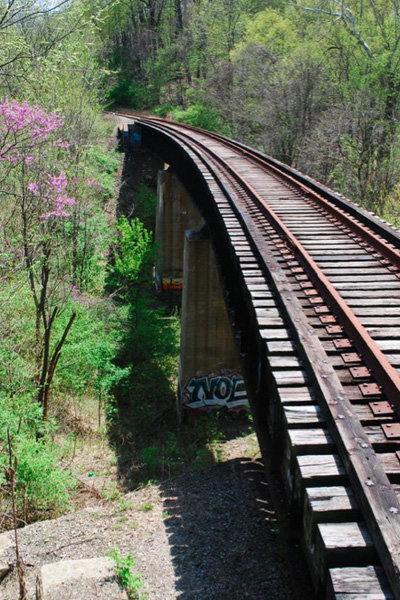
A group of residents from several Cincinnati neighborhoods spoke at the June 7 meeting of Cincinnati City Council's Quality of Life Subcommittee. Their subject? A recently closed railroad spur and a proposal to change it into a 6.5-mile cycling and walking path."This could really serve as an important connector for the many [multiuse path] projects Cincinnati has going on," said project advocate Jay Andress.The proposed project would convert a Norfolk Southern Railroad spur into a path that would connect with the Little Miami bike trail in Newtown and run into the heart of downtown. Advocates at Tuesday's meeting pointed out that the path would only cross seven roads in its entire length, making it a true rarity: a nearly uninterrupted trail running through several neighborhoods in a major urban area.But beyond the health benefits and transportation options that the path could provide, some residents at the meeting brought up another point: building the path could resolve a growing problem with the semi-abandoned line.Hyde Park Neighborhood Council President Anne Gerwin said the point where the line crosses Wasson Road has been a maintenance and safety issue for years. "We struggle many times each year to have the city and railroad maintain it," she said. The neighborhood's council passed a resolution supporting the project.Likewise, Hyde Park resident Lindsay Felder, who said her home is within sight of the track, said there's been a visible deterioration of it - and an uptick in people loitering along the weedy path - since it became inactive in 2009."We've always wondered about the tracks," she said, explaining that she began going door to door to drum up local support after meeting Andress and learning about the proposed project."We see it as a great upcycling of existing property that is underutilized," she said.Subcommittee chair Laure Quinlivan said there are a number of details to clarify before the project moves further forward, such as determining if Norfolk Southern has future plans for the line, and if an arrangement can be made that would allow the city to adapt the path into light rail if that becomes a future transit option."This is really a great proposal," she said. "The best ideas don't always come out of City Hall. If we could make this happen, it would be such a great asset to so many residents."Story: Matt CunninghamPhoto: Wasson Way Project

Airway Therapeutics helps premature infants with healthy lung development

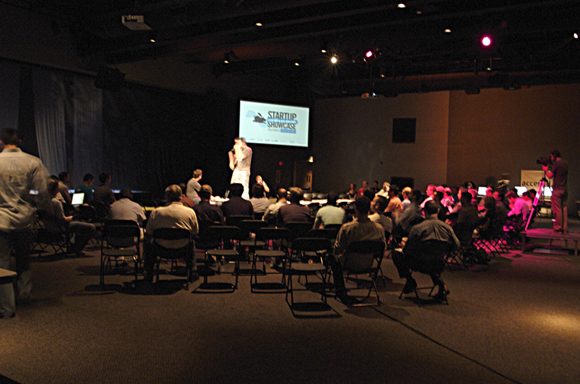
 In 2008, more than 530,000 babies were born prematurely in the U.S. That's about one in eight babies, according to the March of Dimes. Many have lungs that are not yet fully developed. That's where Airway Therapeutics comes in - the local business was created to help premature infants with their lung development and even survival rates.Based on 10 years of research at Cincinnati Children's Hospital Medical Center, Airway Therapeutics was created to develop a surfactant protein that lines the surface and airways of babies' lungs to help inflate them and keep their air sacs from collapsing. Airway's initial focus will be on the prevention of bronchopulmonary dysplasia (BPD) and also the prevention and treatment of neonatal respiratory distress syndrome (nRDS) in very premature infants. Normally, lungs mature to produce surfactant in the seventh month of gestation. Very premature infants (before 32 weeks gestation) have generally not developed lung surfactant to make the transition during birth from fluid-filled lungs to lungs that can easily expand to handle air movement. Administering surfactant to these very premature infants shortly after birth allows them to breathe. Airway's product, rhSP-D, would be added to existing surfactant prior to treating a premature newborn, and has been shown in the lab of Dr. Jeffrey Whitsett to be useful in reducing lung inflammation, a condition associated with BPD. Dr. Whitsett is chief of the Section of Neonatology, and Perinatal and Pulmonary Biology at Children's. Bringing his research into the market is CEO Steve Linberg, Ph.D., who has more than 30 years of clinical research, drug development and biologic development experience. The company recently received a seed-stage investment by CincyTech - a Cincinnati-based venture development firm that invests in technology-based startup companies - and the Cincinnati Children's Tomorrow Fund. Each has invested $250,000 as part of a projected $1.2 million seed-stage funding round led by CincyTech. The company is headquartered at BioStart, the Cincinnati bioscience startup center located in Clifton, which is a previous investor in Airway.The new investment will allow Airway to meet with the Food and Drug Administration within a few months to confirm their plans to begin developing rhSP-D in combination with an already-available surfactant, and then file an Investigational New Drug (IND) application within 15 months. Linberg estimates a total estimated cost of $25 million to bring the drug to market."This drug will save babies that don't survive today and radically improve the lives of millions of others," says CincyTech Executive-in-Residence Mike Venerable.Writer: Sarah Blazak

Couple puts life on the line to find expert care at Ronald McDonald House

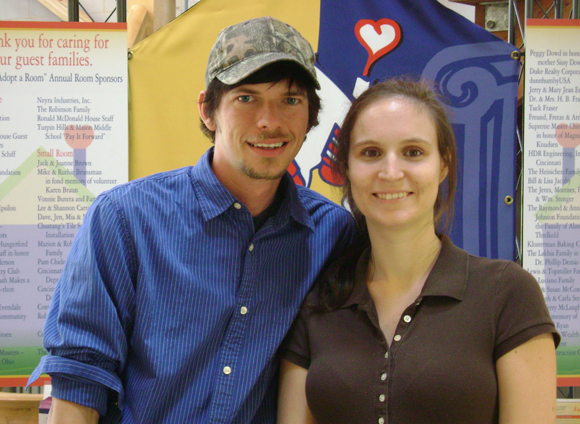
Angeline is still weeks away from being born, but she is already a miracle for her mother, LaDonna Thompson, and her father, Jared Litke. The young couple from Biloxi learned in April that their daughter-to-be had spina bifida - her spinal cord was literally growing outside of her back. They researched, consulted with experts and weighed heavy options.They could wait until her birth, then face a dangerous operation and growing odds that she might need to have a shunt inserted into her brain or spine to help drain spinal fluid. Or, they could try a risky but promising procedure available at only a handful of hospitals in the country. Fetal surgery to enclose their baby daughter's spinal cord before her birth offered the best chance that she might live a more normal life. "Only four hospitals in the country do it," says Litke, 24. "Vanderbilt and Cincinnati Children's are the top two."So Litke and Thompson, 19, who met while working at Petsmart in Mississippi, made plans to travel north. "We lost our jobs, we lost our home coming up here," Litke says. Though engaged, they don't qualify for the Family Medical Leave Act. They relied on family and friends to do what they could to help.They had three weeks to clear out their belongings and head north. It was a daunting task, but Litke and Thompson didn't hesitate. "Kids always come first," Litke says.Their stay at the Ronald McDonald House in Avondale started this spring. Thompson underwent a three-hour surgery in May to close Angeline's spine. Results looks promising so far, but because of the risks, the parents-to-be will stay in Cincinnati until Angeline's birth in September. The couple settled on the name Angeline early on, Litke explains. The word for "angel" has strong Irish and Italian roots, as do the parents.The Ronald McDonald House never withholds treatment because families can't afford it, but Thompson and Litke wanted to contribute something to offset the cost of treatment. In 2010, the facility housed more than 1,200 families from 49 states and 28 countries. Providing a room costs the agency $90 per day, but the suggested donation amount for families is just $25. Thompson and Litke could scarcely afford any additional expenses, so they decided to start a non-profit, Angeline's Hope, to raise funds for other families in similar conditions. They started collecting pull tabs from canned drinks, mostly via Facebook and friends in Mississippi, to donate to the Ronald McDonald House as well as to raise awareness of the organization's never-ending needs.Just 13 percent of its annual budget actually comes from McDonald's, explains ?Colleen Weinkam, communications manager of the Ronald McDonald House Charities of Greater Cincinnati. Cincinnati Children's Hospital Medical Center contributes 1 percent of the annual budget. But the lion's share of the funding, 84 percent, comes from donations and contributions. Last year, the organization raised more than $16,000 by cashing in hundreds of thousands of pull-tabs. Though it takes more than 300,000 pull-tabs to support a single night's stay in the house, Litke and Thompson were inspired by the House's existing pull-tab donation program. Plus, they wanted to give something back to show their appreciation and support of the people who became their family away from home. So far, they have collected more than 100,000 pull tabs. Their goal is to hit 400,000 before Angeline's birth. "It really does feel great knowing there is that there is all that support there," says Litke. "It's important to know that we are giving our little girl a better shot at living more of a normal life." Do Good:• Become a friend. Get the latest news on Angeline and fundraising on Facebook.• Sponsor a family. Pay for as little as one night for $25 or three months for $2,325 to cover costs for a family that is fighting for its life.• Be a Hero. Pick from more than a dozen options that package donations into categories including a "Basic Baker's" pack, a "Comfort" pack and a "Kitchen" pack.By Elissa YanceyPhoto courtesy Ronald McDonald House Charities of Greater Cincinnati

World of Opportunities Expands Through Grace of CincyDance

CincyDance! targets third-graders in city schools where students may have no other exposure to ballet, and uses the language of dance to build confidence and bridge communication barriers.  

Laughing Cincinnati Zoo penguin a hit on YouTube

A video of Cookie, the "Laughing Penguin" from the Cincinnati Zoo is a hit on YouTube with over one million viewers. The video shows Cookie hopping and laughing after being tickled by an animal handler. Read the full story here.Read the full story here.

SVP donors plant seeds of success at Civic Garden Center

Cincinnati's Civic Garden Center staff had a dream: turn an abandoned Avondale gas station site into a high-tech example of all things environmentally sustainable. The far-reaching goals of the Green Learning Station targeted builders, developers and public officials as well as homeowners and students. The innovative idea and environmental focus intrigued the then-new Social Venture Partners Cincinnati, a non-profit made up of individuals who invest their financial and professional capital in group grants, known as "partnerships." It was 2008, and SVP gave its first grant--$25,000--to the Civic Garden Center to support the development of the Green Learning Station, which was slated to open in 2009."They wanted to be relevant to today's communities," says Lisa Davis-Roberts, SVP Cincinnati director. So began a unique collaboration between grantor and grantee. SVP Cincinnati assigned a team of partners to support the project. Members included a financial management expert, a project manager from Procter & Gamble, a venture capitalist and a marketing expert.Through their research, partners discovered a major concern, located just blocks from the Civic Garden Center. The successful and popular Harold C. Schott Education Center at the Cincinnati Zoo & Botanical Gardens, which opened in 2006, already fulfilled many of the Green Learning Station's goals for environmental education.Instead of pulling funding, SVP members helped CVG partners develop a new strategy for the site, one more in line with their central mission of helping people garden. "Rather than try to be everything to everybody, the new Green Learning Station is about gardening for people," Davis-Roberts says.With rain gardens, vertical gardens and container gardens, pervius paving and composting, the station highlights practical ways that people can positively impact the environment in their daily lives. It will open to the public this summer."The cost is a fraction of what it was going to be," Davis-Roberts says. She explains that money, in this case a total of $55,000, is just the start of SVP's investment in a project. "We work with our organizations for three to five years." SVP members invest $6,000 of their own money for three years and also commit to an average of 100 volunteer hours—time spent sharing their expertise with non-profits. Davis-Roberts says that Cincinnati's roughly 20 partner units (which can be made up of more than one person) represent a wide range of skills, including legal, financial, IT, marketing and project management. Working with professionals, many of whom have years of experience in corporate settings, offers non-profits invaluable insights. "Non-profits need cash," Davis-Roberts says. "They also need capacity building." SVP Cincinnati, which launched in spring 2007, is one of 25 affiliates of the Seattle-based non-profit in cities across three countries. So far, the local branch has invested in four non-profits. "We want to grow an engaged community of knowledgeable donors," Davis-Roberts says. Do good:• Become a partner. Make the most of your social investments by using your expertise to be a part of positive change.• Link with SVP. See which of your LinkedIn connections are already involved. Then join them and start spreading the word.• Get your hands dirty. Learn more about the Civic Garden Center's Green Learning Station before it opens this summer.By Elissa Yancey Photo courtesy SVP Cincinnati

Cincinnati ranks #1 for best emergency care

 HealthGrades ranked the Top 10 Cities for Emergency Medicine, ranking Cincinnati as the number one place for the best emergency care. HealthGrades analyzed patient volumes, quality ratings, and range of services provided at each hospital.Read the full story here.

ArtWorks projects’ impact lingers on walls, in lives

It was a big, blank moldy wall on Covington's Washington Street this time last year. Now, a brightened, clean parking lot sits next to the building, which is home to Be Concerned, a non-profit that helps low-income families obtain necessities. The art has transformed a neighborhood eyesore to a sign of rebirth through art.The massive ArtWorks mural, with blues and greens that reflect the power of the Ohio River, is full of hopeful images—a flower, a fish, a grove of blooming trees. It is the result of the work of a team of 14 apprentice artists, lead artist Tina Westerkamp and three teachers. One young mural worker on the project made a two and a half our journey from his home in Roselawn to Covington to get to work each day. He took two busses and walked across a bridge. He did it for minimum wage. He did it to make art."We want to set these kids up for success," says Tamara Harkavy, founding director of ArtWorks, the largest employer of visual artists in the community. This is the 16th summer that ArtWorks has sponsored public art projects that do more than provide jobs and add a splash of color to neighborhoods. "These are real investments in community," says Harkavy. In Covington, for example, the mural inspired new lighting for the parking lot as well as a concerted effort to keep the space clean. Last year, ArtWorks received 400 applications and hired 75 apprentices between the ages of 14 and 21. This year, Harkavy wants more. She wants double, to be precise. By adding $300,000 to her $800,000 budget from last year, she can hire 150 apprentices to work on projects, including a C. F. Payne-designed mural, "Sing," on the side of WCET's office building in Over the Rhine. This summer, innovative art projects are planned for Avondale, Mt. Adams, Newport, Covington, downtown and Over-the-Rhine. One, at the Ronald McDonald House in Avondale, will employ 16 apprentices to add art to 26 guest rooms and conduct an art-making workshop with families. Harkavy knows the lasting impression made by ArtWorks extends beyond the paint on walls. With 15 summers completed, she often runs into lawyers, surgeons and professors and artists, all former ArtWorks apprentices, who credit the summer job with changing their lives.Do Good:• Adopt an Apprentice. As little as $25 can sponsor a young artist for a half a day's work creating a lasting piece of community-inspired beauty.• Interview an apprentice. Help ArtWorks narrow the talented applicant pool.• Hear why they do it. ArtWorks alums describe the program and their role in it.By Elissa YanceyPhoto courtesy of ArtWorks

Our Partners

Solutions journalism takes time, trust, and your support.

Close
Psst. We could use your help today!

Don't miss out!

Everything Cincinnati, in your inbox every week.

Close the CTA

Already a subscriber? Enter your email to hide this popup in the future.