
Coffee, conversation, and the cost of war
The war did not enter the room through headlines or maps. It came in through voices. Measured. Tired. Precise.
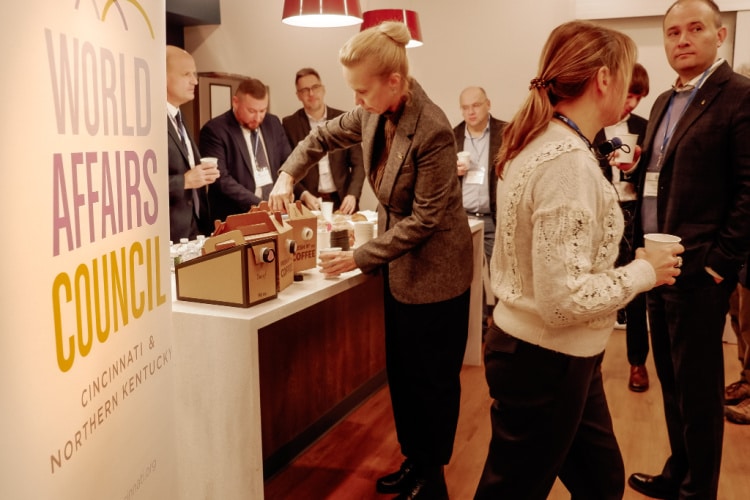
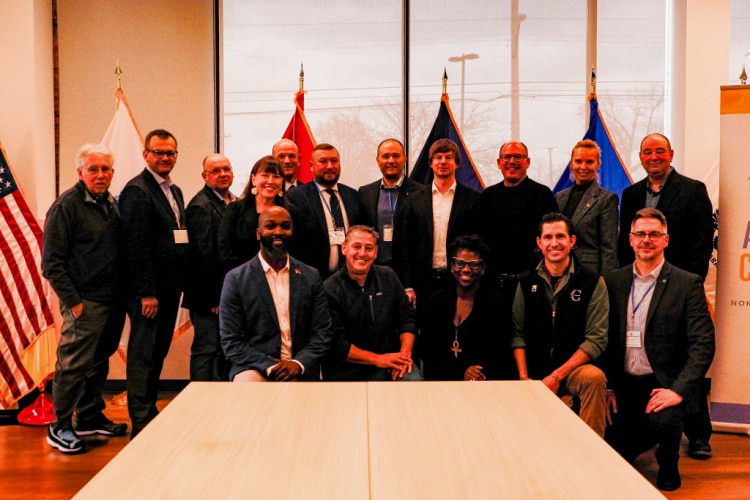

On a December morning in Northern Kentucky, Ukrainian educators, administrators, and policy leaders sat with Cincinnati community members over coffee and pastries, speaking plainly about universities operating under drone threat, students who can identify the sound of incoming weapons, and a workforce hollowed out by displacement and death. This was not a briefing. It was a conversation about survival, and about what comes after.
Hosted by the World Affairs Council of Cincinnati and Northern Kentucky, the Coffee & Conversations gathering was part of the U.S. Department of State’s International Visitor Leadership Program, a federally funded exchange that brings global leaders to the United States to engage directly with American institutions and communities. Titled U.S. Approaches to Market-driven Education and arranged by American Councils for International Education, the visit brought senior Ukrainian education leaders to examine how academic systems adapt to labor market demands, workforce shortages, and post-crisis recovery.
Ukraine’s education system has not paused for war. It has adapted.
In frontline regions, learning is almost entirely online. In other cities, hybrid systems dominate, with shelters built into campuses and classes interrupted by air raid alerts. Universities in Kyiv, Kharkiv, Dnipro, and other heavily targeted cities operate remotely. Institutions in comparatively safer regions continue in-person instruction under constant contingency planning.
The educators in the room were not speaking hypothetically. The delegation included rectors, vice-rectors, and senior officials responsible for accreditation, curriculum reform, vocational training, and digital transformation across Ukraine’s higher and professional education systems. Their portfolios span civil engineering, architecture, economics, water and environmental engineering, and national education quality assurance, disciplines now central to rebuilding infrastructure and stabilizing civic life.
Nataliia Shalimova, Chair of the Sectoral Expert Council at Ukraine’s National Agency for Higher Education Quality Assurance and Dean of the Faculty of Economics at Central Ukrainian National Technical University, spoke directly about the students themselves. They are strong, she said, but not untouched. Psychological strain is present everywhere, even when it goes unnamed. Many students work alongside their studies. Others seek semesters abroad, not for opportunity, but for something resembling normal life. Despite this, universities continue to graduate students.
Before the war, Ukrainian workers competed for jobs. Now, companies compete for people.
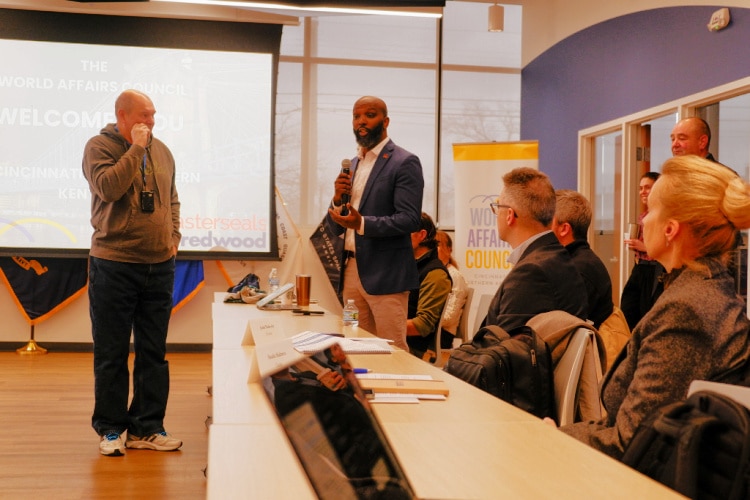
Millions have fled the country. Entire sectors, including manufacturing, services, and infrastructure, face labor shortages that did not exist before 2022. Businesses are increasingly willing to partner directly with universities and vocational colleges, offering training, early recruitment, and collaboration to secure future workers. This shift sits at the heart of Ukraine’s current education reforms, as institutions race to align curricula with rapidly changing labor needs.
Ukraine’s vocational education system, closer to European models than U.S. community colleges, allows students to earn professional qualifications alongside secondary diplomas. That system has become critical to national recovery efforts, particularly as the country modernizes accreditation, quality assurance, and competency-based education. But reform is unfolding under fire.
Educators described trying to modernize programs amid blackouts, displacement, and constant security threats. The challenge is not merely economic. It is existential. Who rebuilds a country when its people are scattered across continents?
The conversation repeatedly returned to veterans.
Ukrainian delegates listened closely as leaders from Easterseals Redwood shared lessons from U.S. veteran transition programs, emphasizing reintegration, mental health support, and community-based care. The parallels were immediate. Ukraine is not preparing for a distant post-war future. It is already managing a society shaped by combat trauma.
Volodymyr Zelenyi, Acting Director of the Verkhniodniprovsk Vocational College at Dnipro State Agrarian and Economic University, framed the moment through an anthropological lens, citing Margaret Mead’s definition of civilization. Civilization, Mead argued, begins with a healed femur. A healed bone proves that someone stopped, shared resources, and protected another human long enough for healing to occur.
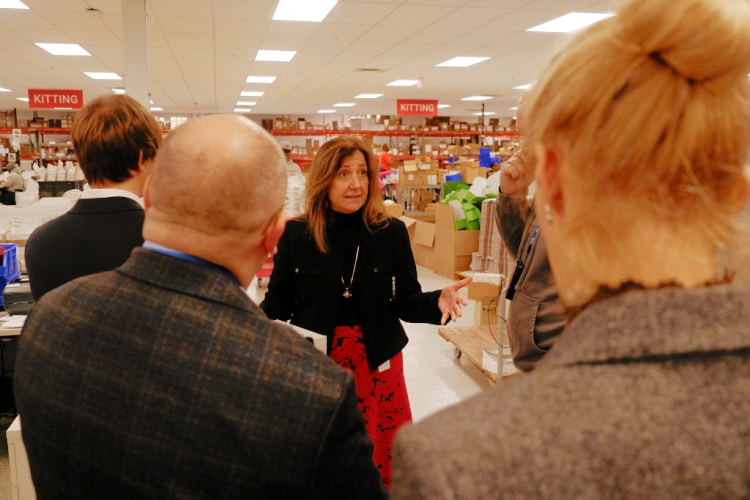
The Ukrainian educators did not disagree. Zelenyi warned that what Ukraine is facing now is not only a war over territory, but a war of power rather than law, an attempt to replace rules with force and survival with domination.
Several participants described cities bombarded at night and restored by morning. Streets swept clean before dawn. Life continuing under conditions that are, by any ordinary measure, intolerable. Psychological exhaustion, they noted, is not incidental. It is part of the strategy.
This gathering was not symbolic. Cincinnati, with its long-standing ties to Ukraine and its focus on workforce-aligned education and veteran reintegration, offered a working model rather than a theoretical one.
It placed Ukrainian leaders responsible for national education reform in direct conversation with Cincinnati educators, veteran advocates, business leaders, and civic partners grappling with their own questions of workforce development and social repair. It grounded global policy discussions in lived experience.
Even the details reflected the theme. The pastries came from a woman-owned bakery in Covington. The coffee was brewed by a nonprofit that employs people with disabilities. Inclusion was not a talking point. It was built into the room.
That is the World Affairs Council’s quiet work. Not spectacle. Not slogans. But creating spaces where global realities meet local responsibility.
The war will end someday. The rebuilding has already begun.
On this morning, in a room filled with coffee cups and unguarded truths, it became clear that education, battered, adaptive, and deeply human, may be one of Ukraine’s strongest defenses.
Author

Related Articles
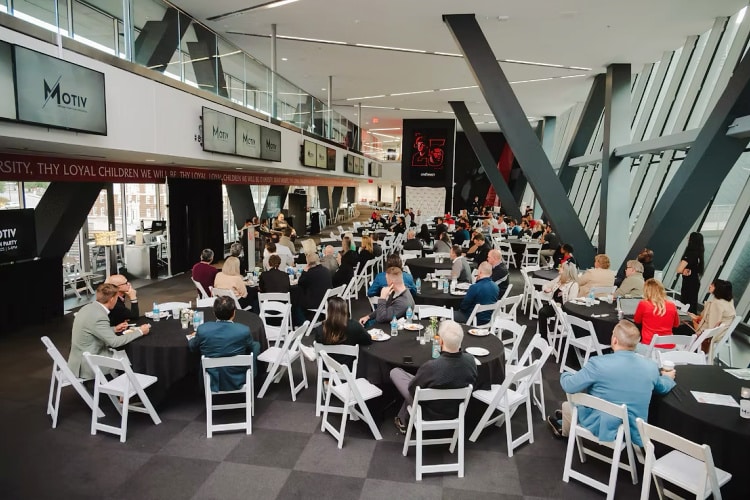
Building startups at UC: Inside the 1819 Innovation Hub where students are turning ideas into companies
With support from the Venture Lab and a growing entrepreneurial ecosystem, classroom ideas grow into real businesses.
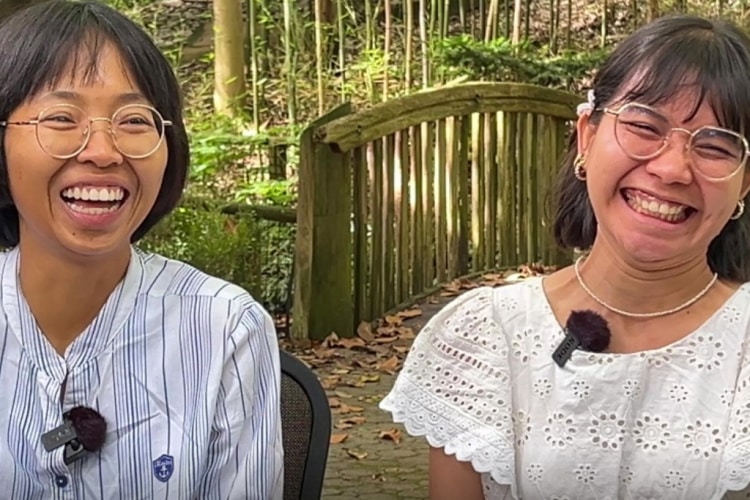
A federal leadership grant puts Cincinnati Zoo at the center of global conservation
This award strengthens a program that supports emerging conservationists from the communities where conservation work is happening.
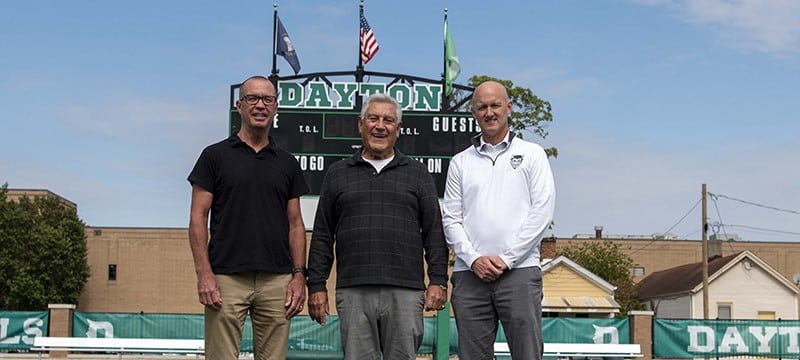
The school that Jack and Jay built: A vision becomes reality in Project One campus
A sense of place fosters community and security from early childhood through young adulthood.