Author

Elissa Yancey

Elissa Yancey, former Soapbox managing editor and co-founder of nonprofits WordPlay Cincy and A Picture's Worth, is a longtime Cincinnati journalist and educator with a passion for building community through story.

Elissa Yancey's Latest Articles

Young patients find hope in therapy dog’s devotion

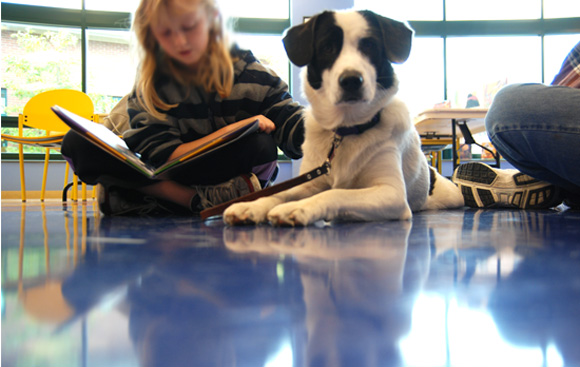
When Larry Bennett isn't busy chairing UC's Fire Science and Emergency Management program, he has discovered another kind of "rescue" work that helps fire victims in a very personal way.Twice a month, Bennett takes his Chesapeake Bay Retriever, Bruce, to Shriners Burn Hospital for Children in Clifton, where patients and staff alike find joy in the gentle and loving companionship of a pet. "Some children are in wheelchairs, some are confined to beds that are rolled out of their rooms and some are walking," Bennett says. "They get to pet and hug the dogs. The children often share stories about their own pets."As a volunteer for Therapy Pets of Greater Cincinnati, Bennett takes his work with young patients to heart. He has even developed stickers with Bruce's smiling face that he leaves behind for patients and nurses who gladly keep a piece of their special visit close to their hearts.Founded in 2004, Therapy Pets of Greater Cincinnati trains volunteers and screens pets to visit acute, rehabilitation and palliative healthcare facilities, group homes and schools throughout the region. More than 200 volunteers regularly take their dogs, cats and birds to share unconditional love with those who need it most. Therapy pets visit people and patients of all ages as part of informal Animal-Assisted Activities or work toward specific goals with Animal-Assisted Therapy. Some dogs are specially trained to be part of the Reading Education and Assistance with Dogs (READ) program in schools and libraries. At Shriners and nursing facilities, in hospitals and schools, a friendly pet walking the halls can lighten even the darkest moments. But therapy with pets is about more than feeling good in the moment. Scientific researchincludes both anecdotal evidence and full-scale studies that show pet therapy works. For example, it can lengthen children's attention spans, increase their physical activities and even improve their communication skills. For Bennett and other therapy pet owners, though, the therapeutic benefits flow both ways. Do Good:• Be part of the team. Find out how you and your pet can become approved pet therapy teams.• Get inspired. Brighten your day by reading testimonials from pet therapy teams. • Check with the Public Library of Cincinnati and Hamilton County to find out about the next Pages and Paws program.By Elissa Yancey

Mayerson Fund brings fame to SCPA

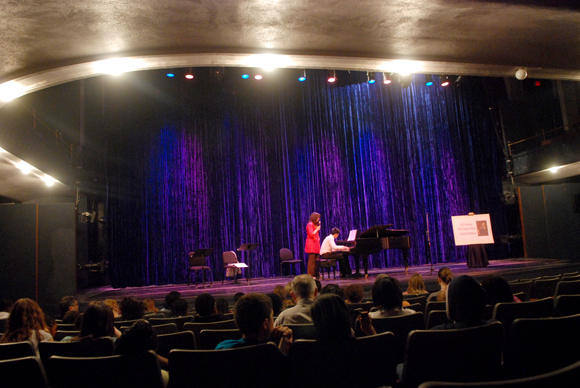
It's been a busy year at the new Erich Kunzel Center for Arts Education, the sparkling downtown campus of Cincinnati's School for the Creative and Performing Arts. Beyond their performances and demanding schedules, students have enjoyed another year of master classes, private lessons and special sessions with visiting and resident professionals thanks to the Mayerson Foundation's Artistic Excellence Fund. Fledgling dancers stretched and spun with the Cincinnati Ballet's internationally known choreographer-in-residence, Adam Hougland, whose contemporary reimagining of Igor Stravinsky's classic "The Firebird" will be performed March 18 and 19.In April, visual arts SCPA students will hear from Jimmy Baker, a Northside-based artist fresh from his first solo show at the Contemporary Arts Center.All year, young musicians have enjoyed private lessons and public performances with members of the Cincinnati Symphony Orchestra's renowned Brass Quintet."The purpose of the Fund is to help ensure that the arts education taking place in the new facility is as world-class as the facility itself," says Jeff Seibert, grants officer with the Manuel D. and Rhoda Mayerson Foundation.Since it began in 2009, the Fund has introduced SCPA students to master classes with violinist Nadja Salerno-Sonnenberg, pianist Gabriela Montero and violist Nokothula Ngwenyama. Future collaborations are in the works with musicians in the MusicNow Festival and WCET. Seibert has been surprised both by the generosity of artists who enjoy sharing their talents with SCPA students and "the dramatic and nearly immediate impact on students' level of artistic excellence when they come into contact with extraordinary master artists."In the $72 million facility, the vision of learning by engaging performing professionals in the educational process, has always been part of the plan. "Although Erich (Kunzel) didn't live to see the fruition of his vision, his spirit is present whenever the talented SCPA students strive for the level of artistic excellence that embodied Erich's lifelong work," Seibert says.Do Good:• Get brassy. Attend a free concert at SCPA by the Mayerson Brass Ensemble-in-Residence, March 23, 7 p.m.• Catch a rising star. Mark your calendar for the 25th Anniversary Corbett-Mayerson Awards at SCPA, May 12, from 5 to 7 p.m., with a free performance following dinner and entertainment. Proceeds of the $50 dinner benefit the non-profit Friends of SCPA. Email Karen Dorn for more information.• Support your local artist. Attend an art show or a concert, buy an original painting, take piano lessons. Repay their generosity with your own. Need inspiration? Watch this!By Elissa YanceyPhoto of Nadja Salerno-Sonnenberg working with SCPA students courtesy of Scott Beseler. 

Urban Appalachian Council works to bridge cultural, educational gaps

Amanda sits with her pen between her teeth. Her brow is scrunched more tightly than the ponytail that contains her long black hair. The 20-year-old high school drop-out has been working at the Urban Appalachian Council's East Price Hill GED Center for just a couple of months, but her patience is wearing thin.She looks at a page from an English practice test. Compound words and contractions. She learned this stuff years ago. "Why do I have to keep doing the same things over and over again?" she asks, shaking her head. Then she looks at the next section of words that must be joined to form compounds that fit into a series of sentences about boats in a harbor. The first sentence stops her cold."What type of object would pull slowly into a harbor?" her tutor asks.Amanda looks up from the page and scans the room filled with long tables and thick study guides. Some of her peers at the end of the table are swapping stories, and Amanda has found an easy distraction. "Hey, Amanda, let's just get this section done," her tutor says. The words "tug" and "boat" sit just a few centimeters above the blank in the sentence. "I bet you can guess. What would pull in a harbor?""I can't guess," Amanda finally says, taking a deep breath. "I don't know what that word, harbor, means."Like many of her classmates on this damp March day, Amanda faces a series of hurdles beyond showing up for class each morning and barreling through page after page of study guides in an effort to earn her Graduation Equivalency Diploma. Cultural gaps, not in intelligence but in exposure, seep into the room like fog into a harbor, slow and stifling.The national average age for people who take the GED is 24. In 2009, Ohio ranked 23rd among the 50 states for the number GED test-takers who passed all components, with 76 percent. Nationally, 69 percent of people taking the GED passed it. But the statistics can be deceptive. Some students in East Price Hill are making their third, fourth or even fifth trip back to GED books. While Cincinnati Public Schools has raised its overall graduation rate to just more than 80 percent, that is not the case at Amanda's neighborhood school, Oyler, where nearly nine of 10 students are economically disadvantaged and nearly one in three students has a disability. Oyler's current 50 percent graduation rate marks a steady improvement in many areas of study, but that doesn't change the fact that prospects for half of the school's students remain dim.Oblivious to the statistics that might give her pause, Amanda chews her gum and dreams of day when she can have a regular job, nothing fancy, just a chance to bring home a paycheck and take care of herself. Do Good:• It's simple as A-B-C to volunteer to help GED students. Call the East Price Hill GED Center, 513-557-2546, to find out how you can help. Fill out a volunteer application online.• Find out the latest. Join the UAC email list today.• Make a donation using Paypal. Support UAC's efforts without leaving the comfort of your laptop.By Elissa YanceyPhoto courtesy Urban Appalachian Council

Teens bring creative touch to Art Museum programs

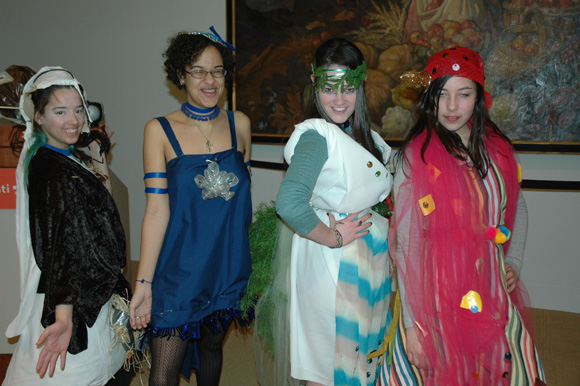
In a scene straight out of Project Runway, the teens had two hours to create a piece of clothing inspired by one of five artworks at the Cincinnati Art Museum. They worked with bubble wrap, duct tape, acetate, paint and other found materials. They sewed, they stapled, and they pinned. Then, they hit the runway. "It was a great way for teens to get to know the collection and interpret works," says Kristine Donnelly, coordinator for Family Learning at the Cincinnati Art Museum in Eden Park and leader of the museum's 12-member Teen Advisory Board. Teen Board Members range in age from 14 to 19. They plan quarterly events that are open to any teen from the region. Donnelly says between 25 and 50 teens typically participate in the programs, which range for studio nights to movie nights to writing workshops. Teen Advisory Board members have created teen guides to the museum and special tours. They even made a video trailer for an exhibit. "They are always willing to go the extra mile to make a teen event successful," Donnelly says. What started in 2004 as a museum-driven initiative to engage young visitors and encourage their future patronage has evolved into an opportunity for teens to take ownership of their own art-inspired projects. Teens involved in the Advisory Board this year represent 12 high schools: Anderson, St. Xavier, McAuley, Mt. Notre Dame, William Mason, Walnut Hills, Highlands, Sycamore, Seton, Moeller, Summit Country Day School and Seven Hills. Their project for this spring follows the Project Runway theme, but expands it to new, original works of art by youth throughout the region. "Inspiration in Eden Park" is a high-school student art show that will showcase work created by teens and inspired by pieces of art on display at the CAM. Do Good: • Enter the art show. If you are or know a teen aged 14 to 18, visit the CAM's website to download an entry form. Entries are due March 18 for the April 15 show. • Like the TAB. Keep up with the latest TAB news on Facebook. • Join the circus contest. Know a child aged 6 to 13? Find out how a coloring contest could lead to a clowning gig with the Ringling Brothers Barnum and Bailey Circus. Seriously. By Elissa Yancey Photo of teens modeling their art-inspired couture courtesy Cincinnati Art Museum

Emmy-nominated Books Alive expands with online, at-home options

If "Reading Rainbow" met a live music concert, its inspired educational offspring would look a lot like the locally produced, nationally praised program, Books Alive. The Emmy-nominated, award-winning literary performing arts program is the brainchild of local jazz legend Kathy Wade.Wade, founder and director of the non-profit Learning Through Art, started the Books Alive curriculum 15 years ago as a way to increase literacy, and fun, in elementary schools around the region. "The connectedness between literacy, visual art and performing art is powerful tool for teaching," Wade says. "It allows integrating the arts through every curriculum topic in a classroom."Books Alive, designed for students from Kindergarten through third grade, includes elements of sight, sound and touch: participants read the book, watch of a performance based on the book and make a related craft. Teachers and administrators of Bond Hill Academy praise Books Alive for helping increase students' literacy between 20 and 40 percent since 1998. Teachers in Connecticut who use Books Alive report literacy gains as well. In all, Books Alive has touched the lives of more than 7,000 children so far, reaching from Cincinnati to the East Coast and anywhere there is an Internet connection, thanks to online versions.After hearing from teachers how much the program helped students, how it encouraged them to connect with books in new and exciting ways, Wade determined to expand. Today, the Books Alive program includes an Educational Edition, Home Edition, Birthday in a Box and Holiday in a Box--all of which are available to purchase online.Just one of many Learning Through Art programs, Books Alive embodies Wade's approach to learning that lasts. "It's about taking your creativity and teaching with it to it and for it," she says.Do Good:• Read all about it. Follow LTA's work on Facebook.• Go to the Zoo! LTA's annual Zoo Day, which includes greatly reduced admission,  July 20, 2011. ?• Support the cause. Contact LTA and donate your time or money to keep connecting more kids to the arts and learning.By Elissa YanceyPhoto courtesy of Learning Through Art

Targeted donations put workers Back on Track

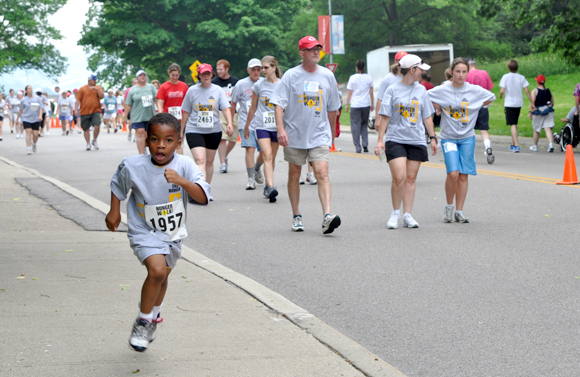
In its Liberty Street location, past the Freestore/Foodbank's lime and pumpkin walls, its cheery plant-laden offices, spic and span floors and smiling faces sits a needy rack of men's shoes. The FSFB's massive capital campaign leaves footprints as solid as the steelcase filing cabinets that buffer cubicles on every floor. It marks the welcome/waiting area, the portal of social services, the food pantry that resembles a tiny-scale Jungle Jim's, and more private office areas for clients in need of homelessness prevention and money management help. Friendly staff members, sometimes only distinguishable by their green and yellow lanyards and nametags, add to the feeling that the agency has constructed an ideal setting for maximum effectiveness and respectful service delivery.FSFB renovation's decorator/client services manager Bernice Cooper first mentions the Back on Track program - home of the aforementioned shoes - as she begins a new tour. She explains the program is an on-site endeavor to provide donated clothing to all qualified comers for no cost. In order to visit the shop, clients must have completed a job training or work-readiness program and be on their way back to employment. They can visit two times a year, with at least six months between visits.Donations must be clearly tagged for the program; otherwise, they will be sold at low prices through the St. Vincent DePaul Society, which collects drive-by donations at the FSFB Liberty Street warehouse.Back on Track volunteers staff the one-and-a-half room space filled with neatly stocked racks that line the perimeter, and divide the room into clear-cut departments - men's, women's and children's. Tall cardboard boxes filled with donations yet to be sorted sit tucked away in corners and behind the makeshift counter.Despite the large quantity of merchandise in the room, it's hard not to notice the shoes. During one visit, there were 12 pair, neatly displayed on a wire rack that could have held at least four times as many loafers, sneakers and boots. They were all men's shoes, all in good condition, mostly gym shoes. Men's suits hang neatly just a few feet away, but which lucky suit-wearers will be able to find acceptable shoes to dress for a job interview or church? How many men will find a barely worn suit, carefully measured and labeled by a retired Procter & Gamble chemist-turned-volunteer, then be left grateful to snag a pair of sneakers? In the Back on Track store, the shoes tell a powerful story through worn laces, scuffed heels and a stretch of empty wire that conveys, in a very concrete way, the depth of gaps in services for those in need throughout the community. Do Good:• Give some goods. Back on Track donations must be clearly labeled, clean and in good enough condition to be helpful to a hopeful job-seeker.• Get the news. Sign up for the FSFB's email newsletters.• Join the Hunger Walk and 5K. Create a team today for the Memorial Day events.By Elissa Yancey

Music breaks barriers with Melodic Connections

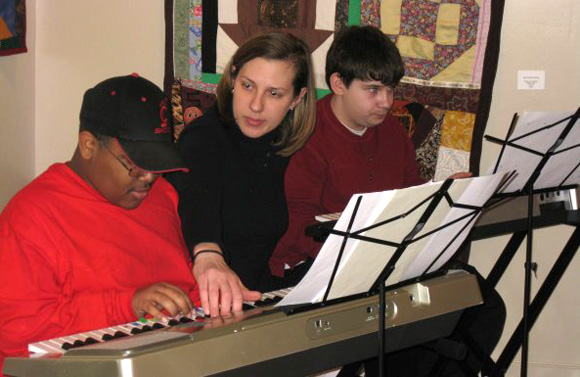
Audience members sing along to Journey and Bruno Mars. They sway to B.B. King and traditional jazz standards. Concerts by the students of Melodic Connections defy stereotypes and create bonds through rhythm and joy."It's about the enjoyment of the experience," says Betsey Zenk Nuseibeh, founder and executive director of the non-profit. She says the best part of the shows, which highlight the talents of students with a wide range of disabilities, is the expression of excitement, of accomplishment, on students' faces. "I try to make it an interactive experience."Some of the guitars have stickers under the strings that guide student fingers. Others have the aptly named easy chord adaptive device. Keyboards have color-coded keys. Students use color-coded sheet music. Nuseibeh, a music therapist and special education teacher, started Melodic Connections in 2008 after watching the dramatic transformation of one of her students with autism, Latron Dodd, at the keys of a piano. Dodd, a piano prodigy, received a scholarship to the University of Cincinnati, where he now takes private lessons at the College Conservatory of Music. Other students learn typing skills after learning color coding on keyboards. A silent student began to sing. Another stubborn eater began to take bites to the beat of a drum. Music, Nuseibeh knows, offers a gateway to more than just melodies. She founded Melodic Connections to provide an affordable way to give anyone who needed it access to music therapy-based services. She now teaches more than 40 students aged 7 through 65 and has watched them perform at the Blue Wisp Jazz Club downtown, the Southgate House in Newport and Union Terminal, along with other art galleries, clubs and museums.While the lessons move students forward in musical and practical ways, the performances bring students and their parents a different kind of satisfaction, Nuseibeh says. As performers throw their hands in the air and say, "rock and roll," their parents watch, breathing in the sweetness of success in a space where their children always get a standing ovation.Do Good:• Give a guitar. Melodic Connections accepts donations of guitars and keyboards for students.• Join the email list. Get the scoop on the latest concert information and more. A Blue Wisp show in April and a Cincinnati Art Museum show in May are already in the works!• Like Melodic Connections on Facebook. Watch videos, scroll scrapbooks and find out more about the organization online. By Elissa YanceyPhoto of Betsey Zenk Nuseibeh working with students courtesy of Melodic Connections.

Modifications open doors for neighbors in need

The military veteran, confined to a wheelchair, hadn't left his Madisonville home in six years. Most days, he watched videos and depended on others to bring him food and other household needs. He couldn't afford to have a ramp added to his home, a job that can cost about $5,000. Then he learned of a service called Modifications for Mobility, part of the non-profit People Working Cooperatively. PWC constructed a ramp for his home, where he could then live more comfortably and with more stability. "It opened up the world to him," says Kim Sullivan, PWC's manager of marketing communications. Sullivan says Modifications for Mobility works with people of all ages, from children born with disabilities to seniors trying to remain independent. She notes one young client who was born with defects that will keep him in a wheelchair for his entire life. Modifications to his home included turning the first-floor family living room into his bedroom, adding a washer and dryer to the first floor and installing a wheelchair-friendly shower. The job made it possible for the family to function with less stress on a single floor. Modifications for Mobility jobs also include changes to bathrooms and kitchens so that family members with disabilities can function. Costs for these kinds of renovations can range up to $10,000 for a single bathroom, Sullivan says. A bathroom may need a wider door to accommodate a wheelchair, a higher toilet seat and grab bars for independent transfers. In kitchens, residents may need counters and cabinets lowered, appliances rearranged and floor plans reconfigured for maneuverability. "This keeps the most fragile neighbors in their homes," says Sullivan. "It helps the entire neighborhood." She notes that an aging population means that more low-income residents are in need of changes to their homes that they can't afford. The average PWC client earns $13,000 a year. "There's not much left over for utility bills or home repairs," Sullivan says.In 2010, PWC completed 13,000 home modifications, an increase of more than 11 percent from the year before. As demand continues to grow, PWC continues to provide emergency and critical home repairs, as well as free weatherization, for the region's most vulnerable residents. Do Good: • Buy a brick. Celebrate PWC's 35th anniversary and be a part of the walkway to their Bond Hill offices for as little as $50. You can even use PayPal. • Learn a skill. Attend one of PWC's monthly training sessions or apprentice with a pro, then use your skills during a PWC volunteer project. • Connect on Facebook.

Life with Redwood mixes love and opportunities

Kristine Jones didn't mean to fall in love. The Ohio native admits she never thought she'd end up moving to Kentucky to be closer to the object of her affections. But for the health and well-being of her daughter Taylor, who was born with multiple handicaps, Jones discovered that she could not find any better support and encouragement than at Redwood in Ft. Mitchell. Jones, a Procter & Gamble retiree, first learned about Redwood when she ran out of options for summer care for Taylor. Her daughters needs were too great for traditional camps, and Jones didn't know where to turn. Redwood, which serves more than 700 children and adults with severe and multiple disabilities, from age six weeks and up, had summer programs where Taylor found a welcome home. After two successful summers at Redwood, Jones needed little convincing to enroll her daughter in the non-profit's school age program, especially since it offered her afterschool care as well as classrooms that were split 50-50. Half of the students in each class have disabilities; the other half does not. "It's a place where her special needs are seen, not as obstacles, but just part of every day living," says Jones, who joined Redwood's Board in 2005 as a way to give back. "She is encouraged to become the best that she, as an individual, can be." The Jones' school move included a physical family move across the river. In 2006, Taylor graduated into Redwood's Adult Independence Program, which she still attends every day. Adults in the program work with mentors to learn computer skills, exercise and practice daily living skills. "My daughter gets up in the morning eager to go to Redwood," Jones says. "Taylor has become the self-assured young lady she is today due to the staff at Redwood." From a nursery to job training, Redwood's depth of services reflect its mission since its founding in 1953: To empower and improve the quality of life for people with disabilities. Do Good: • Take a trip on the Redwood Express. The March 4 fundraiser includes food, bourbon-tasting and Mardi Gras-style fun. • Care for a Kid. Support Redwood's scholarship program for kids in need and help young ones with disabilities access Redwood's top-quality care. • Donate. And find out plenty of other ways to help when you visit Redwood online.

Boys find help through horses at Campbell Lodge

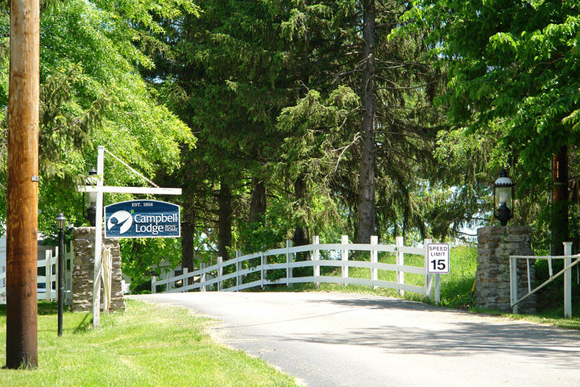
Steven was 11 years old when his emotional outbursts at school and at home led to a stay at Campbell Lodge Boys' Home, a 115-acre, year-round, residential treatment facility in Northern Kentucky. "He came in not able to trust adults or peers," says Barry Jones, executive director. Before he could learn to trust anyone else, Jones knew, Steven needed to trust himself. So, like every other young man at Campbell Lodge, Steven went to the stables. There, he encountered 1,200-pound horses, integral members of the facility's equine-assisted counseling program. After seven months, Steven learned to lead, ride and groom horses. At the same time, he learned to trust himself and his family. Now back home with his parents, Steven is one of hundreds of young men learning how to relate to people by working with other herding animals, horses. "It's experiential," Jones says. "Your feelings and thoughts come out within the exercises." As they lead horses through obstacle courses, young men deal with fear, frustration and issues of personal space. Working through problems with horses provides a model for working through problems in life outside the lodge's boundaries. Jones explains that equine therapy has been the primary focus at Campbell Lodge for six years, though last summer marked the groundbreaking of the equine center, which allows for year-round interaction between youth and horses. Residents learn quickly which of the six horses is most laid-back--that would be Buddy--and which is prone to bite--usually Scooter. "Traditional talk therapy was not always as effective as we wanted it to be," Jones says. Horses provide powerful physical metaphors for many problems that face residents, many of whom must confront a variety of mental health issues during their stay. Residents have to communicate with the horses and with each other to be successful at the Lodge, whether they are in equine therapy sessions, learning grooming techniques or volunteering to help children with disabilities enjoy time with the horses. Jones says the experiential therapy builds confidence and skills that residents carry with them once they leave the lodge. Do Good: • Fill a need. Whether you have a spare pool table no longer in use or the ability to donate lots of personal care items, Campbell Lodge will put items on its wish list to good use. • Have dinner out. The Lodge's annual Springfest, a fundraiser dinner and silent auction, happens March 5, 2011. • Donate online or join the e-mail list. Find out how you can best support this 53-year-old regional resource that now serves up to 25 young men at a time.

Our Partners

Solutions journalism takes time, trust, and your support.

Close
Psst. We could use your help today!

Don't miss out!

Everything Cincinnati, in your inbox every week.

Close the CTA

Already a subscriber? Enter your email to hide this popup in the future.