
My Soapbox: Honour Pillow revisits Fringe
Addyston-born playwright, comedienne and cancer survivor Honour Pillow has stories to tell. She gives Soapbox's Becky Johnson a glimpse behind the inspiration of her Fringe-encore performance at the Know.
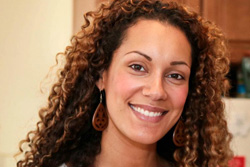
Addyston-born playwright, comedienne and cancer survivor Honour Pillow has stories to tell. She gives Soapbox's Becky Johnson a glimpse behind the inspiration of her Fringe-encore performance at the Know.

In “a city that sings,” the Cincinnati Boychoir is bringing its music to historic Memorial Hall in Over-the-Rhine, its new rehearsal and concert home. While boychoirs across the country struggle to retain membership and funding, the Cincinnati Boychoir has doubled in size over the last few years and is expanding its programming and performance schedules. Its home in Norwood no longer allowed all boychoir participants to rehearse together, and the organization looked several years for a new rehearsal and performance venue. Memorial Hall fit the bill in more ways than just added space. “We wanted to be located around the arts and culture of downtown,” says Chris Eanes, the choir’s director, “and we wanted to be available to lower income families” who may want to join the choir or participate in one of its programs, including Saturday classes and piano lessons. “You don’t have to convince anyone in Cincinnati that music is a valuable vocation,” Eanes says. “There is no lack of interest in these music programs. What there is is a lack of accessibility.” When the choir was founded 50 years ago, boys came from Cincinnati schools with strong music programs that usually offered at least one high-level music class. Now more and more boys joining the choir come from schools with no music program at all. “So we’ve restructured our programming to take a novice singer and teach him from scratch,” Eames says. There are three choirs under the Cincinnati Boychoir umbrella: the training choir for young boys; the concert or main performing choir; and the Men’s Glee Club, including older boys and adults. Now with all three rehearsing on Mondays at Memorial Hall, younger choir members will have more opportunity to be mentored by the older boys, “our most important teaching tool,” says Eanes. Do Good: • Take In: a 2012-2013 season performance of the Cincinnati Boychoir or watch them at the World Choir Games. • Visit: the historic Hamilton County Memorial Hall to see why choirs love to sing there. • Like Cincinnati Boychoir on Facebook. By Becky Johnson
If after leaving prison, a man can successfully re-enter his family, he can successfully re-enter society. This is the first and greatest hurdle for a father leaving behind prison walls. The RIDGE Project, a fatherhood program that has partnered with a number of Ohio prisons and faith-based organizations to successfully integrate fathers with their families and communities, is now joining hands with the Avondale Community Pride Center and the Avondale Comprehensive Development Corporation (ACDC) to help. “Fatherlessness is a chronic disease in our neighborhood,” states Ozie Davis III, executive director of ACDC. The program offers community members effective training that helps integrates men within their families and supports their efforts to face adult responsibilities through personal development, communication, job skills, readiness training, and even subsidized employment opportunities. ACDC will provide locations for fathers and families to receive this training and will find at-risk families to participate in the program. RIDGE’s nationally acclaimed “Keeping FAITH” program emphasizes effective communication between couples and has discovered that most couples lack even basic skills. Fathers learn to accept responsibility for their actions and prepare to overcome obstacles in their transition back into their homes and communities. Fathers and couples also learn to surround themselves with others who share their goals and hold themselves accountable to new, healthy lifestyles. The RIDGE Project is the only program developed by a formerly incarcerated father who, with his wife, successfully kept their family together through 15 years of prison time. Now Ron and Catherine Tijerina, co-executive directors of the RIDGE Project, will work with staff at ACDC to coordinate activities and programming in Avondale to achieve good results with the community’s re-entering fathers and at-risk families. Do Good: • Read About: RIDGE’s nationally acclaimed program, “Keeping FAITH." • See: what the Avondale Comprehensive Development Corporation is doing to improve the lives ofAvondale citizens with thoughtful economic development and the encouragement of arts, culture,health care and safety. • Like the Avondale Community Pride Center on Facebook. By Becky Johnson
The riding arena is state-of-the-art with its bright, airy space, insulated walls and comfortable and air-conditioned viewing area. If not for the wheelchair ramp, no one would guess this stable’s special mission. The Cincinnati Therapeutic Riding and Horsemanship (CTRH) facilities are east of Milford, nestled in the hilly land along State Route 50. Starting in 1985 with one pony and five riders, CTRH has grown into a riding center that offers therapy to 120 people of all ages and with disabilities ranging from autism, Down syndrome, cerebral palsy, multiple sclerosis, spina bifida, ADD and ADHD to mental health issues. An Aug. 4 horse show will highlight both the physical and emotional accomplishments of these riders when paired with kindly horses and dedicated healers. CTRH, a Premier Accredited Operating Center (PATH), has met international standards for therapeutic riding centers with diverse and personalized therapy. For adaptive recreational horseback riding, each rider is paired with a horse leader and up to two side-walkers who stay next to the rider at all times, providing a safe and supportive experience. A more intense physical, occupational and speech therapy treatment strategy, hippotherapy, uses the horse’s movements to encourage neurological function and sensory processing. “The benefits to the rider are so varied,” says Lauren Warm, one of the center’s licensed physical and occupational therapists who uses this one-on-one treatment. “Riding improves strength, range of motion, muscle tone, cognitive abilities, communication and function. I love the motivation and joy it brings to riderswhen they interact with the horses.” Evaluated for temperament and intensely trained, CTRH horses are at once essential to the program and an ongoing expense — $6,000 a year per animal. More than 2,000 hours of programming, at an hourly cost of around $145, are offered to riders for $35. The center subsidizes the rest. “We run such a lean operation,” says Linda Rubel, a CTRH board member and volunteer. “Program director Laura Benza is our only full-time employee. We rely on hundreds of volunteers,” who care for the horses, help in the office and work with the riders in their therapy. Recently, CTRH launched new programs, including Equine Services for Heroes, offering physical and emotional therapy to armed forces veterans. CTRH is also collaborating with Cincinnati Children’s Hospital Medical Center to offer Equine Facilitated Learning, a program that helps patients develop trusting relationships with animals on their journey to mental health healing. Do Good: • Attend: the CTRH Horse Show, Aug. 4, 2012, an all-day event at the stables, for a free cookout-style lunch and the chance to support the program’s riders as they showcase their skills. • Volunteer: Submit a volunteer application online and sign up for the next training sessions, June 26 at 6:30 pm and June 28 at 10 am. By Becky Johnson

Make way for Lyden Foust, the Xavier University senior who led the effort to host Xavier’s first TEDx event and was the only Xavier undergraduate honored with an Entrepreneurship Black Belt in an award ceremony last month. With two start-ups now under that black belt and work lined up in web development, design and branding after graduation, Foust recently spoke to Soapbox's Becky Johnson to explain his creative approach to business strategies and how he would like to challenge accepted notions about the purpose of profits.
“Diversity happens. Inclusion is a choice.” Shawn Jeffers wants a new generation to understand and act on that concept. As coordinator for JUST Community, a program of BRIDGES for a Just Community, his organization is bringing that awareness to a younger generation through a new working model this year. Through education and empowerment, the non-profit organization BRIDGES for a Just Community equips people with awareness, skills and opportunities to develop relationships that will transform this region into a more equitable and just community. JUST Community, a youth program, developed out of the former “Anytown” youth program under the National Conference of Community and Justice (NCCJ), from which BRIDGES evolved. Since NCCJ began its mission in 1927, its goal of opening healthy dialog between religious groups has broadened over years to include racial understanding and supporting the rights of women and other disadvantaged groups through education and awareness- building. BRIDGES has used the JUST Community program for students to teach leadership skills necessary to engage their peers in creating more respectful and inclusive school cultures. In years past, the program was over the summer, with area schools sending a small group of students to participate. Students came back excited and willing to implement their learning, but waiting for school to start dampened their initial enthusiasm. This year’s program is different, based on a successful model already in use through the Great Oaks district. Larger groups of 10-15 students from each school will experience the program in September, during the school year, and two educators from each school will also participate and act as mentors when students return to begin dialog and initiatives. Issues discussed will include race, socio-economic status, gender and sexual orientation. “And we want different students who can do true community building,” says Jeffers, “not just the student officer or honor roll student” but students who have influence without knowing it and are ready to learn how they really can change the world, school by school. Do Good: • Find out: if your neighborhood school is interested in participating in this program. • Investigate: the many programs, events and services BRIDGES offers to further inclusiveness and acceptance among all of the Cincinnati community. By Becky Johnson
Even Tim Jeckering finds the changes in Northside amazing. After 13 years on Northside’s Community Council, eight of them as president, Jeckering still experiences a sense of wonder at the near west side neighborhood’s decade of transformation. “If I were to tell you that Northside is close to having 125 new, single-family housing units today, would you believe it?” he asks. Throw in another 110 new units now being offered in the American Can Building, a newly-paved bike trail along the Mill Creek, and vibrant businesses and artistic organizations nestling in along Hamilton Avenue, and Northside has become a community transformed. The Northside Community Fund is certainly one reason for these obvious changes. In eight years, it has raised more than $45,000 for neighborhood projects, “initiatives that came from the people,” says Jeckering. Back in 2004, the Northside Business Association and Northside Community Council realized that an independent fund was the best way to support neighborhood-based initiatives, knowing that City of Cincinnati financing for such projects would continue to be erratic. Pulling together a board of directors and placing the fund under the Greater Cincinnati Foundation (GCF) gave the organization credibility and standing in the city, as well as invaluable help through the GCF’s support services. Since then, the Northside Community Fund has proven its worth. When the community wanted a farmer’s market, the fund supported a general manager’s position. Today, the Northside Farmer’s Market, voted best market by City Beat last year, offers cottage crafts and local farmers’ fresh produce and swells the streets and local stores each market day with visitors from all around Cincinnati. Other neighborhood-based initiatives supported by the fund include food pantry help through the local churches and a Summer Earn and Learn program for youth. Fundraisers like the June 2 “Hot Club of Northside” concert, featuring the Faux Frenchmen and both silent and live auctions, continue to raise money for Northside community initiatives. Those funds, along with “an army of volunteers and great community activism,” acknowledges Jeckering, are remaking Northside into the community its residents want it to be. Do Good: • Attend: The Hot Club of Northside on June 2, from 7-11:30 pm at the Great Room of the Historic American Can Building, 4101 Spring Grove Ave. Tickets are $20 and can be purchased at Shake It Records, Picnic & Pantry and the Northside Bank and Trust. • Visit: the Northside Farmer’s Market to see what good things community dollars can support. • Like the neighborhood on Facebook. By Becky Johnson
Eight hundred and fifty. That is the average number of abused and neglected children, just in Hamilton County, who need foster parents each year. With this great a need, county services must rely on private sector resources to provide help and find good homes for these kids. This year, Lighthouse Youth Services, one of the private agencies that helps Hamilton County, plans to do something about that stubborn number of children in need. “Be the Somebody,” its new foster parent recruitment campaign, is quite different from recruitment campaigns of the past. Led by Lighthouse board member Lisa O’Brien, the campaign is directed by multiple committees and uses best-in-the-business research, marketing and branding resources to not only attract potential foster parents but to also streamline the foster care licensing process and increase support for current foster families. Noticing that board committee work has been pivotal to the success of Lighthouse fundraisers, O’Brien approached the board with the idea of a foster family recruitment campaign based on the same platform. Five committees now direct different elements of the campaign, from an “Everything after the Call” committee, which helps lead new recruits through a more cohesive learning and licensing process, to social and traditional media and creative marketing committees that pair appropriate business strategies with foster family and employee recruitment and retention issues. “Our best marketing resources are our foster parents and our employees,” says Jamie Clark, program director at Lighthouse Foster Care. “We’re learning how to incentivize our program.” Lighthouse is also learning how to use every supporter in the committee process. “We developed a recruitment committee consisting of past board members who had institutional knowledge and past foster parents,” as well as those with business and leadership skills, says Clark. As the Lighthouse board took control of the mission, prioritized and delegated responsibilities, “Be the Somebody” took off. That it is poised to succeed is a testimony to committee work and the power of collected intelligence and experience, and a reminder that it, indeed, “takes a village.” Do Good: • Visit: Be the Somebody’s new website to learn more about the campaign and for information on a foster parent open house in early June. • Consider: fostering a child yourself. To speak to someone about this opportunity to help and to grow, call Lighthouse Foster Care at 513-487-7135. By Becky Johnson
One week after physician Henry Heimlich published findings on what would become the Heimlich Maneuver, a choking victim was saved by this method. Since its 1974 introduction, the Heimlich maneuver has saved hundreds of thousands of lives worldwide documented cases of this maneuver saving the lives of those choking or drowning, thanks to the health care providers, safety professionals and many adults who applied this life-saving technique. Now, the Heimlich Institute, located at Deaconess Hospital and supported by the Deaconess Associations Foundation, is teaching this life-saving method in a local classroom, with plans to take the program across the state and, eventually, the nation. Michelle Mellea, a science teacher at Bethany School in Glendale, has incorporated the Heimlich Maneuver into curriculum that meets the objectives of the State of Ohio’s most recent Sixth Grade Academic Content Standards for science, as well as for language arts, math and health. Visuals like posters, teaching and learning materials, diagrams, and graph paper were developed by Paul Neff Design. On Wednesday, April 18th, the curriculum was introduced in a Bethany School classroom by local EMS professionals, Ms. Mellea, and Dr. Heimlich himself. Named Heimlich’s Heroes, the program hopes to inspire children with their own power to help others. Children learned the technique, practiced on a specially-designed child-sized doll and interviewed Dr. Heimlich. “The day exceeded our expectations,” says Patrick Ward, executive director of the Deaconess Associations Foundation. “The kids had done research…knew of his inventions and accomplishments, and were so excited to see him.” The foundation plans to continue fine-tuning the curriculum over the year as it is introduced to more schools. In teaching a life-saving technique in the classroom, the Heimlich Institute and the Deaconess Associations Foundation hope to inspire a new generation of children to understand their own importance in society and their own opportunities to do wonders. Says Ward, “Every one of them has the power to be a superhero because they all have the power to save a life.” Do Good: Investigate: bringing this curriculum to your neighborhood school; watch the YouTube video Visit: the Heimlich Institute to see what this organization is doing across the country and the world to encourage the creativity of the mind in medicine and life. By Becky Johnson
Blue is a beautiful color: a shade of the sea, the sky, wild flowers. It is also the tint of a bruise. April is National Child Abuse Prevention Month, and Northern Kentucky’s Family Nurturing Center wants every person in Greater Cincinnati to understand the symbolism of that color in child abuse. Its Blue Ribbon 5K Race April 28 is just one part of its Blue Ribbon Campaign, a community-wide effort to recognize society’s collective responsibility to prevent and confront all forms of child abuse and neglect. “Child abuse is entirely preventable,” says Tracy Fuchs, the Family Nurturing Center’s director of development. “It’s not like cancer or a disease.” One of the Center’s primary goals is to educate adults to know the signs of abuse and understand their legal and moral responsibilities to prevent it from happening. “The Blue Ribbon programs are like an umbrella, giving opportunities for everyone throughout the community to learn.” The Blue Ribbon Ceremony kicked off April Child Abuse Prevention Month activities at Tom Gill’s Chevrolet, featuring local officials, families, law enforcement, area organizations and a blessing from Bishop Foys of the Diocese of Covington. Featured speaker Gary Hudson is founder of the local office of Darkness to Light – Stewards of Children, a progressive prevention program designed to teach adults to prevent, recognize and react responsibly to child abuse. The Family Nurturing Center uses the Blue Ribbon campaign to increase awareness in adults, who have the only power to make changes in children’s lives. The Bank of Kentucky, long-term partners with the Center in its campaign, encourage visitors and clients to donate at its banks as well as read about child abuse. The Mellow Mushroom in Wilder, KY, is offering Pizza for Prevention as an April fundraiser, and trees in yards, at libraries and in town squares across Northern Kentucky are festooned with blue ribbons to increase public awareness of this preventable tragedy and encourage our collective actions to end it. Do Good: • Participate: in one of the many Blue Ribbon Campaign events through the rest of April, including the Blue Ribbon 5K Race April 28. • Learn: about what the Family Nurturing Center is doing to treat children and educate adults about the national epidemic of child abuse and how society can prevent it from happening. By Becky Johnson
Our Partners








Common Ground Is Brewing
Support local stories and receive our signature roast straight to your door when you join at the Standard level (or above).
Drink Better, Read Local
