
Author

Elissa Yancey

Elissa Yancey, former Soapbox managing editor and co-founder of nonprofits WordPlay Cincy and A Picture's Worth, is a longtime Cincinnati journalist and educator with a passion for building community through story.

Elissa Yancey's Latest Articles

Life with Redwood mixes love and opportunities

Kristine Jones didn't mean to fall in love. The Ohio native admits she never thought she'd end up moving to Kentucky to be closer to the object of her affections. But for the health and well-being of her daughter Taylor, who was born with multiple handicaps, Jones discovered that she could not find any better support and encouragement than at Redwood in Ft. Mitchell. Jones, a Procter & Gamble retiree, first learned about Redwood when she ran out of options for summer care for Taylor. Her daughters needs were too great for traditional camps, and Jones didn't know where to turn. Redwood, which serves more than 700 children and adults with severe and multiple disabilities, from age six weeks and up, had summer programs where Taylor found a welcome home. After two successful summers at Redwood, Jones needed little convincing to enroll her daughter in the non-profit's school age program, especially since it offered her afterschool care as well as classrooms that were split 50-50. Half of the students in each class have disabilities; the other half does not. "It's a place where her special needs are seen, not as obstacles, but just part of every day living," says Jones, who joined Redwood's Board in 2005 as a way to give back. "She is encouraged to become the best that she, as an individual, can be." The Jones' school move included a physical family move across the river. In 2006, Taylor graduated into Redwood's Adult Independence Program, which she still attends every day. Adults in the program work with mentors to learn computer skills, exercise and practice daily living skills. "My daughter gets up in the morning eager to go to Redwood," Jones says. "Taylor has become the self-assured young lady she is today due to the staff at Redwood." From a nursery to job training, Redwood's depth of services reflect its mission since its founding in 1953: To empower and improve the quality of life for people with disabilities. Do Good: • Take a trip on the Redwood Express. The March 4 fundraiser includes food, bourbon-tasting and Mardi Gras-style fun. • Care for a Kid. Support Redwood's scholarship program for kids in need and help young ones with disabilities access Redwood's top-quality care. • Donate. And find out plenty of other ways to help when you visit Redwood online.
ETC’s Prelude spotlights unlikely young artists

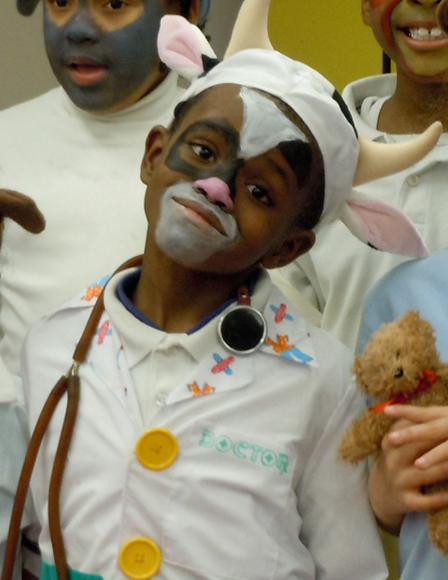
The six young actors took their places at the front of the classroom, in costume and full makeup. There was Dr. Cow, Alice the Bear, Antwon the Rooster, Steven the Elephant and Sugar Bear. At Chase Elementary in Northside, the small but mighty class of children aged 6 to 9 with multiple disabilities made Prelude history in December. After a 10-week residency with Ensemble Theatre Company's education outreach associate, Amy King Ruggaber, class members had written and rehearsed a play based on a message they chose. "They just wanted everyone to think about how to play nice with one another," says Ruggaber, who had never before worked with a class that used American Sign Language in its performance.Their finished work, "At the Playground," drew raves from an audience of peers, teachers and family members. One class member, who is hearing-impaired, insisted on both signing and speaking her lines, quite a feat since that meant learning new vocabulary in two languages. "They worked so hard," says Ruggaber, who teamed with occupational and physical therapists as well as an interpreter and classroom teachers at Chase. She averages five residences per year, but does her best to work with as many students as possible. Typical classes include about 18 students, each of whom will have some kind of speaking part in the final performance."It's a really extraordinary opportunity to give these kids a voice, says Ruggaber, 28, a North Carolina native who started her tenure at ETC as an acting intern. "The skills that it teaches are so much more than how to be an actor."Ruggaber shows students that learning comes in many forms and shows teachers creative ways to teach state academic standards. Successful plays and slashed arts budgets have heightened demand for Prelude, and Ruggaber, ETC's one-woman education and outreach department, oversees four other programs, including the popular Fairy Godmother Program each winter. Now in her fourth season at ETC, Ruggaber has expanded Prelude to include two classes at Rothenburg Elementary in Over-the-Rhine, one of a growing number of schools with no art or music teacher. The "play lady" wants to do more than generate an appreciation for the arts.  "We want to support these kids," she says.The performance at Chase proves that each effort makes a difference. Ruggaber marveled as the children, who have been teased and bullied because of their disabilities, acted out a message of compassion and empathy. "It's strange how small things become powerful, she says. Do Good:• Join the Entourage. You can usher at a show, buy juice boxes for the Fairy Godmother or find any number of ways to put your skills to use to promote ETC's education outreach efforts.For Good News Editor: Elissa Yancey (Sonnenberg)• Follow the blog. Ruggaber documents her ETC education outreach work, including Prelude, on this engaging and inspirational blog.• Be an early bird. Subscribe to the 2011-2012 ETC season before March 15 and you'll not only support education outreach, you'll enjoy wonderful plays and performances.

Hands-on education grows at Gorman Heritage Farm

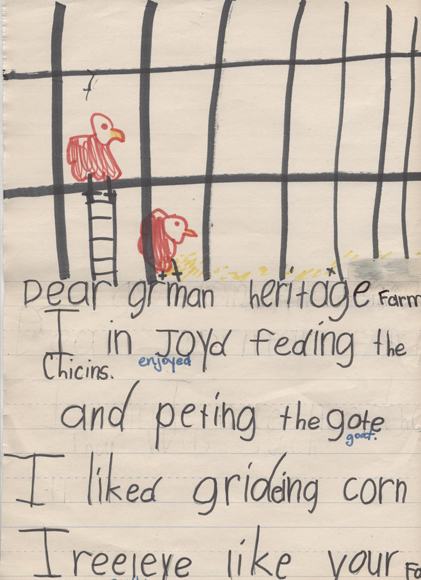
Just 15 minutes north of downtown Cincinnati, kids from the heart of the city eagerly demand second helpings of radishes and spinach. After a day of exploring the 160-year-old family farm, students have worked up quite an appetite for the food they pick fresh from the garden, says Vicki Foster, Gorman Heritage Farm's marketing and special events manager."All of them go into the farmyard," Foster says. "They get their hands in the ground."With 4,000-plus students visiting every year, Gorman is a busy educational and working farm -- 120 acres in Evendale protected from development by the wishes of Jim and Dorothy Gorman, the brother and sister who deeded their property to ensure it remained a farm.Students receive small-group opportunities thanks to the efforts of an army of dedicated, trained volunteers, who provide 70 percent of the educational offerings. Foster says that organizers split field trips into groups of no more than a dozen students each to ensure authentic hands-on activities each child.The farm hosts seasonal festivals, public farm tours and summer camps for a range of ages. They sell greens in the spring, produce through the summer, popcorn and pumpkins in the fall and honey from their own hives.For Foster, though, the importance of the farm reaches beyond its educational and edible offerings. She remembers an exhausted young woman who stepped through the farm gates at the end of a long work day, took a deep breath and visibly relaxed. Foster invites others to the farm so that they can understand its power."Come and get back in touch with yourself."Do Good:• Sponsor a field trip. This March, many scheduled school field trips may cancel due to budget cuts. Visit the farm's website to make a donation. • Rummage away. Volunteer to help at, donate to or shop during the farm's annual rummage sale, Feb. 26. If you can help, email the farm.• Take a class. Whether it's wood-fired cooking or gardening workshops or summer camp, Gorman Heritage Farm offers regular opportunities to get in touch with nature. For Good News Editor: Elissa Yancey (Sonnenberg)

WAY builds relationships for youth success

They have been diagnosed as bi-polar or ADHD. They have schizo-affective or reactive attachment disorder. And they are 12 to 16 years old. All of the 99 youth involved in Lighthouse Youth Services Work Appreciation for Youth (WAY) program have diagnoses that qualify them for mental health services. Many live in either foster or group homes. Many have been kicked out of traditional schools. The WAY program, a non-traditional effort to provide stability and critical life skills for young clients, launched five years ago, says program director Shannon Kiniyalocts. "Some of it is just advocating for the client," she says. "Some of it is communication skills, problem-solving and decision-making skills."Young WAY participants' case managers are called "life coaches." They meet at home and in communities, not mental health facilities. Teens learn how to choose the right Metro route to get where they need to go. They learn how to prepare for a job interview.The five-step program, adapted from a model in New York City's Children's Village, focuses on keeping some of Hamilton County's most challenging youth in environments where they can develop lasting relationships. Life coaches can stay with participants up to three years through five phases of accomplishments."We provide services  and skill-building activities to assist them in breaking down mental health barriers," says Kiniyalocts.Whether it's learning how to navigate public transportation, how to prepare for a job interview or how to manage medications, WAY includes practical lessons in responsibility and independence. Kiniyalocts notes that youth in the program may never have had a relationship with an adult that lasted three full years.As youth move through the program, they begin to complete monthly community service projects and have opportunities to practice new skills. They earn nominal salaries for completing chores, open their own bank accounts (with Lighthouse support) and then gain experience with bigger jobs within the program.Advanced participants create art at Essex Studios in Walnut Hills two to three times a week. They learn about photography and Photoshop, painting and drawing. Tasks range from creating art for note cards to baking dog biscuits. In spring, they oversee a garden plot in Northside, sell their harvest and take home leftovers. They sell their garden products, along with their other creations, at Northside and Findlay markets. "They are generally the ones selling to the community members," says Kiniyalocts. Interacting with the public, as well as seeing the impact and popularity of their work, goes a long way toward building self-esteem and creating a sense of hope and possibility for bright, productive futures.Do Good:• Write a letter to your friend. Use WAY artist note cards to share news about your world.• Give your dog a treat. Bags of WAGS start at just $1.50. Email to reserve your treats.• Clean your closet. Lighthouse Youth Services has a never-ending wish list, including furniture, household items and much more.For Good News Editor: Elissa Yancey (Sonnenberg)

Awe of youth circus makes My Nose Turns Red shine

The larger-than-life-sized open metal wheel has rungs along its two rims that allow twisting, turning, spinning and climbing. A favorite Cirque du Soleil act, the German wheel features nimble acrobats who scale its rung and tumble over and under as they command every inch of the stage.Now local theatrical clowns at My Nose Turns Red Theatre have added the German wheel to an already full plate of circus skills taught in classes for ages 7 to 18.For more than 25 years, co-founders Steve Roenker and Jean St. John have taught children how to juggle, ride unicycles, walk tight-ropes and get laughs from any size crowd of any age. They believe that learning teamwork and trust in a non-competitive environment yields healthy physical and psychological benefits.But for the students, it's really about the fun. Annual performances at the Aronoff Center for the Arts culminate months of work in schools and community sites. Summer camps evolve into public performances. Young clowns work closely together to create performances that showcase individual skills as well as group dynamics. MNTR's YouTube channel features a sampling of past shows and even work by MNTR students in the 2009 American Youth Circus Festival.Roenker's gentle but determined teaching style, combined with enthusiastic advanced students, create a learning environment that is both fun and a safe place to hone new skills."Send your kids to the circus," advises St. John, who has taken her own advice for years. Her daughter, high-school senior Natalie Roenker, attended the American Youth Circus Festival after years of clown training. She heads to college next year to major in -- what else? -- theater.Do Good:• Patronize a juggler. Or is that become a juggler patron? Mark your calendar for MNTR's March 19 performance and for just $25, you can be a juggler patron and get two free tickets.• Catch a special Cirque performance. Purchase tickets to the April 29 benefit performance of Ovo at Coney Island through MNTR and 100 percent of your purchase supports local clowning.• Make a Facebook friend. Keep up with MNTR's latest news on the fan page.For Good News Editor: Elissa Yancey (Sonnenberg)

Cincinnati Cooks and Kids Cafes satisfy city hungers

"Try the macaroni and cheese," urges the chef-in-training behind the buffet line, his white apron starched and his hair neatly tucked inside a plastic cap. "It's the best." His classmates nod as guests load up on the rich, creamy dish. The consensus is clear: guests will not leave hungry, or disappointed. Budding chefs at the Freestore Foodbank's Cincinnati Cooks program take their food seriously. They plan on making a career out of food service. Each new 10-week class that starts at the Rosenthal Community Kitchen downtown demands its members stay clean, sober and dedicated to learning the trade. In return, students receive free classes and leftovers to take home. Every day, the classes' work feeds about 1,200 schoolchildren at 20 Kids Cafes located throughout Cincinnati and Northern Kentucky. After school, students look forward to sampling chicken and noodles, beef stew, jambalaya and, of course, mac and cheese. Every school day, Kids Cafes offer free fresh food alongside tutoring, homework help and organized activities. Program Director Dennis Coskie, who has been with the Cincinnati Cooks since its inception 10 years ago, explains that the program operates as a model of efficiency. "We're utilizing donated foods so they don't go to waste. We are training people with marketable skills. And we're feeding 1,200 hungry kids every day," he says. "It's got a lot of magic to it."Coskie has overseen 94 classes and 780 Cincinnati Cooks graduates so far. "It's a thrill to watch people make a positive change in their lives," he says. The success rate for graduates continues to attract more students along with community praise. More than three-quarters of graduates find jobs within two months of graduating and 60 percent are still employed a year later. Do Good: • Spice up your next event. Try Cincinnati Cooks Catering and let professional cooks serve you top-quality foods while the funds raised support Cincinnati Cooks. And yes, they do weddings. • Join the Virtual Food Drive. Help the Freestore Foodbank serve more clients from the comfort of your computer. • Send a message of hope. Write a personal note to let people struggling in our community know they have not been forgotten. For Good News Editor: Elissa Yancey (Sonnenberg)

Inmates find expression, hope through art and performance

The group of women listened carefully to their art teacher, lifting fresh damp brushes and putting watercolor paints to paper, expressing thoughts and feelings through strokes and swirls of color. Many couldn't wait to take their new skills home and try watercoloring with their children. But all of the members of this class would have to wait until completing their sentences at the River City Correctional Facility in Camp Washington, which offers a diversionary program for non-violent felony offenders with substance abuse issues. For 10 years now, Inside Outside, The Prison Project (ISOS)  has engaged groups of River City inmates in eight-week sessions exploring visual, written and performing arts as an avenue to build interpersonal and life skills. Each session culminates with a performance for fellow inmates and the public. Shows mix hard truths, humor, music, movement and deeply personal revelations as inmates read poetry, act out dramas and talk about the artistic process. Fellow prisoners offer enthusiastic support -- whoops and shouts -- as they watch from perches outside their cells, while members of the public, stripped of cell phones and other accessories, enjoy the multi-media show. "We know how important the arts are," says Jefferson James, the development administrator for ISOS and the artistic and executive director of the Contemporary Dance Theater. "ISOS makes it so much more immediately obvious." James, who administrates ISOS through the CDT and coordinates the team of ISOS artist-teachers, brought the project to Cincinnati ten years ago. Since then, she has watched 13 performances that serve to narrow the gap between life inside and outside of prison. "They work very hard," James says. "They want their art to be an accurate reflection of themselves." Poem by the Women of Chrysalis Pod, December 2010: "Of What Do We Make Our Homes" Of brick. Of sheet metal. Of hope. Of disappointment.Of tears. Of truth. Of lies and deceit. A wood burning stove.A sister. A brother. Of pain. Of fire. Of siblings. Of both parents.Of cardboard. Of broken dishes.Of haylofts. Of bunk beds. Of blanket tents.A forest can be a home.A beach can be a home.Laughter can be a home.A teddy bear. A dog. A cat.Of addiction. Of stress. Of shame. Of drugs to blame.Of cats. Of chaos.A music box. A few crayons. Of silence. Of sickness.Of the dead. Of night. Of tenderness. Of leaving.Clouds can be a home.Nature can be a home.A good meal can be a home.I'll build my house of dreams.I'll build my house of roses and grass.I'll build my house with bare hands and hard work.I'll build my house of love, of leaving, of trust, of silence, of my own kind. By the Women of ISOS 2010, compiled by Carolyn Brookbank (After Jean Nordhaus) Do Good: • Donate. With no 14th session yet planned, the future of ISOS depends on financial support. Find out how you can donate via the Contemporary Dance Theater. • Watch part of the 2009 ISOS women's performance online. • Get connected. Join the CDT's mailing list, receive ISOS invitations, or contact James directly to find out more.mailFor Good News Editor: Elissa Yancey (Sonnenberg)

Youth, elders learn through Council for Life Long Engagement

In an elementary school history class studying the Civil War, guest speaker Harriet Krumpleman arrives in full period costume, excited to talk with students about her family's history during the historical period. Another group of young learners gets a hands-on lesson in recycling from retiree David Lowry, whose passion for going green energizes the room. A pilot program of the Episcopal Retirement Homes, the Council for Life Long Engagement aims to eliminate the negative impact of ageism by creating opportunities for residents of their facilities to share their expertise and interests with students at Nativity Elementary School in Pleasant Ridge. "Children will learn first-hand from elders who have lived rich and rewarding lives," says Laura Lamb, vice president of residential housing and healthcare, and a Nativity parent. "They will make history, science and even math come alive through their experience and wisdom." Lamb hopes to create a model program that can be replicated in other communities around the city and around the country in an effort to enrich lives, not only of students, but of older residents. Her ultimate goal: eradicate ageism, which studies have shown can result in shortened not only quality of life, but life itself. Since class visits started last fall, residents have enjoyed the interactions. Corning Benton, a resident at Marjorie P. Lee Retirement Facility in Hyde Park, spoke with a class about one of his passions, space travel. "It has been a joy to have a renewed sense of energy," he says. Do Good: • Visit with Patch Adams. Support CLLE by attending a March 5 benefit dinner with the renowned doctor who inspired the movie. • Call bingo! Volunteer to call a game at St. Paul Village, Canterbury Court or Marjorie P. Lee Retirement Community. • E-communicate. Sign up for e-newsletters to find out more about Episcopal Retirement Homes activities and programs.For Good News Editor: Elissa Yancey (Sonnenberg)

Fisher finds fulfillment at Women Helping Women

When Kendall Fisher started college, her math skills and no-nonsense approach to life propelled her to major in accounting and finance. She envisioned a life of steady employment and better-than-average pay. Then, in her first year away from home, one of the Columbus, Ohio, native's undergraduate friends was sexually assaulted. She was outraged at the lack of support systems available to help her friend. So she helped start a campus sexual assault program. Then she trained to be a rape advocate. At 19, she began financing her education through full-time work at the Butler County battered women's shelter. The determined red-head with a mane of curls and an easy laugh had found her calling. She shifted her major to sociology and women's studies."My dad was mortified," Fisher says. "But I'd rather be broke and making a difference." As executive director of Women Helping Women, Fisher, 41, continues the quest she started more than half her lifetime ago: to stand up for the underdog and make sure people are treated fairly."We pride ourselves on being there when people need us the most," she says. In her time at Women Helping Women, Fisher has helped raised funds to place one full-time employee in the Personal Crimes Unit, the equivalent of the SVU, of the Cincinnati Police Department; two full-time employees within the Cincinnati Police's Domestic Violence Investigation Unit; and one full-time worker at Legal Aid. Fresh from a 12-plus hour day on the job, Fisher laments the 42 percent cut of city funding this year and praises the often-overlooked efforts of her staff. Women Helping Women workers are in arraignment court every morning, Monday through Saturday. As the only rape crisis program in Hamilton County, the organization ensures that advocates arrive at hospitals within 20 minutes of a call about a case. More than 60 trained volunteers log 700 hours of service a year, allowing WHW to serve more than 12,000 women each year.With the skill of an experienced negotiator and the patience to meticulously renovate a historic home in Northside, Fisher saves her biggest praise from the women her agency serves every day. "They are the ones doing the hard emotional work," she says. "They are their own heroes. We are their cheerleaders." Do Good: • Raise your cultural IQ. Attend a Sunday Salon, a series of Sunday afternoon gatherings with topics as diverse as FBI tactics and cupcakes.• Be an advocate. After 40 hours of training, you could be a court, hospital, hotline, education or clerical advocate. Background checks required.• Take a quiz. Do you know someone in an abusive relationship? Point and click to learn more.For Good News Editor: Elissa Yancey (Sonnenberg)

Welcoming the new kids on The BLOC

Tucked behind the shiny new Kroger store on Warsaw Avenue in East Price Hill, an old, once-majestic red brick church welcomes a new wave of immigrants. At the McPherson Avenue BLOC Center, Guatemalan families find English and Acculturation classes, homework help for their children, computer training and a growing sense of community. The BLOC, a non-profit, faith-based organization, was founded in 1998 by Executive Director Dwight Young and his wife Stephanie, a licensed counselor. Its Price Hill and Cleves centers offer at-risk youth after-school programs, from theater classes to tutoring to sports and games. Some lift weights, others play pool or navigate new computer programs. All students who hang at The BLOC create their own communities and learn how to make positive decisions part of their daily routines. They take those lessons home, and, Young believes, contribute to building stronger families because of them. "We just try to help them with everyday life," he says. A new initiative, though, brings The BLOC closer to the homes of some of its most at-risk neighbors. Young wanted to serve the growing number of Hispanic families in Price Hill—families with parents struggling to learn English and children struggling to fit in. Providing healthy, affordable housing, and establishing a community one street at a time, seemed like the perfect way to start. Bolstered with a grant from the Greater Cincinnati Foundation, The BLOC has launched a concerted effort to renovate three homes and an eight-unit building on McPherson, providing space for 12 to 14 Guatemalan families, by this summer. "Our goal is to bring a better attitude to the people who live on that street," he says. Do Good: • Donate: Support the efforts online at The BLOC. Each apartment unit will cost $5,000 to renovate. All donations welcome. • Have some coffee: Visit one of the two Corner BLOC Coffee Houses. • Make a Friend: Like BLOC Ministries on Facebook.

Our Partners

Solutions journalism takes time, trust, and your support.

Close
Psst. We could use your help today!

Don't miss out!

Everything Cincinnati, in your inbox every week.

Close the CTA

Already a subscriber? Enter your email to hide this popup in the future.