
Queen City: Guerrillas in their midst

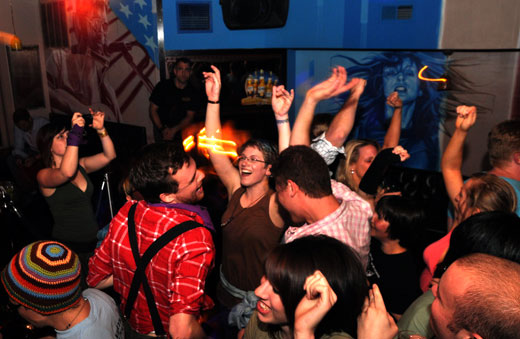 Queen City: Cincinnati Guerilla Queer Bar
By Ryan McLendon
An innovative approach to queer integration coupled with a healthy dose of visibility and fun has resulted in a new club night for the Greater Cincinnati area that could very well threaten the delicate balance of gay and straight nightlife.
It’s slightly salacious and is proving to be wildly popular and even, some report, a little addictive.
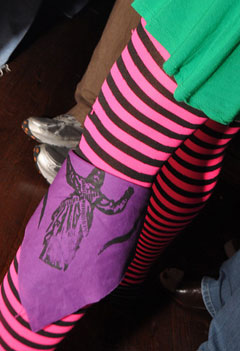
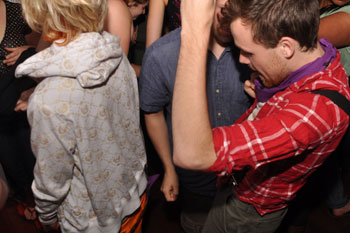
The trendy activity goes by the name Cincinnati Guerrilla Queer Bar, and consists of a once-a-month dance party that sends a significant portion of Cincinnati gays to places they might not normally go… specifically to straight bars. On the first Friday of every month, the word goes out to _______________ to meet-up at any one of Cincinnati’s most hallowed sports bars or traditional straight pick-up bars.
The organizer of these ___________ is of this homegrown concept, Ethan Philbrick, a young 23 year old activist who has far loftier goals than simple confrontation. He wants his heterosexual brethren to love, or at least just share a pleasant drink with their gay counterparts.
 Why shift Cincinnati’s rainbow-tinted landscape? Why would a rogue band of homos pester nice straight people while they’re out for the evening?
“The ability to be loving towards someone’s identity that is different than yours necessitates a kind of openness and ability to understand difference,” Philbrick said. “That is awesome and can be so huge for a community when a lot of people do that.”
His story is the antithesis of the Lifetime–esque coming-of-age, coming out story.
Philbrick grew up in Nantucket Island in Massachusetts, a homogenized community and a self-described bastion of privilege.
From a young age he identified as queer, cross-dressing in the second grade and having a preternatural flair for the theatric. When he came out as a teenager, he was lucky enough to be embraced by his “loving and engaged” family.
Sent to a progressive arts school outside of Boston as a teen, Philbrick discovered a sense of community and identity among the other homosexuals at the school. “It was basically gay male heaven,” Philbrick said. “75 percent of the male population was gay.”
Those experiences helped to develop his own flavor of gay. “I don’t really dig what seems to be the homo-normative or the mainstream gay identity,” Philbrick said. “I don’t want to identify that way.”
“If I have to pick one identity, I want to exist in ambiguous ‘identity-land’ which has informed… what I do now.
 Philbrick later attended the New England Conservatory of Music and then transferred to Brown in Providence, graduating with a music degree. There he met his future husband, Will, a medical student originally from Cincinnati on his way back to his hometown to attend graduate school at the University of Cincinnati.
Philbrick decided to tag along. “I sort of like making impulsive decisions,” he says. “It was the last place I thought I’d go, so it was perfect.”
The couple married in Boston and moved to the Midwest shortly after. Originally Philbrick thought he’d be a student, but settled on being an advocate. He began working at the Peaslee Neighborhood Center designing a music curriculum.
But Philbrick also wanted to affect some kind of change in Cincinnati’s LGBT scene. “What is it that I want to do in this city while I’m here?” he asks. “It always came back to things surrounding sex, sexuality, identity, and queerness.”
Cincinnati Guerilla Queer bar is a manifestation of that desire. Now instead of struggling with “gay” identity, Philbrick plays with them openly and in tandem with a chunk of the gay community. It doesn’t conflict with is variegated and hyper-aware gay identity.
“I like going to clubs and whatever would be stereotypical for a gay white male to do,” he said. “I like those things too.”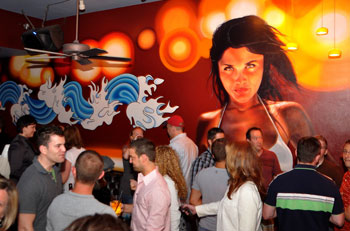
He wanted to be a member of the queer community and embracing a queer identity, but not the “set idea of gayness.”
This idea is rather remarkable in a city like Cincinnati. This city’s gay community is largely invisible, only coming to life for brief periods in the summer around Pride weekend, but ostensibly ignoring themselves the rest of the year.
Entities like Cincinnati Guerilla Queer Bar could be instrumental is coaching lukewarm gays from the woodwork and prompting them to celebrate their queerdom more often and in the presence of their straight counterparts.
That’s where the rub lies and why Guerilla Queer Bar is so important to Cincinnati’s gay vitality. It’s almost as if the gay community is frightened of what heterosexuals everywhere thinks of their queerness. This is the wrong way to think.
What all gay Cincinnatians should be doing daily is exposing themselves to the outside world –straight, gay and everything in between—and proclaiming their gay identities. Exposure and familiarity with gays can weaken the stigmas that still persist amongst out straight peers.
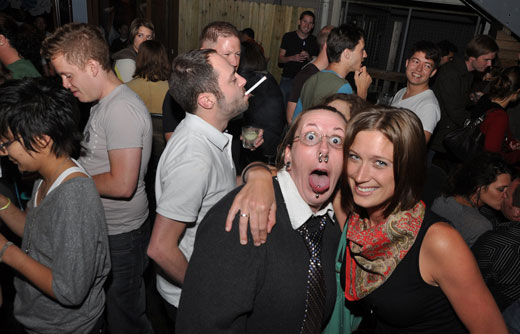 You can be someone’s token gay friend.
However, not every gay in Cincinnati is sold on Cincinnati Guerilla Queer Bar. Philbrick has encountered some resistance from other gay groups and other members of the community that aren’t expressly interested in flaunting their gayness around in straight bars.
I understand this marginally. Many members of the community have not experienced a society that accepts without reservation who they are. These members are obviously afraid of rejection, anger or even potential bodily harm. This is all they know.
To these individuals, I believe it’s important to be counted in society no matter what distinguishing marks you carry; if Guerilla Queer Bar isn’t your style, make an impact in other way.
But make an impact nonetheless. You’re not just living for yourselves in gay Cincinnati.
Photography by Scott Beseler
All photos taken at the Pavilion in Mt. Adams
Related Articles
Fewer options, fuller ERs: The behavioral health fallout of Medicaid cuts
MHA advocates for state funding that preserves behavioral health care and keeps rural hospitals open.
What does the new childhood vaccine schedule actually mean for your family?
Officials say not much will change. Experts aren’t so sure.

New platform to share ‘Common Ground’ from community ideas and solutions
Issue Media Group, a multilocal network of solutions-based, issues-focused digital publications, has launched a new national platform for increasing the reach and impact of its journalism.