This inclusive Cincinnati neighborhood thrives on people power
Grassroots organizations like NEST provide neighbors with the civic muscle and voice to create the kind of places they want to live in.
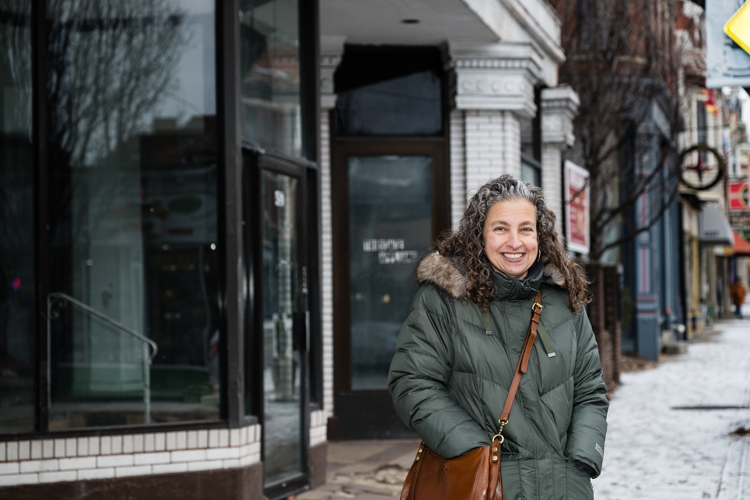
NEST Executive Director Rachel Hastings in front of Northside’s Park Theatre.
People who feel their voice matters are healthier and empowered. As divisions nationally appear to become deeper, this series, part of the larger Health Justice in Action project, examines efforts to make voices heard and improve community connections.
The hulking, 113-year-old building in the heart of Northside enjoys a colorful history. It opened in 1913 as a vaudeville and movie theater, with tenants including a barber shop and a pool hall. In the ‘70s, it screened X-rated movies, drawing the attention of the Cincinnati vice squad. It morphed into the Alpha Theater, showing foreign films and art house obscurities. Then it was the headquarters and commissary for a local bakery company, a second-hand furniture store, and most recently, a used appliance warehouse.
Its next incarnation is unknown, but chances are good that it won’t house any more washers, dryers, or skin flicks. The new owner is, essentially, the community of Northside, via its not-for-profit organization, NEST. NEST (Northsiders Engaged in Sustainable Transformation) is a community development corporation, one of 32 such not-for-profits in the city of Cincinnati whose mission is to create the kind of neighborhoods residents want.
These grassroots organizations can provide neighbors with the civic muscle and voice to shape their communities and create the kind of places they want to live in. This “people power” creates healthier communities and individuals, studies have shown. It can empower neighborhoods that have suffered from decades of disinvestment, racism, and neglect. And that’s healthy for everyone.
As events on the national stage seem to spin out of control, an antidote to the chaos is connecting with neighbors to get something done on the local level. “People need to have a sense of belonging to something bigger than themselves and know that they are valued,” says Elizabeth Bartley, executive director of Invest in Neighborhoods. The Cincinnati-based not-for-profit provides resources, training, and leadership development for neighborhood-based organizations. “Being able to participate and see the direction things are going in and have a say in it, gives a sense of agency about what’s going on around you,” she says. “That is how we can combat isolation, depression, all of the things that are going on in our society right now.”
Community development corporations are local, community-led organizations with expertise using tools to shape their neighborhoods. When they work, they can be a bridge linking the goals of the neighborhood, city or town with the people and power structures that can get them done – City Hall, developers, state agencies, funders, philanthropies. They provide an organized and effective voice for local residents to effect change where it matters – on the streets of their hometown.
“A community development corporation is founded on what is in the best interest of folks who live and work here,” says Rachel Hastings, executive director of NEST.
In the case of the Park Theatre, it was in the neighborhood’s best interests for NEST to purchase the historic edifice when it became available upon the owner’s retirement. It sits in the center of the Hamilton Avenue business district, is one of the most sizable structures on the strip, and for years has been something of a blight on the neighborhood.
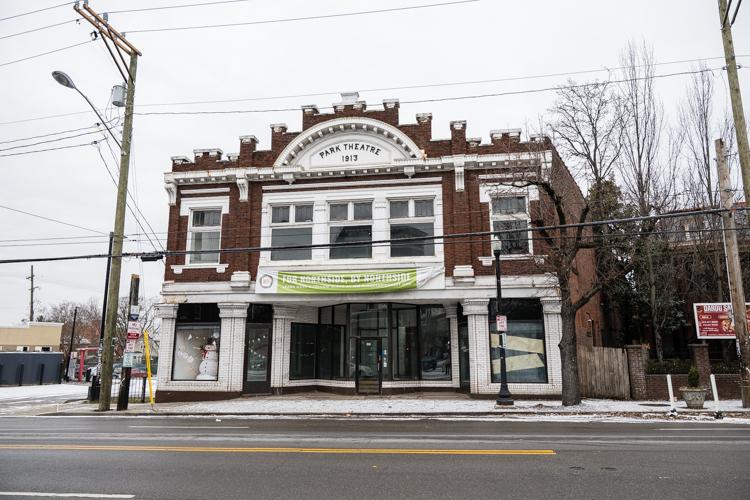
It’s been a vaudeville and movie theater, bakery, and used appliance store. The community will have a say in what’s next.
After buying it last year, NEST sought formal proposals to redevelop the site, and those are now under review by the organization and its board. “We have some really promising candidates, which is exciting,” Hastings says.
To hear what the community wanted, NEST organized an open house inside the property and asked for ideas. Those ranged from a community center, an art gallery, a nonprofit arts and education center to “the crown jewel of Hamilton Avenue.”
NEST is one of the most active community development corporations in Cincinnati and its impact on Northside has been significant. A few years ago, it acquired a property that had languished for years as an abandoned Sav-A-Lot grocery. It worked with a developer to build a 57-unit apartment complex designed to be affordable housing for LQBTQ seniors. John Arthur Flats is one of the first such projects in the country, affirming Northside’s longstanding acceptance of and ties to the gay and lesbian community.
Last summer, a White Castle closed that had stood for nearly 60 years at the gateway to the neighborhood. The corporation tore down its building and the real estate went on the market. NEST acted quickly to access city funding and buy the property, a key parcel at what is known as Knowlton’s Corner, where five Northside streets come together.
It’s not been decided what will be built there, but the purchase means the future of an anchor property will be determined by the community, not by a for-profit business or another fast-food purveyor. “Knowlton’s Corner is so important to the neighborhood that we couldn’t let an outside interest turn it into something else,” Hastings says.
The intersection has been a focus of NEST’s redevelopment efforts. On one of the corners, NEST bought a long-vacant wood-frame property on the corner that has survived two major floods but has defied local renovators efforts to return it to productive use. As a not-for-profit community-based organization, NEST was able to assemble funding from the city, a foundation, and a local preservation group, and plans to transform it into four affordable apartments upstairs and a small commercial space on the first floor.
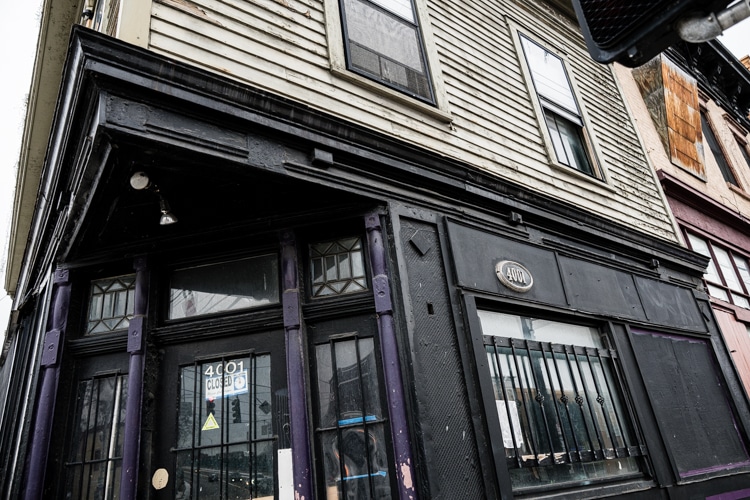
NEST bought this vacant property on Knowlton’s Corner and will transform it into affordable apartments.
On another corner across the way, NEST in 2021 bought the four-story, 19,000 square foot former Stagecraft costume store and is working with local developer Urban Sites to turn that into apartments.
Housing has been a focus of NEST’s efforts since its founding 20 years ago. It has purchased, renovated, sold or transferred 42 single-family homes since then, more than half of the sales restricted to low- or middle-income buyers. “We are still a neighborhood that wants more affordable housing, and that really sees the value of having a truly diverse population of folks from different income levels and different walks of life,” Hastings says.
Promoting housing that working people can afford is in keeping with the neighborhood’s character. “It’s important to make sure that everyone has a place to live,” says longtime Northside resident Harry Blanton. “We’re a community that’s open to diversity in all kinds of ways, and I think the community wants to be supportive and attractive to everyone.”
A former NEST board member who has had a career in community economic development, Blanton says the community values affordable housing as well as a lively business district. “As a resident, I’m really happy that we have an organization that’s professionally run, that’s keeping the neighborhood vibrant and bringing in new amenities and providing housing options,” he says.
Organizations like NEST reflect their communities. “There’s a personality to every single neighborhood,” Bartley says. “This work enhances that personality and gives people things that bring them together.”
All 14 NEST board members either live or work in Northside. Hastings herself has lived in the neighborhood for 27 years. In 2025, it surveyed residents, asking, among other questions, what the business district needs. (Increased cleanliness, more neighborhood events, pedestrian safety improvements, and more dining options were the biggest vote-getters.)
“All of this is really driven by what neighborhood residents tell us they want to see in the neighborhood,” Hastings says. “It’s about creating a healthy, vibrant neighborhood that is affordable and where a sense of social connection and social capital is really strong.”
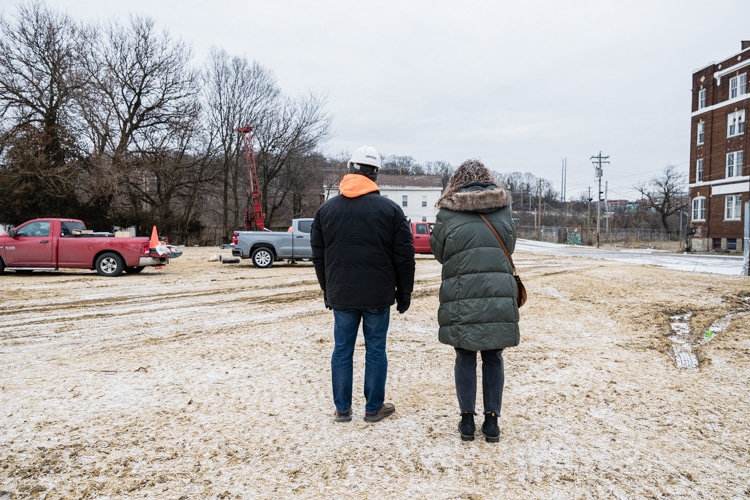
Soil testing at the former White Castle site in Northside. NEST purchased the key property in 2025
NEST is one of the most active community development corporations in Cincinnati, but is far from the only one. Working in Neighborhoods has been supporting home ownership in South Cumminsville and surrounding neighborhoods since the ‘70s. Madisonville’s Community Urban Redevelopment Corp. has spearheaded the revitalization of that neighborhood’s business district. College Hill’s CDC has raised and invested tens of millions to revive that neighborhood’s business district and bring in new housing. Westwood Works turned a decaying town hall into an event center and neighborhood hub.
What they have in common is their mission to respect a community’s history and respond to its desires for the future. They restore power to neighborhoods. When residents have a seat at the table where decisions are made, they typically respond with ideas that are good for the community’s health and that of its residents.
That’s what happened in the Butler County city of Middletown, where neighborhood group Middletown Connect shifted its approach to better understand what residents wanted and needed, changing from a top-down approach to one that allows issues to bubble up from the residents and then to connect them with resources to work for change. The result was residents who were more informed and better engaged.
READ MORE: Power to the people: Neighborhoods flex their muscles to bring about change
Civic engagement is linked to improved health, according to many studies. The very act of civic engagement is a predictor of good health, says Dr. Jerome Adams, who was U.S. surgeon general in the first Trump Administration. “When citizens are active in the democratic process, they are more likely to advocate policies that prioritize health, equity, and well-being,” he writes.
The Health and Democracy Index developed by the Institute for Responsive Government showed that states with greater levels of civic participation are healthier.
Funders across the county recognize this, such as the Los Angeles-based California Endowment, which has identified “people power” as one of its three central ideas for the coming decade, and promised “to promote greater civic activism as essential building blocks for an inclusive, equitably prosperous state.”
In Northside, people power is part of the neighborhood’s culture. “Folks really see themselves as having agency, not only over their family’s future, but the future of the neighborhood,” Hastings says. “And how can we create a space together that is a place that we all want to live, where we want to raise our kids and age in place.”
This series is made possible with support from Interact for Health. To learn more about Interact for Health’s commitment to working with communities to advance health justice, please visit here.
Author

Related Articles
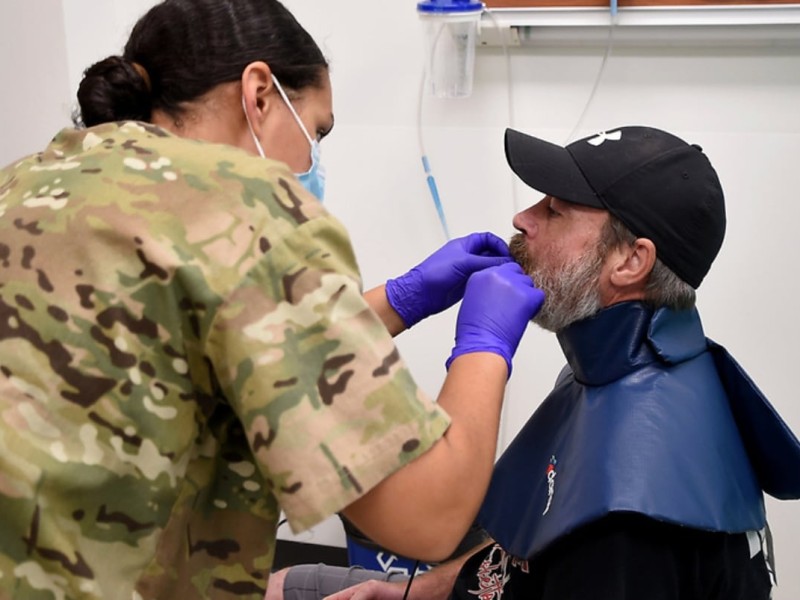
GuardCare partnership brings free healthcare to Ohio Appalachian residents
GuardCare provided free health services to nearly 500 Ohio residents, highlighting both collaborative solutions and persistent gaps in dental care.
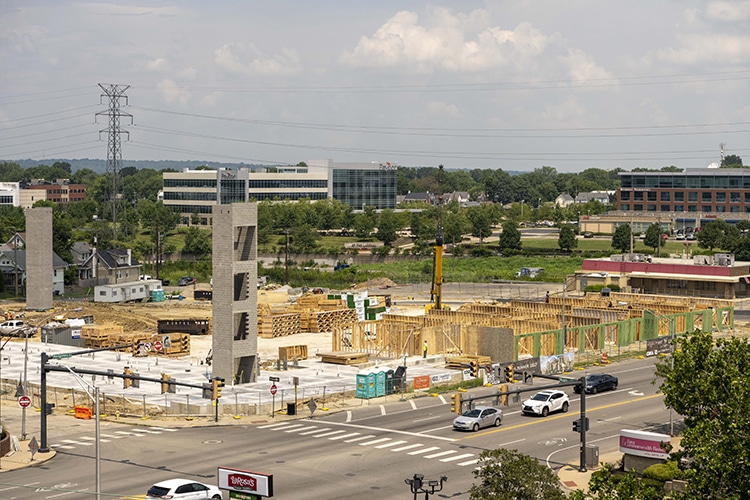
Who lives in our communities is changing. Housing needs to change with them.
The housing picture is complicated by changing demographics in the first-ring suburbs.
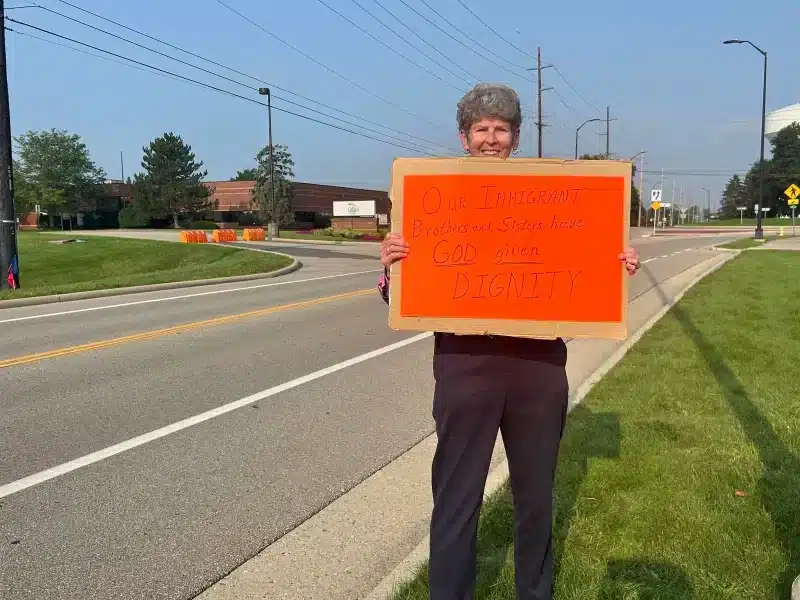
‘Even the nuns are mad’: Catholic sisters are standing for Haitians outside ICE offices
In Ohio, they’re playing a visible role among religious leaders who have been organizing demonstrations after mostly Springfield-area Haitian residents were summoned to report to immigration enforcement.