
Middletown, Butler County leaders mull fate of city’s historic buildings
As the city looks for a new path forward, perspectives may vary, but there is shared enthusiasm for an invigorated downtown.

Historic preservation’s favor or disfavor has run in cycles. In the 1960s, futuristic fascination spurred many civic leaders to bulldoze historic structures in the name of progress. A few decades later, citizens reconsidered what was lost when buildings central to a city’s legacy were reduced to rubble.
Today, the topic seems to have settled in an ambivalent state. Historic buildings and their civic and cultural impact merit consideration, but economic growth, construction jobs and a refresh of downtown building stock may provide residential units that catalyze a neighborhood’s renaissance. Newer building materials and methods may reduce a building’s, and a city’s, carbon footprint.
These are the issues facing those with a stake in a revitalized Middletown. As the city looks for a new path forward, perspectives vary, but there is shared enthusiasm for an invigorated downtown with increased downtown housing, greater employment opportunity, and enhanced retail and restaurant options that enhance quality of life.
As the 1920s roared, Middletown’s humming manufacturing economy was fueled by steel, paper mill and other production facilities that spurred a construction boom that yielded myriad handsome Art Deco buildings for hospitality, financial, and automotive market needs.
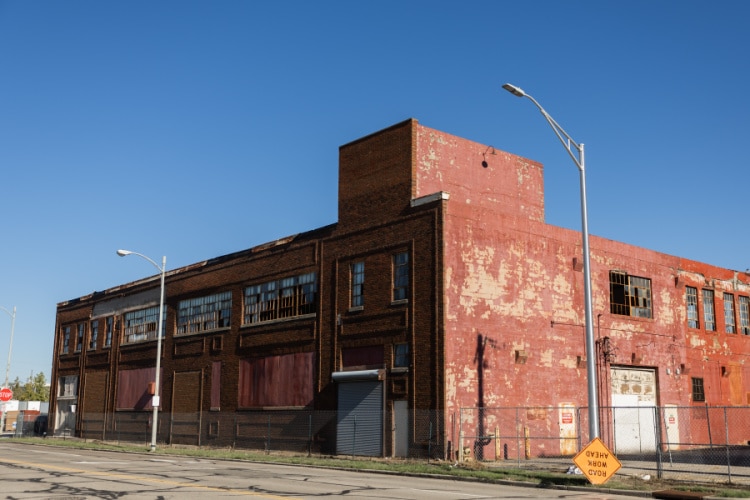
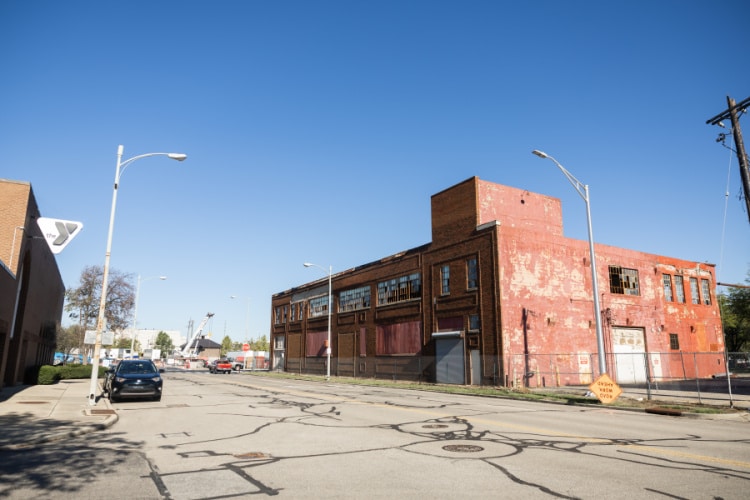
Built in 1922, the Manchester Hotel, located at 1027 Manchester Avenue, was a landmark inn that had hosted such famous guests as Ronald Reagan, John Philip Sousa and John McCain. As demand for a downtown Middletown hotel diminished, the Manchester gradually declined and finally closed in 2011. William Grau bought the property for $1 in 2014 with the intent of renovating the hotel but was never able to procure enough funds for the eight-figure renovation required. As such, he abandoned the project, and the Manchester property reverted to city ownership.
Also built in the early to mid-1920s and adjacent to the Manchester, the Sonshine Building, was originally opened as Dan Snider Ford, which it reportedly remained until the early 1950s. After an approximately decade-long succession of other dealership incarnations, the building was gradually abandoned.
In 2022, Trenton-based Vickers Demolition thoroughly cleaned out debris, trash, and any remaining furniture from both buildings to make them more attractive to potential future developers. Both buildings are listed on the National Register of Historic Places, which makes them eligible for redevelopment tax credits.
Other iconic downtown Middletown buildings include the First National Bank building. First National opened for business in 1865 and moved into the historic North Main Street building in 1921. The Goetz Tower Building, located at 1000 Central Avenue, was built in 1930 and is slated for a $12.3 million redevelopment by Canton-based Coon Restoration, funded in part by a $2 million award from the Ohio Preservation Tax Credit program.
Butler County Finance Authority, BCFA, the county economic-development organization
Joshua Smith, the president and CEO of the Butler County Finance Authority (BCFA), has learned about civic redevelopment through extensive city-manager experience serving in that capacity for 23 years total in Waukee, Iowa, Cedarburg and Howard, Wisconsin, and most recently, Hamilton, Ohio. His experience led him to this role that allowed him to focus on “closing development gaps” in projects that could bolster cities’ economic growth.
“I explored the idea of establishing a Hamilton-specific Port Authority and, when I proposed this to the Butler County Commission, they recommended taking over the Butler County Authority, which is now known as the BCFA,” he said.
BCFA fulfills the traditional roles typically encompassed with a Port Authority, Smith noted, but added that it provides traditional economic development activities across Butler County due to a lack of countywide development staff. He noted that a city managers’ attention and energy are spread thin across many departments, while an economic authority enables a laser-focus on civic growth.
He described Hamilton as the “first post-industrial city” for which he worked. Smith sees parallels between his early management tenure there and Middletown today.
“I definitely see the same potential in Middletown that I saw in Hamilton in 2010,” Smith said. “The downtown architecture is beautiful but there’s a lot of building vacancy. One difference is that I think Hamilton had an overarching consensus between stakeholders. Middletown’s leaders want to move forward, but there are several engaged groups rather than a single organization driving the effort.”
Smith stated that his aim within his BCFA role is to recruit proven Ohio developers into the city to evaluate its current building stock to provide “real-world insights” about potential best usage for a city’s amenities. One example was bringing in Dublin-based Crawford Hoying, which developed The Banks, and Blue Ash-based CMC Properties, among others, to review Middletown to discuss how to fulfill goals of increased market-rate housing and retail to a legacy downtown such as Middletown’s.

“It’s been consistent across the board,” he said. “They say that the Main and Central corridor must be saved. Those projects make sense.”
However, he noted disappointment that none of the developers brought in provided an optimistic prognosis for the Manchester. He recounted comments about the lack of demand for a downtown hotel, and that repurposing to a restaurant or apartments would not be cost-effective.
“The Manchester contained 110 hotel rooms, but the way its infrastructure is laid out, it would only convert into 40 or 50 apartments,” Smith said. “I had developers say you could write them a $5 million check and give them the property for $1, and it still wouldn’t be profitable. One said that would apply to a $10 million grant.”
Translation: meeting the need for increased housing stock downtown efficiently with substantial first-floor retail, restaurant, or mixed-use space would require the Manchester’s and Sonshine Building’s demolition.
He sympathizes with the desire to preserve Middletown’s historic buildings, a common sentiment among residents in many communities, and one that is particularly justified if the alternatives are parking lots and businesses such as convenience stores that add little to community character.
“Development requires an intentional plan with a long-term vision in mind,” Smith said. “If the determination is made for the Manchester and Sonshine come down, the goal would need to be mixed-use development that would bring in hundreds of new downtown residents. I’m a big believer in positive momentum, and I think that would be a game-changer.”
Smith noted that developments not only spur economic growth, but also elevate public safety thanks to increased activity, which bolsters development at the Goetz Tower and First National Bank Building. He noted they couldn’t achieve the same scale as a new development on the Manchester/Sonshine corridor, but that 10-30 new residential units and a first-floor anchor would burnish a revitalized Middletown. And, referencing the increasingly sought-after greenspace for urban renaissance, Smith cited the proposed downtown park that would be directly across the street from a potential mixed-use development. Smith estimates that a catalyst mixed-use development for downtown Middletown would require a $25-30 million investment. Long-term, he thinks retail, residential, entertainment and greenspace developments within a three-block downtown radius could tally $50-$75 million over the next decade.
He noted a key part to the Hamilton redevelopment; the opening of Marcum Park led to the construction of the 102-unit Marcum apartment building and 10,000 sq. ft. of retail. These positive steps led to the $160 million development of Spooky Nook, touted as America’s largest indoor sports complex.
Smith acknowledged the multifaceted financial formula that such an undertaking would require, such as historic tax credits, new markets tax credits, and mezzanine financing. There are always gaps in a project’s capital stack (debt and equity) that will need to be filled.
The city of Middletown has recently posted a request for qualifications (RFQ) to attract developers to undertake revitalization projects in downtown Middletown. The city will accept proposals through 4 p.m. on November 3, 2025, and will undertake several weeks of due diligence review to determine compatibility for the city’s goals. Smith expressed optimism that, between RFQ submissions and developers he’s contacted, that firms with complementary skillsets will synergize Middletown development.
Smith acknowledged that being in a civic or economic development leadership position requires thick skin. He recalled advice that another Ohio city manager gave him when Smith took the Hamilton position: “Delete your social media accounts.” On one Middletown-centric Facebook discussion group, opinions on Middletown’s development range from go-go optimism to nihilistic “blow it all up” missives.
Saving Downtown Middletown (SDM) strives to preserve architectural gems
Gabe Schoenlein, a pharmaceutical business-development professional, serves on the Middletown Planning Commission and is the director of Saving Downtown Middletown (SDM), which strives to preserve Art Deco architectural gems. His passion for downtown preservation was stoked by a presentation by the city’s building inspector about the Manchester and other historic structures. A no-holds-barred assessment of their structural challenges triggered a City Council discussion this past spring that subsequently civic passions to preserve them, and Schoenlein was tapped to lead the effort.
“We’ve been buzzing around engaging city staff and council,” Schoenlein said. “It started as perhaps a bit adversarial, but it’s turned into a collaboration where they’re listening, and we understand each other’s expectations. We don’t agree on every point, but there’s respect and two-way communication.”
Schoenlein acknowledged the Manchester’s decline and the past failures of developers to follow through on broad strokes of development on these city-owned properties. Homeless squatters have infiltrated the building creating public-safety hazards, and Schoenlein noted that the city’s maintenance of the building has been lacking.
“I haven’t heard reports that Manchester’s structural integrity is compromised, it’s just in bad shape,” Schoenlein said. “It’s too much of an architectural gem to justify knocking it down.”
He referred to the city’s 2022 comprehensive development plan, with guidance that advocates mixed-use development and market-rate housing, likening it to successful plans already executed in Lebanon and Hamilton. He conceded that some developers specified the Manchester’s current condition as a barrier to Middletown development plan.
“We understand the possibility that the Manchester might need to be demolished if there is no viable development for it,” Schoenlein said. “If it’s decided that this is the case, it’s important that any development that is built be in keeping with Middletown’s existing historic character. If tearing down the Manchester is the course of action taken, we will be holding city leaders accountable for following through on the promised developments.”
As the city also pursues development of Renaissance Pointe along Middletown’s I-75 corridor, Schoenlein is hopeful that city leaders remain committed to both projects’ success. Looking ahead to next week’s City Council elections, he noted that not all candidates have demonstrated the same level of knowledge about or commitment to downtown revitalization and hopes that efforts from SDM and like-minded organizations to familiarize them with the importance of preserving an authentic Middletown identity.
Schoenlein appreciated the initiative and creativity that city employees and organizations such as Downtown Middletown Inc. have taken in creating a calendar of events to attract people downtown but said that a robust development plan requires a sustained effort and hopes they “have an appetite for risk.”
“Expecting improvement without significant investment is crazy,” Schoenlein said. “If the city is called on to spend tax dollars to support local businesses or increase investment for renovation or construction projects downtown, my hope is they embrace this is necessary for growth and improvement.”
City views Renaissance Point and downtown redevelopment as complementary undertakings
Jacob Schulte, the assistant director of Middletown’s community and economic-development department, noted that the city’s development RFQ entails the aforementioned buildings, as well as the property that formerly housed a Swallen’s department store and vacant lots on Broad Street’s north side. The city has previously leaned into several RFQs to spur development, including one issued in 2022 for a downtown “refresh,” as well as for school-building revitalization and refurbishing Middletown’s town hall.

“We want to drive as much development interest that would bring quality mixed-use projects to downtown Middletown,” Schulte said. “It’s unique because we’ve deeply engaged community feedback at the front end to flesh out the format, content, and goals of objectives.”
Schulte said that the city views Renaissance Pointe and downtown redevelopment as complementary undertakings, with Renaissance cultivating a more suburban milieu that will provide a mixture of office space, retail, entertainment amid a more expansive greenfield area along the interstate corridor, whereas downtown redevelopment will pursue projects that fit within a tighter urban-core footprint.
To reignite the Manchester, Schulte said it was important to keep options open when evaluating the site’s best use but acknowledged that market conditions and the cost of redevelopment could make reclaiming its original use as a hotel property challenging.
However, it’s National Register designation opens the door to tax credits to facilitate renovation, but that they do carry restrictions and stipulations that preserve its original character.
The state’s historic preservation office certifies the value of tax credits for a historic property’s renovation, with the value of the tax credits based on the project’s qualified rehabilitation expenditures (QREs), following IRS-established criteria. Architectural and engineering fees and constructions are included as QREs; property acquisition costs, building additions and non-permanent furnishings are not.
After two weeks of evaluating RFQs submitted before the deadline, city officials will meet to determine the most viable development candidates. Looking ahead, Schulte thinks groundbreaking on new projects by late 2027 is a realistic timetable.
“It’s a balancing act to provide growth that brings the city forward through development that brings new jobs, new retail, more residential opportunities that optimize impact,” Schulte said. “And, through surveys, public outreach and staying engaged with the community, transparency has been a priority.”
In the spring, the city of Middletown issued a survey asking residents these questions:
- Do you support preserving the Manchester Inn and Sonshine Buildings?
- Do you support demolishing the Manchester and Sonshine Buildings?
- What would you like to see developed on the site if the buildings are demolished or repurposed?
When the survey closed, 571 responses were issued, but, due to technical difficulties, survey results haven’t yet been released.
This Partner City Middletown series is made possible with support provided by: Cincinnati Commercial Contracting, the city of Middletown, the Middletown Community Foundation, and the Chamber of Commerce serving Middletown, Monroe and Trenton.
Author

Related Articles
Partner Partner Content Architecture Matters panel discussion: Good design is good for people
Your invitation from AIA Cincinnati and Soapbox to join a thoughtful community conversation about good design.
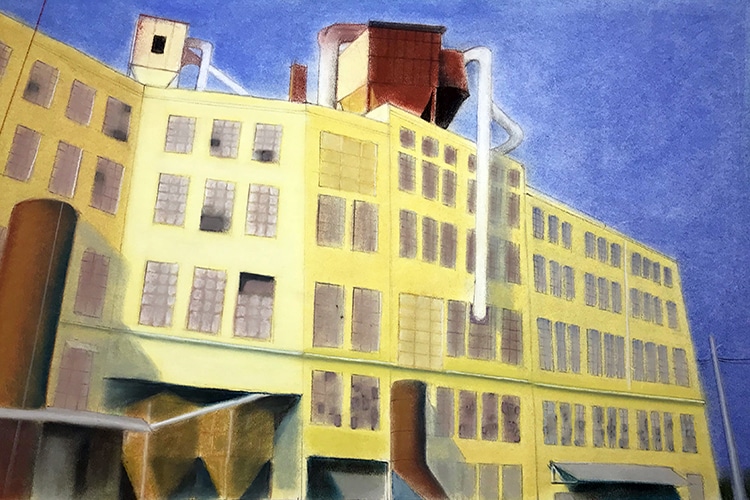
Historic properties are prime candidates for residential and mixed-use developments
The revival of legacy commercial, educational and manufacturing properties embraces sustainability, technology and adds housing.
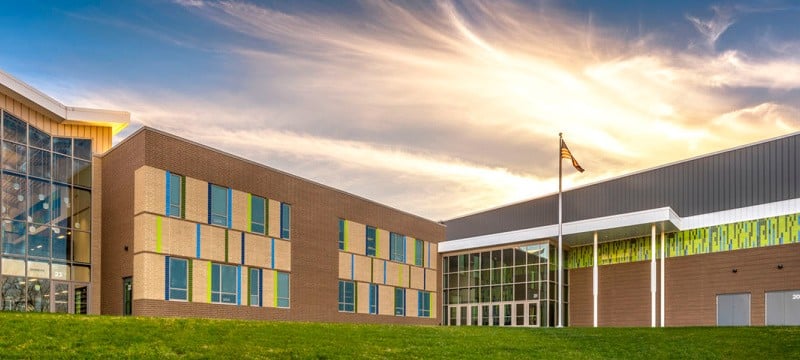
Partner Partner Content Good design is good for people
Buildings do indeed shape us. Learn key principles to help understand, evaluate, appreciate, and advocate for good architecture and design.