
Families wait while power draws its borders
House Bill 442, the proposed ‘People’s Map,’ seeks to realign representation with Ohio’s actual voting patterns.
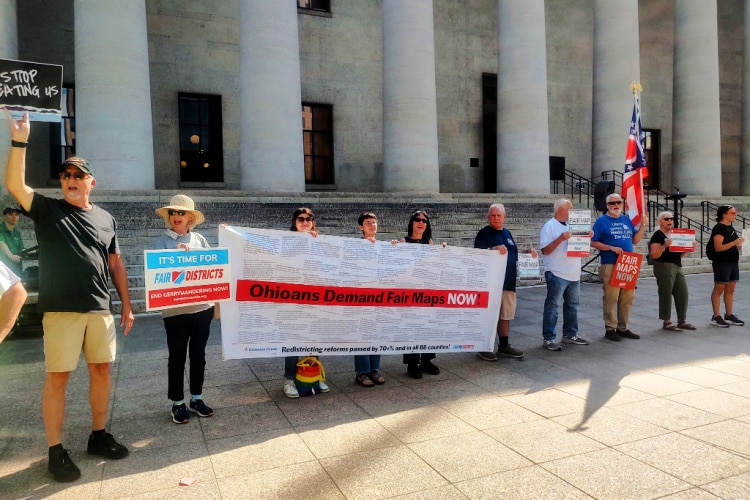
With just days left before the Ohio Redistricting Commission’s October 31 deadline, House Minority Leader Representative Dani Isaacsohn (D-Cincinnati) presented House Bill 442, the Democrats’ proposed ‘People’s Map’, describing it as a fair, constitutional, and community-focused alternative to the state’s long-criticized congressional boundaries.
In testimony before the commission in Columbus, Isaacsohn, who represents Ohio District 24, called for a bipartisan reset and a return to accountability.
“Ohioans desperately need us to get this right,” Isaacsohn told members. “Every day we are reminded of the consequences of having unrepresentative districts. Affordable healthcare, food for children, and economic stability all depend on responsive, accountable representation.”
Across Ohio, families are waiting for the lines to be drawn that will determine how those very needs are met, where school dollars go, which hospitals stay open, and who speaks for their communities. Turning away from the noise of national politics and demanding accountability locally, advocates say, is how Ohioans can finally lock it in.
At the October hearing, about two dozen activists arrived in purple shirts reading “Where is the map?” They sat through another brief session that ended without progress, jeering as the commission adjourned. The chants – “Shame,” “Do your job,” and “Represent us” – echoed through the chamber as lawmakers packed up without releasing a single proposal.
Minority leaders Antonio and Isaacsohn urged the commission to consider their plan, but Republicans offered no counter-map and little urgency. Co-chair Representative Brian Stewart (R-Ashville) for District 12 said another hearing would occur but gave no commitment to present a plan. “If I give you a menu and say you shall choose fish, chicken, or steak,” Stewart told reporters, “choosing steak is not a failure to choose fish,” he said, according to the Ohio Capital Journal.
Gov. Mike DeWine was equally cautious, telling reporters he hoped an agreement could be reached but admitted, “We don’t know yet.”
If the commission fails to adopt a bipartisan plan by October 31, redistricting authority reverts to the legislature, where the Republican supermajority can pass its own map by November 30 with a simple majority vote. That process could potentially secure a 13-2 GOP advantage for the next decade.
Isaacsohn’s proposal, co-sponsored with Senate Minority Leader Nickie Antonio (D-Lakewood), seeks to realign representation with Ohio’s actual voting patterns. Using data from the past ten years of statewide elections, the map reflects a roughly 55 percent Republican to 45 percent Democratic split, creating eight Republican-leaning and seven Democratic-leaning districts. Five districts fall within a five-point margin, doubling the number of competitive seats compared with the current plan.
House Bill 442 keeps 74 counties whole, splits only 14 once, and ensures none are split twice. It creates three districts entirely within a single county, increases compactness, and protects minority voting rights under federal law. Supporters say it mirrors the 2018 constitutional amendment’s requirement that maps not “unduly favor or disfavor” a party or incumbent and that it restores public confidence by keeping cities, counties, and school districts intact.
Beyond numbers, Isaacsohn tied gerrymandering to daily realities. “When politicians pick their voters instead of the other way around, we see hospitals closing in rural communities, healthcare premiums rising by hundreds of dollars, and children hungry in school lunchrooms,” he said. “Those are the costs of a government that doesn’t represent its people.”
“These aren’t side effects,” said Mia Lewis, associate director of Common Cause Ohio and a leader with Fair Districts Ohio, “They are design.”
Lewis explained that when politicians draw lines to choose their voters, democracy becomes performance. “If the outcomes are already decided, voters stop showing up and politicians stop listening,” she said. “They’re letting the clock run out again. The constitution calls for public hearings, but the public is shut out.”
READ: This news story continues Soapbox coverage of Ohio’s redistricting process and the recent feature, “The Lines Between Us.”
In Cincinnati, that erosion is personal. Hamilton County, one of the most politically balanced and diverse regions in the state, remains split between urban and rural districts, weakening its collective voice in Washington. Isaacsohn’s own home district, along with Emilia Sykes’s in Akron and Marcy Kaptur’s in Toledo, are among the seats Stewart described as “most discussed” in private negotiations.
Lewis warned that partisan gridlock is not just about political advantage but about governance itself. “If the real competition happens only in primaries, candidates are pushed to the extremes,” she said. “Moderates, the people who can actually govern, lose out. Everyone else pays the price.”
Reform advocates are urging residents to stay engaged, submit testimony, and attend hearings once they are announced. “Transparency, education, and persistence,” Lewis said. “That’s how we fight back. These lines decide more than elections, they decide how we live.”
For Isaacsohn, the challenge is both political and moral. “These have to be Ohio maps for Ohio’s citizens and no one else,” he told the panel. “We welcome feedback and amendments from our colleagues. H.B. 442 isn’t the only path to fairness, but it’s a start, and it’s time we proved that Ohio’s democracy still belongs to the people.”
Until then, families across Ohio are still waiting for the lines that will define who gets heard.
Author

Related Articles
[OPINION] ODOT missed by not funding the Western Hills Viaduct and other urban projects
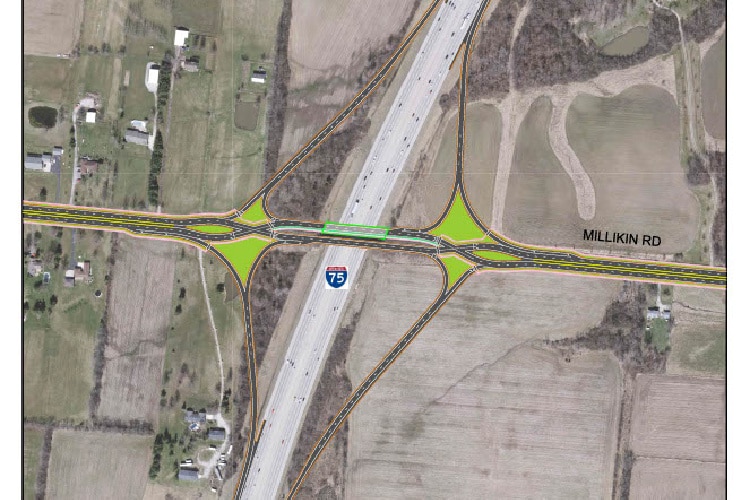
The only funded project in the Cincinnati region is a proposed interchange area that is currently farm fields.
Schools on the brink: Centers of small-town life, these two districts face financial emergencies
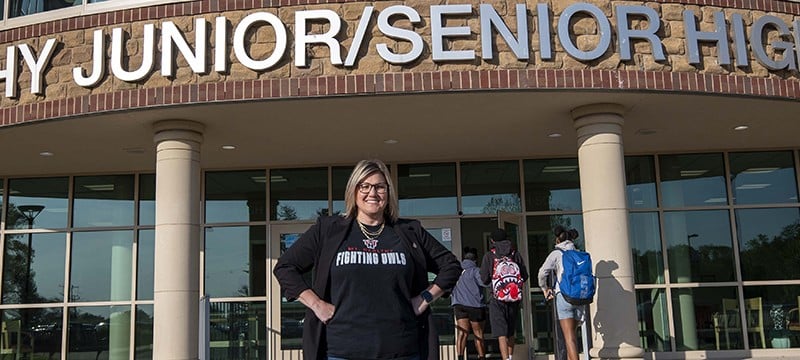
Public schools are sources of pride and launching points for lives and careers. But in Ohio, an arcane, unfair system of funding schools persists.

Video We’re getting involved because we know what’s coming
Concerned citizens are taking action — making whistle kits, getting refreshers in the Constitution, and reaching out to immigrant-owned businesses. The efforts are antidotes to the violence and chaos.