Clovernook offers opportunities, programs for visually impaired
If you’ve heard of the Clovernook Center for the Blind and Visually Impaired, then you may already be familiar with the many ways they assist disabled Cincinnatians. But it might surprise you to learn what else is happening at the center’s North College Hill campus. Did you know, for example, that Clovernook is home to the nation’s second largest Braille print house? Its annual output currently includes 26 magazines—Braille versions of household names like Rolling Stone, Martha Stewart Living and National Geographic—as well as 168 book titles. Clovernook also contracts with various government and private entities to produce everything from IRS file folders to packaging for items available at stores like Target. Founded in 1903 on land procured by William Procter, Clovernook served as Cincinnati’s first home for blind women, and continues to maintain strong business ties with P&G. Visitors can schedule a guided tour of the grounds, which feature the historic Cary Cottage. In keeping with its mission, Clovernook’s staff—42 percent of whom experience some level of visual impairment—work to inspire self-sufficiency by offering art and recreational activities, youth services, independent-living and vocational training as well as counseling and job placement. A longstanding practice of employing from within has resulted in jobs for some patrons, but the overriding goal is placement within the larger community, says Jessica Salyers, Clovernook’s manager of development and media relations. “Kroger is one company that makes [hiring disabled individuals] a priority,” Salyers says. “But some companies don’t realize or forget that you can make jobs accessible for people with disabilities or impairments. Our employment specialists have had success working with local companies to get them to think about providing those opportunities.” Taking advantage of Clovernook’s services starts with a brief evaluation to gauge the level of visual impairment as well as personal goals and skillsets. Trained social workers then help to identify potential solutions for clients’ needs. “Sometimes we’re able to provide a short-term solution, but then if the individual’s eyesight becomes worse later, we reopen their case,” Salyers says. “Some individuals work with our specialists for quite a long time.” Salyers notes key differences between Clovernook and area organizations like the Cincinnati Association for the Blind. For example, many of Clovernook’s youth services are available to children 8 years and older. “If we know a family that has an infant that’s been diagnosed with visual impairment, we’ll do everything possible to refer them to another organization,” Salyers says. “And they’ll refer older kids to us for our youth services, which are very focused on summer camps. It’s not at all competitive; it’s about serving as many people in the community as possible.” Clovernook’s calendar routinely features art exhibits, fundraisers and special events. “We love to have people on-site here,” Salyers says. “We have events coming up, as well as a lot of volunteer opportunities. We love to be more connected to people in our community.” Do Good: • See paintings and pottery this month by Lynn Jansen, a Clovernook artist and board of trustees member who is visually and hearing impaired. “Candelite Terrace” explores Jansen’s memories of light and color in the neighborhood where she grew up. The exhibit will remain open Monday-Friday, 8 a.m. – 5 p.m. until Oct. 26. • Donate or volunteer by contacting 513-728-6261 or csevindik@clovernook.org. • Celebrate “White Cane Safety Day,” Oct. 15, which kicks off with a City Hall rally at 10:45 am, followed by a walk to Fountain Square. By Hannah Purnell Follow Hannah on Twitter.
If you’ve heard of the Clovernook Center for the Blind and Visually Impaired, then you may already be familiar with the many ways they assist disabled Cincinnatians. But it might surprise you to learn what else is happening at the center’s North College Hill campus.
Did you know, for example, that Clovernook is home to the nation’s second largest Braille print house? Its annual output currently includes 26 magazines—Braille versions of household names like Rolling Stone, Martha Stewart Living and National Geographic—as well as 168 book titles.
Clovernook also contracts with various government and private entities to produce everything from IRS file folders to packaging for items available at stores like Target.
Founded in 1903 on land procured by William Procter, Clovernook served as Cincinnati’s first home for blind women, and continues to maintain strong business ties with P&G. Visitors can schedule a guided tour of the grounds, which feature the historic Cary Cottage.
In keeping with its mission, Clovernook’s staff—42 percent of whom experience some level of visual impairment—work to inspire self-sufficiency by offering art and recreational activities, youth services, independent-living and vocational training as well as counseling and job placement.
A longstanding practice of employing from within has resulted in jobs for some patrons, but the overriding goal is placement within the larger community, says Jessica Salyers, Clovernook’s manager of development and media relations.
“Kroger is one company that makes [hiring disabled individuals] a priority,” Salyers says. “But some companies don’t realize or forget that you can make jobs accessible for people with disabilities or impairments. Our employment specialists have had success working with local companies to get them to think about providing those opportunities.”
Taking advantage of Clovernook’s services starts with a brief evaluation to gauge the level of visual impairment as well as personal goals and skillsets. Trained social workers then help to identify potential solutions for clients’ needs.
“Sometimes we’re able to provide a short-term solution, but then if the individual’s eyesight becomes worse later, we reopen their case,” Salyers says. “Some individuals work with our specialists for quite a long time.”
Salyers notes key differences between Clovernook and area organizations like the Cincinnati Association for the Blind. For example, many of Clovernook’s youth services are available to children 8 years and older.
“If we know a family that has an infant that’s been diagnosed with visual impairment, we’ll do everything possible to refer them to another organization,” Salyers says. “And they’ll refer older kids to us for our youth services, which are very focused on summer camps. It’s not at all competitive; it’s about serving as many people in the community as possible.”
Clovernook’s calendar routinely features art exhibits, fundraisers and special events.
“We love to have people on-site here,” Salyers says. “We have events coming up, as well as a lot of volunteer opportunities. We love to be more connected to people in our community.”
Do Good:
• See paintings and pottery this month by Lynn Jansen, a Clovernook artist and board of trustees member who is visually and hearing impaired. “Candelite Terrace” explores Jansen’s memories of light and color in the neighborhood where she grew up. The exhibit will remain open Monday-Friday, 8 a.m. – 5 p.m. until Oct. 26.
• Donate or volunteer by contacting 513-728-6261 or csevindik@clovernook.org.
• Celebrate “White Cane Safety Day,” Oct. 15, which kicks off with a City Hall rally at 10:45 am, followed by a walk to Fountain Square.
By Hannah Purnell
Follow Hannah on Twitter.
Author

Related Articles
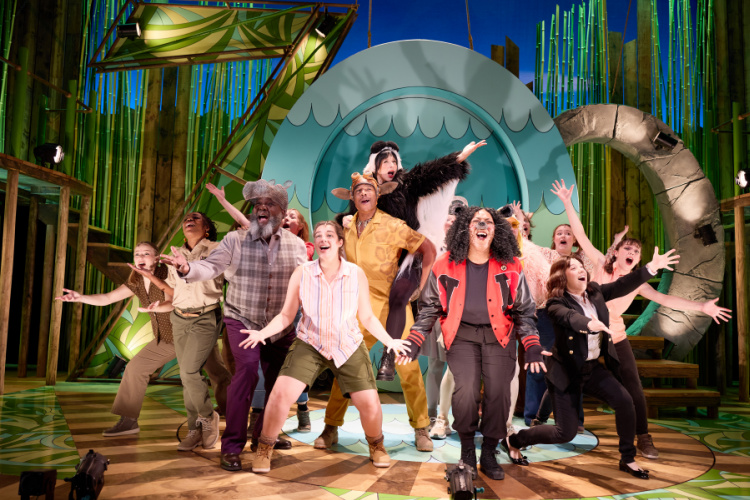
World premiere of “It’s Fritz” delivers as a celebration of art, identity and community
The sequel to “Fiona: The Musical” is on stage now at Ensemble Theatre.
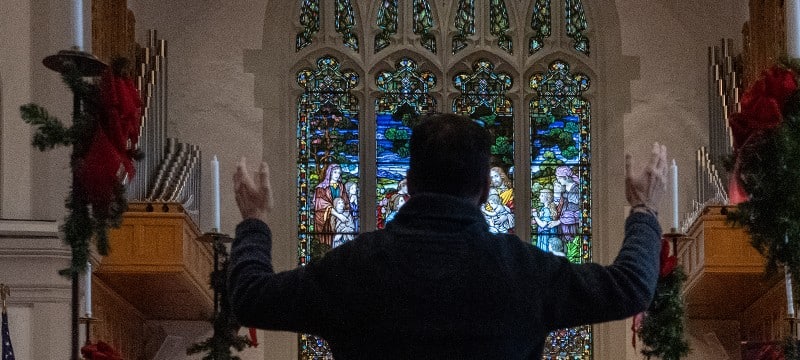
Where we worship: Sacred spaces in Cincinnati
Greater Cincinnati is blessed with an abundance of diverse places for worship, faith and community. Here’s just a few of them.
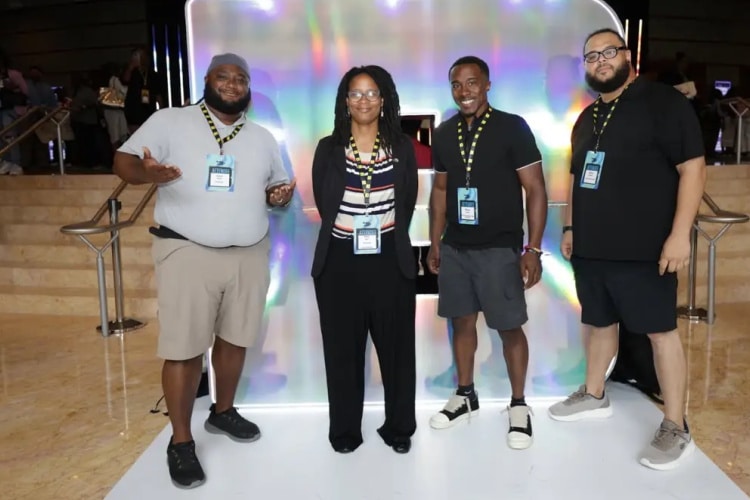
Where innovation meets impact: How Develocode is shaping tech for public good
Cincinnati-based software firm partners with founders building tools that advance public safety, accessibility, and community-centered innovation.