
Discovering Musical History on Race Street
There are those that believe that 811 Race street was home to what may very well have been one of the single most important recording studios in the history of the known Universe. With landmark sessions by Flatts & Scruggs, BullMoose Jackson, The Delmore Brothers, and country legend Hank Williams, Herzog Studios recorded country music before Nashville. Leading the charge to unearth this unique part of musical history is the Cincinnati USA Music Heritage Foundation and its President, Elliot Ruther.
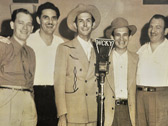
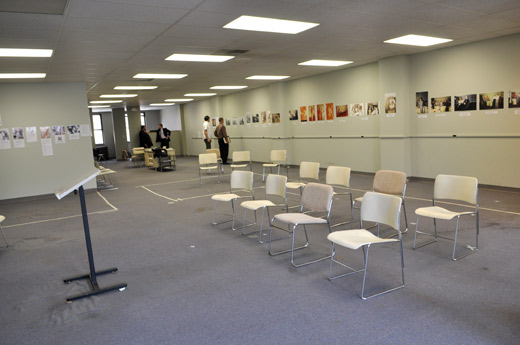
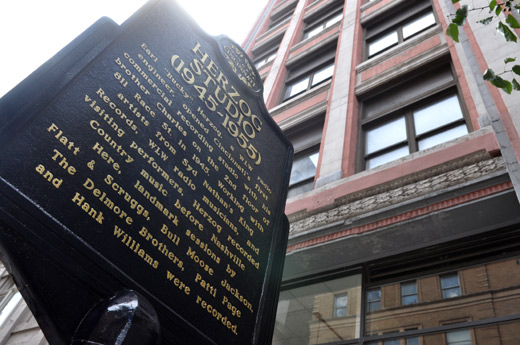 Stepping off the elevator on to the empty second floor of 811 Race Street, visitors are greeted by tired and gray stained carpet, drywall painted a sea foam green and a white drop tile ceiling, circa 1982. The building’s top floors currently serve as the busy world headquarters for alternative weekly, Citybeat, and the first floor once housed Artworks. But you would be hard pressed to find anything special or historical about the empty space on the building’s second floor.
Except for this: there are those who believe that the second floor of 811 Race was home to what may have very well been one of the single most important recording studios in the popular music history – home to recordings by country legend Hank Williams and some of the first rhythm & blues records ever made. Leading the charge in unearthing the studio’s history is the Cincinnati USA Music Heritage Foundation, led by President Elliot Ruther.
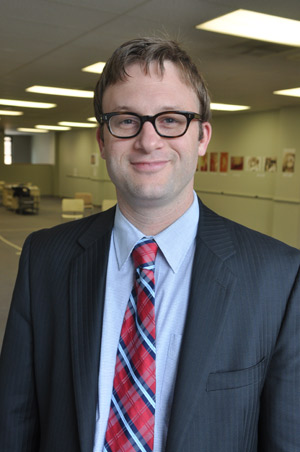 And while Ruther isn’t willing to proclaim Herzog – the name of the former recording studio which operated from 1945 to 1955 at 811 Race – to be as historically important as say, Sun Studio in Memphis, there’s little doubt that important things happened in this space over fifty years ago. Ruther believes that Herzog Studios is an important site which could bring significant international notice to Cincinnati.
“We have an opportunity to bring a greater international presence into this city by showcasing our musical history,” he says.
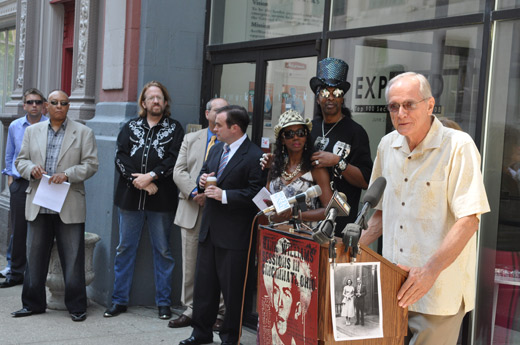
In addition to Ruther, the Cincinnati USA Music Heritage Foundation is led by a diverse mix of musicians and local business people, including Patti Collins, Business Affairs Director for Bootzilla Productions and wife of Rock and Roll Hall of Famer, Bootsy Collins, local musician Marvin Hawkins, Hamilton County librarian Brian Powers, local music historian Chris Burgan, African American Chamber of Commerce Executive Director Sean Rugless, Shake It Records owner Darren Blase, former P&G exec Russell Driver, and former Cincinnati USA Chamber of Commerce PR spokesman, Raymond “Buz” Buse. The group’s primary attention has been focused upon unearthing and documenting Cincinnati’s rich musical heritage. Recent efforts have included the erection of historic markers at the old King Records Studio location on Brewster Avenue in Evanston, as well as Herzog Studios downtown.
Recent musical archaeology conducted by the Foundation has determined that Herzog was operated under the auspices of its namesake, WLW engineer Earl “Bucky” Herzog. Assisted by his brother Charles, Earl operated the city’s first independent recording studio and live performance space. Herzog Studios actually predated the better known King Records. King’s owner Syd Nathan recorded numerous artists at Herzog prior to the construction of his own studio in Evanston.
 In the decade after WWII, landmark R&B, bluegrass, country, pop and jazz recordings were made at the Herzog studios by artists like The Delmore Brothers, Patti Page, and Flatts and Scruggs. Most of these artists recorded at Herzog after performing at nearby WLW, which, at the time, broadcast music from not only recordings but also broadcast regular live performances featuring these artists.
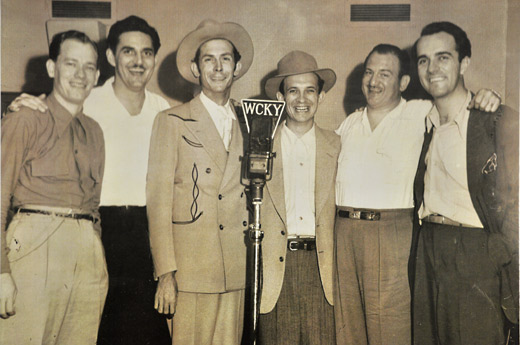
An intimate fund-raising show will be held at Herzog this August featuring Cincinnati rocker Dallas Moore and legendary guitarist Jody Payne. Payne, a graduate of Norwood High School, played with Willie Nelson for 33 years. The purpose of the fund-raising show, Ruther explains, “is several fold. Foremost, the show commemorates the 61st Anniversary of Hank William’s sessions at Herzog.”
Ruther says that the Foundation views the recognition of the Herzog space as especially significant since “leading Hank Williams scholars have confirmed that the Herzog Studio now represents the last surviving structure, anywhere, in which Hank Williams commercially recorded.” Research also demonstrates that Herzog was also the recording site for many classical, Jazz and R&B recordings, including the first rhythm and blues sessions of Bullmoose Jackson sixty years ago. Jackson’s “Big Ten Inch Record,” was covered to great acclaim by Aerosmith, and his recording of “HoneyDripper” is considered to be the very first R&B recording.
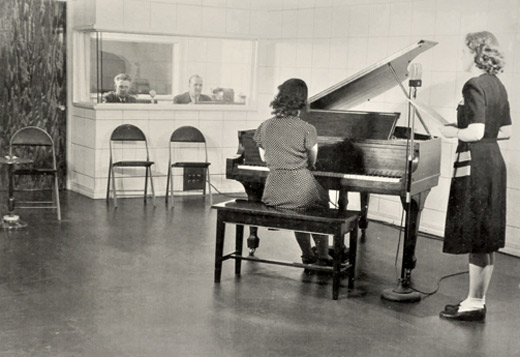 The Dallas Moore Show is also important, Ruther notes as the show serves as a fundraiser to further the Heritage’s continuing efforts. “Given the receipt of a recent anonymous grant,” Ruther explains, “the Heritage Foundation has signed a year-long lease. This lease provides the Foundation an opportunity to prove that we can make Herzog Studios viable.”
Above all, Ruther wants to link Cincinnati’s musical past and present. He also hopes that Herzog will become the epicenter of local music; the collective living room for all members and genres of the local music movement. Such a symbiotic relationship is, Ruther believes, not only logical, but essential to the success of the Foundation. “From the very beginning,” Ruther notes, “the Foundation has been driven by the local music scene, whether it be Bootsy [Collins], Chris Burgan, or others.”
 In this vein, the Foundation plans on using the Herzog space as their new headquarters, a venue in which to host musical events and exhibits as well as other performances which would permit Cincinnati to celebrate its rich musical history. Ruther also states that he can see the day when the Herzog space will again be used for recording and hopes that one day soon the space will become a central location for the MidPoint Music Festival.
Recently the space was used once again as a studio by local recording engineer Dave Davis. Davis recorded a tribute concert given by the Comet BlueGrass All-Stars on the sixty-fifth Anniversary of Flatts and Scruggs recording “Foggy Mountain Breakdown” at Herzog. Davis supports the resurrection of the space noting that the room retains much of the same acoustics as during its operation. He also noted that from a historical perspective, “Herzog studio was also one of the first independent studios.” Davis added that, “the room is also important because it served as a link between the performance era [at local radio stations] – particularly WLW, and the recording era.”
 Ultimately, it’s hard for Ruther to say exactly what will become of Herzog Studios. The more he unearths, the more he finds. “There are several lifetimes of work here for anyone interested,” he says. Thus, despite the hard work of everyone involved, there’s much that remains unknown about the spot.
A prime example being the Moore show itself. After agreeing to do the show, Moore discussed Herzog with his mother. “To his complete surprise,” Ruther said, “Dallas learned that his mother had recorded there in the fifties- a fact unknown to him when he signed on to do the show.”
Whatever the past, the future of Herzog is exciting for not only music junkies but for the entire community. It’s clear that the plain empty room on the second floor has many people excited. It’s also clear that, in time, the future may very well uncover a momentous history that could place 811 Race at the heart of popular music history.
Photography by Scott Beseler.
Related Articles

This inclusive Cincinnati neighborhood thrives on people power
Grassroots organizations like NEST provide neighbors with the civic muscle and voice to create the kind of places they want to live in.
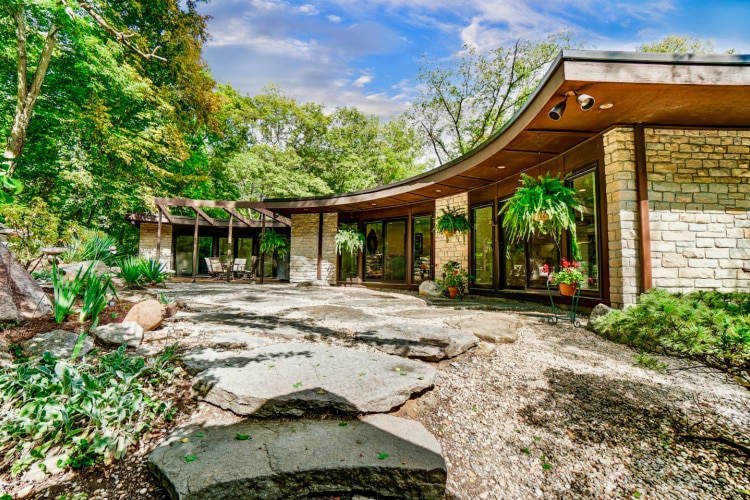
Cincinnati Form Follows Function (cf3) is raising awareness of the region’s endangered mid-century modern architectural form
The nonprofit’s approach unites education, awareness, and working with other preservation associations to advocate for these unique structures.
Middletown, Butler County leaders mull fate of city’s historic buildings
As the city looks for a new path forward, perspectives may vary, but there is shared enthusiasm for an invigorated downtown.